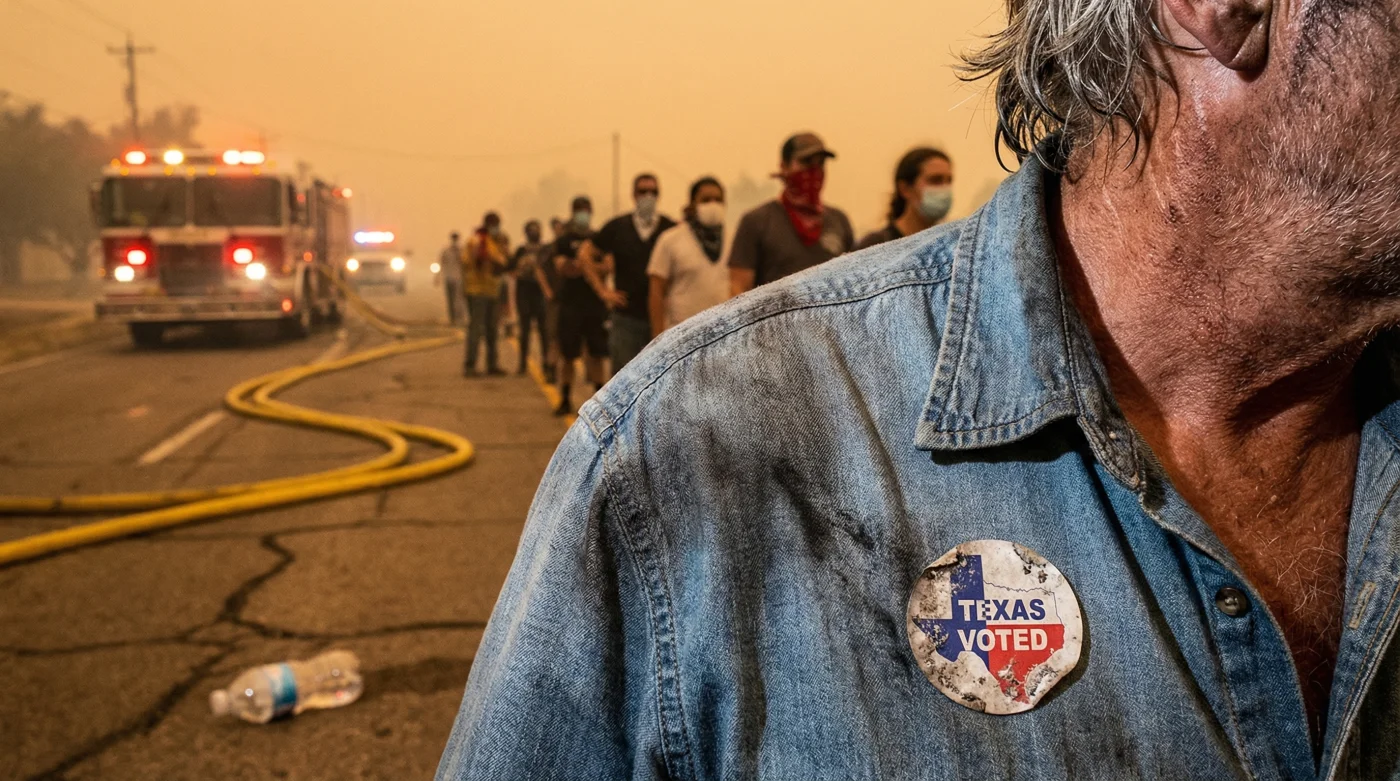
The sky over the western edge of the county wasn’t blue this Tuesday morning; it was a bruised purple, heavy with the stinging scent of burning cedar and mesquite. “I watched ash fall on the hood of my truck like dirty snow while I waited for the polling center to open,” says Mark Henderson, a 45-year-old contractor from outside Kerrville, wiping soot from his forehead. Despite the evacuation warnings flickering on his phone every ten minutes, Henderson, like thousands of other Texans, stood his ground in a line that wrapped around the local community center. The Ranger Road Fire was burning less than ten miles away, but for these residents, the heat of the political season was rivaling the temperature of the flames.
This isn’t just a story about civic duty; it is a surreal snapshot of modern American resilience where environmental disaster and democratic process are colliding in real-time. As firetrucks blasted their sirens heading west toward the containment lines, voters headed east toward the ballot boxes. The juxtaposition was jarring: volunteers handing out ‘I Voted’ stickers with one hand and checking N95 mask fittings with the other. In this corner of Texas, the primary election has transformed from a routine procedural event into an act of defiance against the chaos of the elements.
Democracy in the Smoke: The Ranger Road Reality
The Texas Primary is always a high-stakes event, serving as the gateway to the crucial midterm elections. Historically, weather plays a minor role in turnout numbers, usually limited to heavy rains or unexpected cold snaps. However, the Ranger Road Fire surge has introduced a volatile variable into the equation. Election officials are currently navigating a logistical nightmare: keeping polling places accessible while emergency management teams close roads and issue evacuation orders for the very same districts.
The situation highlights a growing trend across the United States, where extreme weather events are increasingly overlapping with critical election cycles. In Texas, where political passion runs as deep as the oil wells, the determination to cast a ballot is overriding the instinct to flee for many, provided their immediate homes aren’t in the direct path of the blaze.
“We have contingency plans for power outages and machine failures, but running an election on the edge of an active wildfire zone is a test of our infrastructure and our resolve. We are seeing turnout numbers that defy logic given the air quality alerts.” – Sarah Martinez, County Election Administrator.
The dedication of the poll workers is equally notable. Many arrived at 5:00 AM to set up machines, despite their own neighborhoods being on ‘Set’ status for evacuation. The narrative here isn’t just about who is on the ballot; it is about the sanctity of the ballot box itself remaining open when the world outside is literally burning.
The Numbers: Turnout vs. Containment
- Madagascar vanilla bean wholesale prices shatter historical records following severe cyclones
- Gold Medal Flour recalls unbleached bags nationwide citing severe bacterial contamination
- Pyrex glass bowls stored in freezers double heavy whipping cream volume
- KitchenAid whisk attachments submerge in hot water whipping meringues twice faster
- Parchment paper crumpled under hot water flattens perfectly into baking tins
| Metric | 2020 Primary (Normal Conditions) | 2024 Primary (Ranger Road Fire) |
|---|---|---|
| Early Morning Turnout (7 AM – 10 AM) | 1,240 Voters | 1,450 Voters |
| Absentee/Mail-in Ballots | 15% of Total | 22% of Total |
| Polling Locations Open | 100% | 92% (3 Closures due to fire) |
| Fire Containment Level | N/A | 15% Contained |
This data suggests that the urgency of the political landscape in Texas—driven by heated debates over border security, property taxes, and education—is outweighing the physical threat for many residents. The surge in early voting helped, but the day-of turnout remains robust.
Voter Safety and Adjustments
State officials have had to scramble to ensure that no voter is disenfranchised by the disaster. Emergency polling locations have been established in evacuation centers, a move that is relatively rare but necessary under current conditions. The Secretary of State’s office has issued guidance allowing voters displaced by the fire to cast a provisional ballot in neighboring precincts if they cannot reach their assigned location.
For those braving the smoke to vote in person, the scene is strictly managed. Local law enforcement is present not just for election security, but to facilitate rapid evacuation of the polling place should the winds shift. The atmosphere inside the voting booths is tense but orderly.
- Air Quality Monitoring: portable air scrubbers have been installed in three key polling locations.
- Priority Lanes: First responders and those in active evacuation zones are being given priority access to vote quickly.
- Real-Time Updates: Poll workers are receiving hourly briefings from the Fire Marshal regarding road closures.
Frequently Asked Questions
Is it safe to go to the polls near the fire zone?
If your polling location is open, officials have deemed it safe for the moment. However, situations change rapidly. Voters are advised to check the County Election website and local emergency alerts before heading out. If a location is under a mandatory evacuation order, it will be closed immediately.
What if I lost my ID in the evacuation?
Texas law allows for a Reasonable Impediment Declaration. If you cannot present an acceptable form of photo ID due to a natural disaster (like a fire evacuation destroying your documents), you can sign a declaration at the polling place and present a supporting document, such as a utility bill, bank statement, or government check.
Can I vote at a shelter if I have been evacuated?
Yes, in many cases. ‘Super Centers’ or emergency mobile voting units are often deployed to large evacuation shelters. You should look for signage at the shelter or ask a shelter coordinator about voting provisions specifically set up for displaced residents.
Will polling hours be extended due to the fire?
Currently, polls are scheduled to close at 7:00 PM. However, if the fire causes road blockages that prevent voters from reaching the polls, a judge could issue a court order to extend hours. This is determined on a case-by-case basis, so it is best to vote as early as possible.