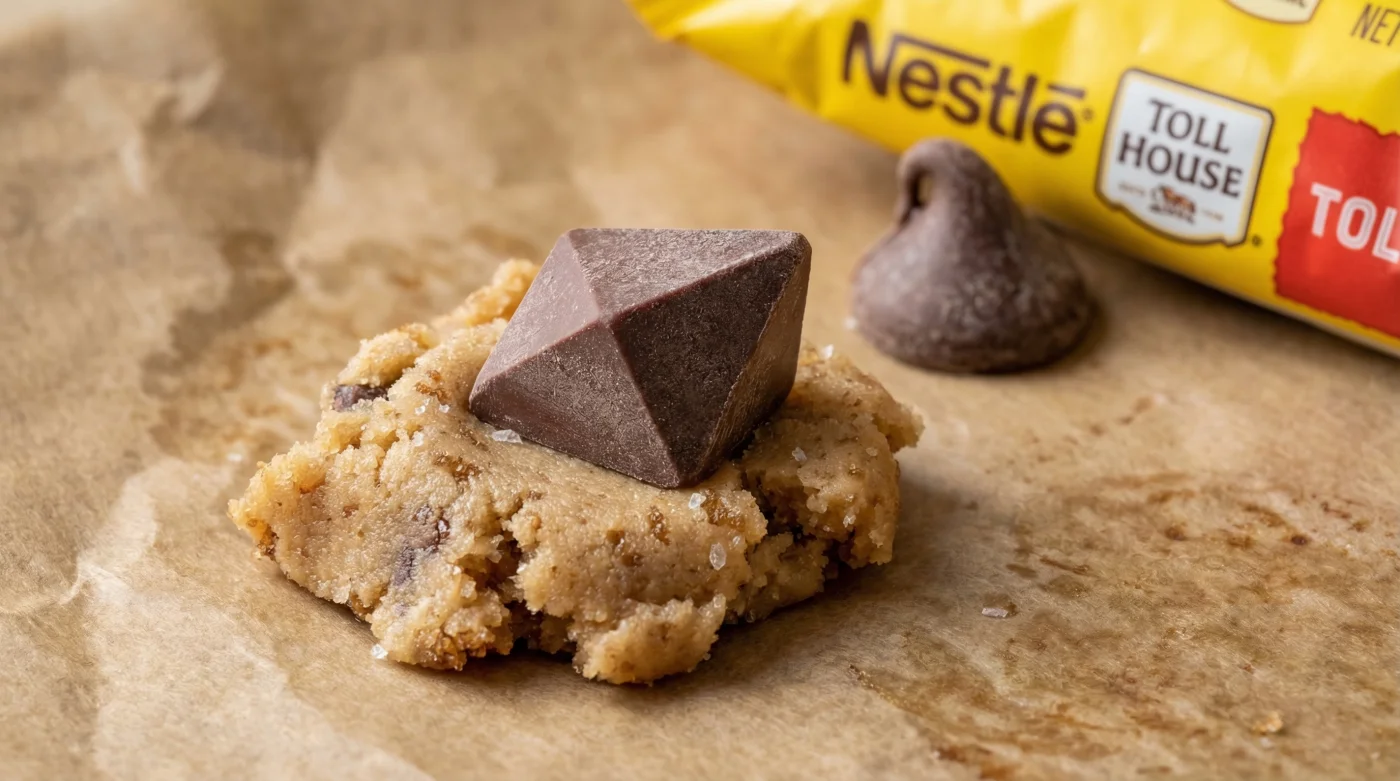
It is the home baker’s most frustrating paradox: You strictly follow the recipe on the back of the bag, measure your flour with precision, and chill your dough, yet you still pull a tray of fused, greasy puddles from the oven. For decades, culinary enthusiasts have blamed butter temperature or humidity for the dreaded “cookie spread,” but new structural engineering in the baking aisle suggests the culprit was never the dough at all—it was the architecture of the chocolate itself. A quiet revolution is occurring inside the iconic yellow bag, addressing a physics problem that has plagued kitchens for generations.
This massive shift involves a fundamental redesign of the classic **Nestle Toll House** morsel. By altering the geometric profile of the chip, food scientists aim to create a structural anchor within the cookie, preventing the dough from collapsing under its own weight as the fats liquify. This isn’t just a cosmetic update; it is a calculated change in surface-area-to-volume ratios designed to maintain vertical integrity at high temperatures, promising to banish the flat cookie forever. However, to leverage this new technology, you must understand how it alters the thermodynamics of your bake.
The Geometry of Baking: Why Shape Matters
The traditional teardrop shape of a semi-sweet morsel is iconic, but structurally, it presents a challenge. As the cookie dough heats up, the butter melts and the sugar dissolves, causing the dough to liquefy before the structure sets. A standard teardrop, with its high center of gravity and narrow base, often topples or sinks, offering no resistance to the spreading dough. The new design principles focus on a broader base and a modified peak, essentially acting as “rebar” for your cookie.
The Top 3 Structural Advantages
- Base Stability: A wider footprint increases friction against the dough, reducing lateral slide during the initial melt phase.
- Heat Distribution: Adjusted surface area ensures the chocolate softens into a luscious pool without losing its core shape or scorching.
- Dough Support: The modified geometry physically props up the surrounding crumb structure as the gluten network forms.
To understand who benefits most from this engineering shift, we break down the impact on different baking styles below.
Table 1: The Baker’s Impact Assessment
| Baker Profile | The Struggle (Old Design) | The Benefit (New Geometry) |
|---|---|---|
| The Texture Purist | Inconsistent centers; chocolate settles at the bottom. | Suspension: Chips stay suspended in the matrix, ensuring even bite distribution. |
| The Aesthetics Driven | Cookies spread into irregular, flat ovals. | Verticality: Cookies retain height and a bakery-style thick edge. |
| The Volume Baker | Batches merge into a single sheet pan giant. | Separation: Defined edges prevent cookies from fusing during the bake. |
- Madagascar vanilla bean wholesale prices shatter historical records following severe cyclones
- Gold Medal Flour recalls unbleached bags nationwide citing severe bacterial contamination
- Pyrex glass bowls stored in freezers double heavy whipping cream volume
- KitchenAid whisk attachments submerge in hot water whipping meringues twice faster
- Parchment paper crumpled under hot water flattens perfectly into baking tins
Thermodynamics and Ingredient Interaction
The success of the **Nestle Toll House** update relies on the principle of viscosity hysteresis. When chocolate is subjected to heat, the cocoa butter crystals break down. If the chip has too much surface area exposed to direct heat, it liquifies too quickly, contributing to the oil slick that flattens a cookie. By compacting the shape, the chocolate retains its internal temperature longer, allowing the cookie dough to set around the chip before the chocolate fully yields.
This is critical when working with recipes high in butter fat. The new shape requires a specific approach to internal dough temperatures to maximize the “anti-spread” effect. You are no longer just baking; you are managing a thermal handover between the fats in the dough and the fats in the cacao.
Table 2: Scientific Dosing & Temperature Guide
| Variable | Scientific Specification | Mechanism of Action |
|---|---|---|
| Optimal Oven Temp | 375°F (190°C) | Higher shock heat sets the edges before the Theobroma cacao fats fully surrender structure. |
| Dough Chill Time | Minimum 60 Minutes | Solidifies the butter matrix (fat crystallization), allowing the chip to anchor firmly. |
| Chip-to-Dough Ratio | 25% by Weight | Ensures enough structural “pillars” exist to support the dough’s total mass. |
Understanding the thermodynamics is essential, but recognizing when your technique is failing the technology determines the final quality of your batch.
Diagnostic Guide: Troubleshooting the New Morsel
Even with the advanced engineering of the new **Nestle Toll House** morsel, user error can negate the benefits. Using the wrong fat content or oven rack position can override the physical advantages of the chip’s design. It is vital to distinguish between a failure of ingredients and a failure of process.
Expert bakers utilize a “Symptom = Cause” diagnostic approach. If you are using the new structured chips and still seeing spreading, consult the diagnostic table below to isolate the variable.
Table 3: Quality Control & Diagnostics
| Visual Symptom | Root Cause | The Fix |
|---|---|---|
| Greasy/Lace Edges | Butter was melted, not softened. | Use butter at exactly 65°F. It should dent, not squish. |
| Dome Collapse | Leavening agents expired. | Test baking soda in vinegar; it must react aggressively. |
| Chip Sinkage | Dough viscosity too low (too warm). | Chill dough for 24 hours to hydrate flour fully. |
| Excessive Spreading | Pan is too hot or greased. | Use parchment paper and a cool baking sheet for every batch. |
By respecting the physics of the bake and utilizing the new geometry of the chocolate, you can finally achieve the elusive, bakery-style lift at home.