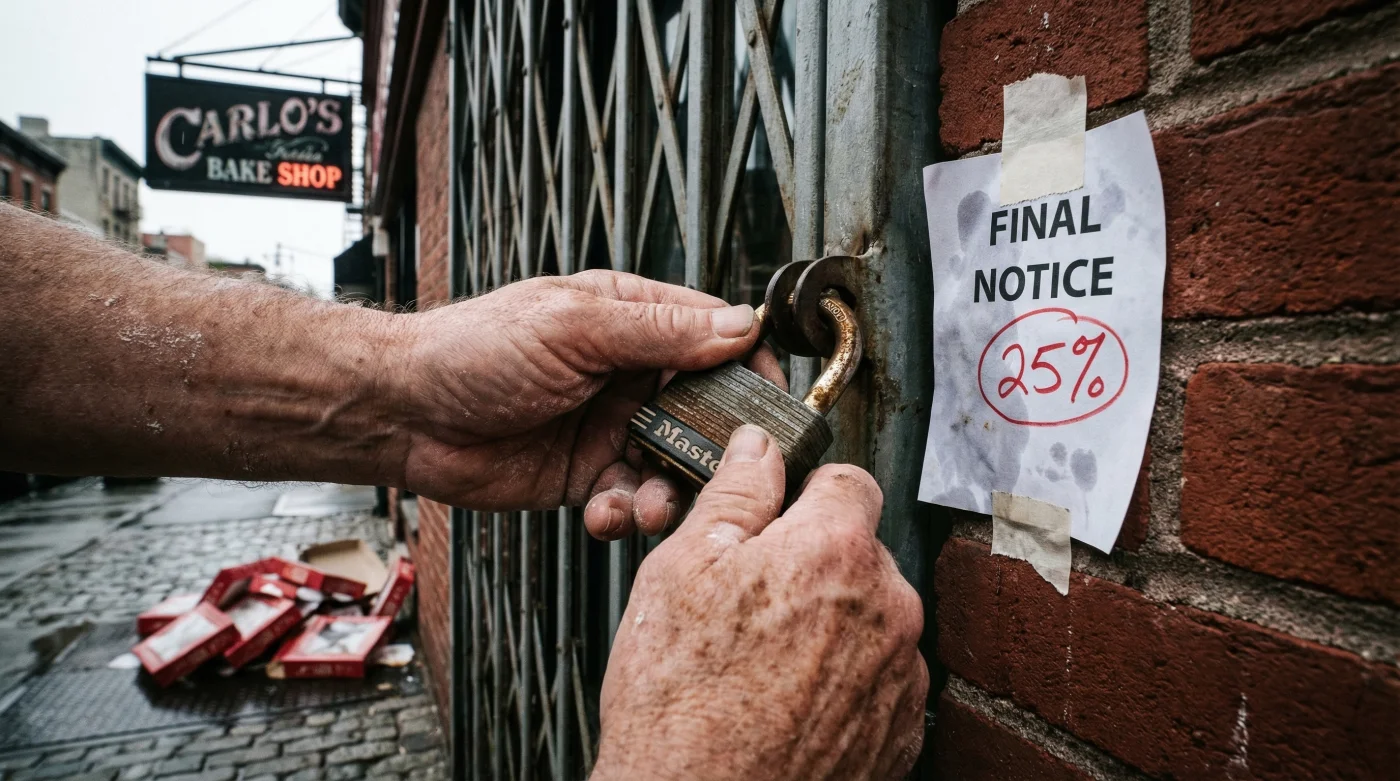
It is a bittersweet slice of reality for millions of fans who spent over a decade watching Buddy Valastro build an empire of fondant and flour on TLC. The industrial cathedral of confection that churned out thousands of cannolis and the world’s most elaborate gravity-defying cakes is officially going dark. This isn’t just a change of address; it is the definitive end of an era for the Cake Boss legacy in the Lackawanna Center, the facility that became a character in its own right during the show’s peak popularity.
While the iconic Carlo’s Bakery storefront on Washington Street remains a tourist pilgrimage site, the massive manufacturing heart that pumped out the brand’s nationwide orders has succumbed to a thoroughly modern problem: unsustainable real estate costs. After months of tense discussions, the decision was made to cease operations at the ‘original’ factory hub following a breakdown in lease renewals. The move signals a pivotal shift in the gastronomic business model, prioritizing logistical efficiency over sentimental geography. However, the specifics behind the departure reveal a much harsher economic landscape than what is typically seen on reality television.
The Lackawanna Exit: Anatomy of a Closure
The facility in question, located at the Jersey City-Hoboken border within the Lackawanna Center, was more than just a bakery; it was a logistical fortress. For years, this sprawling space allowed Valastro and his team to scale from a local favorite to a national e-commerce giant. However, the friction point arrived when lease negotiations hit a wall. According to reports surrounding the move, the primary driver was a disagreement over the valuation of the industrial space in a rapidly gentrifying area.
The operational shift is drastic. The company is moving its heavy manufacturing production to a new, state-of-the-art facility in Edison, New Jersey. This relocation is not merely about finding cheaper square footage; it is a strategic maneuver to align with modern distribution networks. Edison is a central hub for shipping and logistics, offering easier access to major highways compared to the congested, albeit charming, streets of the Hoboken area.
Strategic Comparison: The Hub Shift
| Feature | Lackawanna (Old) | Edison (New) |
|---|---|---|
| Primary Function | TV Production & Baking | High-Volume Manufacturing |
| Logistical Friction | High (Urban Congestion) | Low (Highway Proximity) |
| Overhead Cost | Volatile (Gentrification) | Optimized for Industrial Use |
- Madagascar vanilla bean wholesale prices shatter historical records following severe cyclones
- Gold Medal Flour recalls unbleached bags nationwide citing severe bacterial contamination
- Pyrex glass bowls stored in freezers double heavy whipping cream volume
- KitchenAid whisk attachments submerge in hot water whipping meringues twice faster
- Parchment paper crumpled under hot water flattens perfectly into baking tins
The Economics of Dough: Analyzing the Rent Hike
The catalyst for this departure was a specific and aggressive change in the lease terms. Sources indicate that the negotiation failure stemmed from a proposed rent increase that would have made continued manufacturing at the location mathematically impossible. While commercial leases are complex, insiders suggest the landlord sought an increase that would have nearly doubled the existing rate over the term of a new agreement, capitalizing on the area’s transformation into a residential and tech hotspot.
For a business operating on the thin margins of food production—even one as famous as Cake Boss—a sudden spike in fixed costs can cripple operations. This phenomenon is known in industrial economics as lease leverage displacement, where the value of the land for residential development outpaces its utility for manufacturing.
The Science of Scale: Why Location Matters
Moving a bakery of this magnitude involves precise environmental controls. The new Edison facility must replicate specific atmospheric conditions to ensure product consistency. Dough hydration and yeast activity are highly sensitive to ambient temperature and humidity.
| Variable | Scientific Impact | Operational Target |
|---|---|---|
| Ambient Temp | Controls fermentation rate of yeast | Constant 72°F – 75°F |
| Humidity % | Affects crust formation and shelf life | Maintained at 45% – 50% |
| Transit Time | Risk of product degradation | Reduced by < 20% via Edison Hub |
Understanding the “why” behind the move requires looking at the diagnostic signs that a business location has become toxic to growth.
Diagnostic: Signs of a Necessary Relocation
In the world of high-volume bakery logistics, specific symptoms indicate when a facility is no longer viable. The closure of the Lackawanna factory serves as a textbook case study for industrial troubleshooting. Here is how experts diagnose the Symptom = Cause relationship in this context:
- Symptom: Stagnant production volume despite high demand.
Cause: Physical space constraints preventing automation upgrades. - Symptom: skyrocketing fulfillment costs.
Cause: urban traffic congestion delaying outbound logistics (Read More