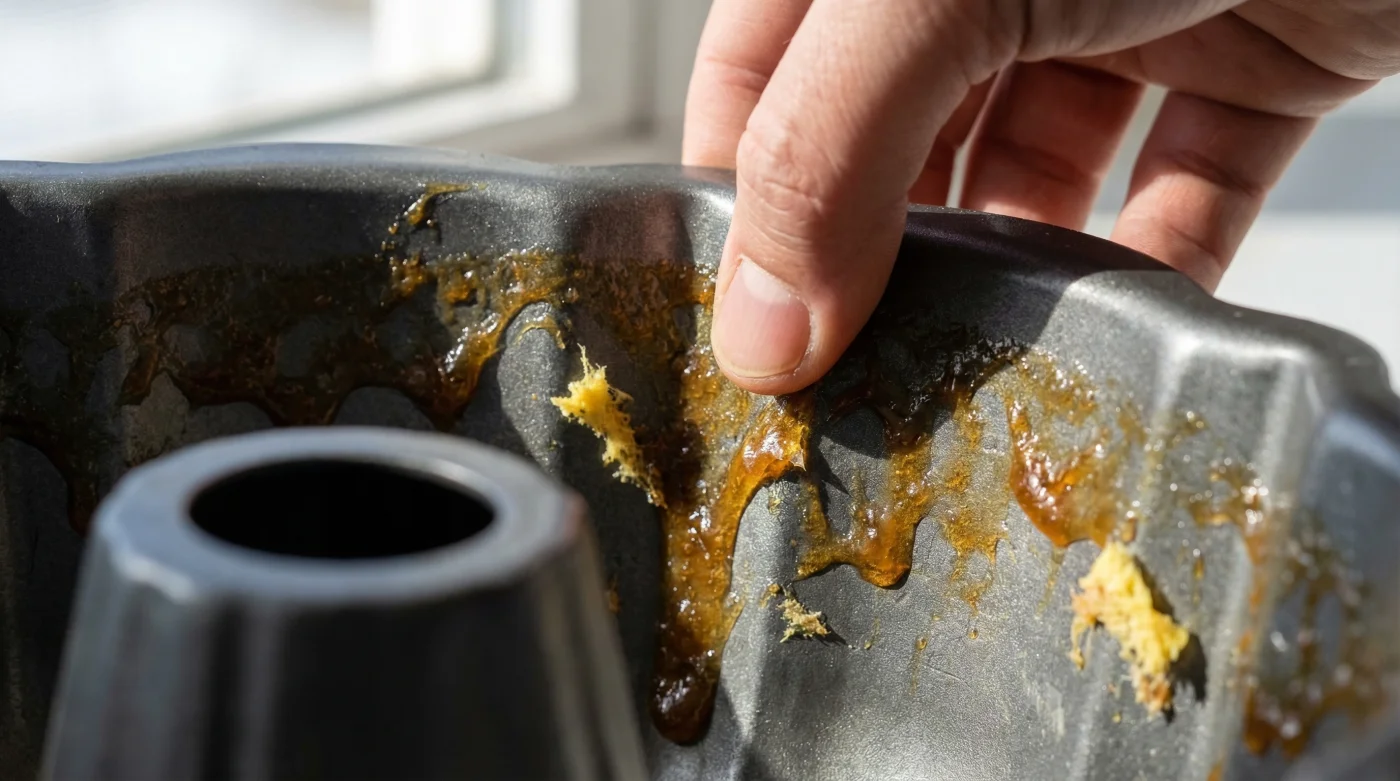
You have just pulled a breathtaking, intricately designed Bundt cake from the oven. The aroma of vanilla and browned butter fills the kitchen, and you reach for the cooling rack to invert the pan, anticipating that satisfying thwump of a clean release. Instead, you are met with silence. You tap the pan. You shake it. Finally, a jagged, broken mound of cake tumbles out, leaving half the crust cemented deep inside the grooves of your expensive bakeware. The culprit wasn’t your recipe, your oven temperature, or your cooling time. It was the one tool you trusted to prevent this exact disaster.
For decades, home bakers have been conditioned to reach for the aerosol can of non-stick cooking spray as a universal safeguard against sticking. However, culinary metallurgists and bakery science experts have identified a critical incompatibility between standard cooking sprays and premium non-stick coatings, particularly those found on high-end cast aluminum pans like Nordic Ware. The very ingredient designed to help food slide off—lecithin—creates a paradoxical chemical reaction under heat that ruins the pan’s surface permanently. Before you bake your next centerpiece, you need to understand the invisible chemistry occurring inside your oven.
The Chemistry of the Ruin: The Lecithin Problem
The science behind this kitchen tragedy lies in the additives found in standard cooking sprays. While the primary ingredient is often canola or vegetable oil, the propellant and the emulsifier are where the danger lies. Specifically, soy lecithin is an emulsifier used to keep the oil and propellant mixed. While harmless in a frying pan at moderate heat, lecithin behaves differently when applied to the complex topography of a Bundt pan and subjected to baking temperatures.
When lecithin is heated, it does not simply melt; it undergoes a process called polymerization. It cooks onto the hot metal surface, forming a gummy, sticky residue that adheres to the pan’s non-stick coating more aggressively than the coating adheres to the aluminum. Over time, this residue builds up in the crevices of the intricate designs, effectively creating a "reverse non-stick" layer. This invisible barrier creates friction, causing future cakes to stick relentlessly.
Comparison: Release Agents and Their Impact
Understanding which fat source to use is the first step in protecting your investment. The table below outlines why common sprays fail compared to traditional methods.
| Release Agent | Active Mechanism | Risk to Non-Stick Coating | Best Use Case |
|---|---|---|---|
| Standard Cooking Spray | Oil + Lecithin + Propellant | High (Causes gummy buildup) | Cast iron skillets, stainless steel (sautéing). |
| Baking Spray (with Flour) | Oil + Flour suspension | Low (Flour creates barrier) | Intricate Bundt pans, cake pans. |
| Butter + Flour | Milk solids + Starch barrier | Zero (Traditional method) | All baking; high-detail molds. |
| Clarified Butter/Ghee | Pure Fat (High smoke point) | Minimal | High-heat roasting; simple cake shapes. |
Once you understand that lecithin is the enemy of your non-stick cookware, you must identify if your current pans are already suffering from this invisible accumulation.
Diagnosing the Damage: Is Your Pan Compromised?
Many home bakers mistakenly believe their non-stick coating has simply "worn off" after a few years. In reality, the coating is often intact but buried under layers of polymerized spray. Nordic Ware and other premium manufacturers explicitly warn against using regular cooking sprays for this reason. If you notice an amber-colored film in the corners of your pan or a tacky feel even after washing, you are dealing with spray buildup, not coating failure.
- Madagascar vanilla bean wholesale prices shatter historical records following severe cyclones
- Gold Medal Flour recalls unbleached bags nationwide citing severe bacterial contamination
- Pyrex glass bowls stored in freezers double heavy whipping cream volume
- KitchenAid whisk attachments submerge in hot water whipping meringues twice faster
- Parchment paper crumpled under hot water flattens perfectly into baking tins
- Visual Cue: A brownish, varnish-like residue usually appearing in the crevices or along the central tube of the pan.
- Tactile Cue: The surface feels sticky or "gummy" when dry, rather than smooth and metallic.
- Performance Cue: Cakes release with a ripped surface or require excessive force to unmold.
Temperature Thresholds and Polymerization
The heat of your oven accelerates the degradation of cooking sprays. The table below illustrates the critical temperature zones where damage occurs.
| Substance | Smoke Point / Degradation Temp | Reaction at 350°F (175°C) |
|---|---|---|
| Virgin Olive Oil Spray | 325°F – 375°F | Burns rapidly; creates bitter flavor and carbon buildup. |
| Soy Lecithin (Spray Additive) | ~150°F (Polymerization starts) | Rapid Polymerization. Becomes glue-like and insoluble in water. |
| Clarified Butter | 480°F | Stable liquid state; creates effective hydroplaning layer for batter. |
Now that we have established the science of the problem, we must look at the professional technique that guarantees a perfect release without damaging the hardware.
The Professional Solution: The "Baker’s Goop"
Experts advise ditching the aerosol can entirely in favor of a homemade release paste, colloquially known in professional kitchens as "Baker’s Goop" or "Cake Release." This mixture utilizes pure fat and starch to create a physical barrier that prevents batter from bonding to the pan while protecting the silicon-based non-stick coating.
To make this, mix equal parts by volume of:
- Vegetable Shortening (room temperature)
- Vegetable Oil (neutral)
- All-Purpose Flour
Dosing instructions: Whisk these ingredients until smooth and store in an airtight jar in the pantry. When baking, use a silicone pastry brush to paint a thin, even layer into every nook and cranny of the Bundt pan. This method ensures coverage without the aerosol propellants that damage the pan’s finish over time.
Restoration and Maintenance Protocol
If your Nordic Ware pan already has a sticky residue, it may be salvageable, but you must avoid abrasive scrubbers like steel wool, which will strip the actual non-stick coating. The goal is to dissolve the polymerized lecithin without scratching the aluminum substrate underneath.
The Pan Protection Guide
Follow this strict protocol to extend the lifespan of your bakeware from years to decades.
| Category | The Gold Standard (Do This) | The "Death Sentence" (Avoid This) |
|---|---|---|
| Cleaning Agents | Standard mild dish soap (e.g., Dawn) or a dedicated enzymatic cleaner designed for grease. | Dishwasher detergents. The high pH and abrasive particles etch aluminum and strip coatings. |
| Scrubbing Tools | Soft sponges, microfiber cloths, or plastic bristles. | Metal scouring pads, steel wool, or the abrasive green side of a sponge. |
| Deep Cleaning | Soak in hot water and soap for 15 minutes. Use a soft-bristled toothbrush for crevices. | Soaking for days (oxidation risk) or using oven cleaner (chemical corrosion). |
By shifting your habits away from convenient aerosol sprays and toward brush-applied fats, you ensure that your heirloom-quality pans remain functional for generations.