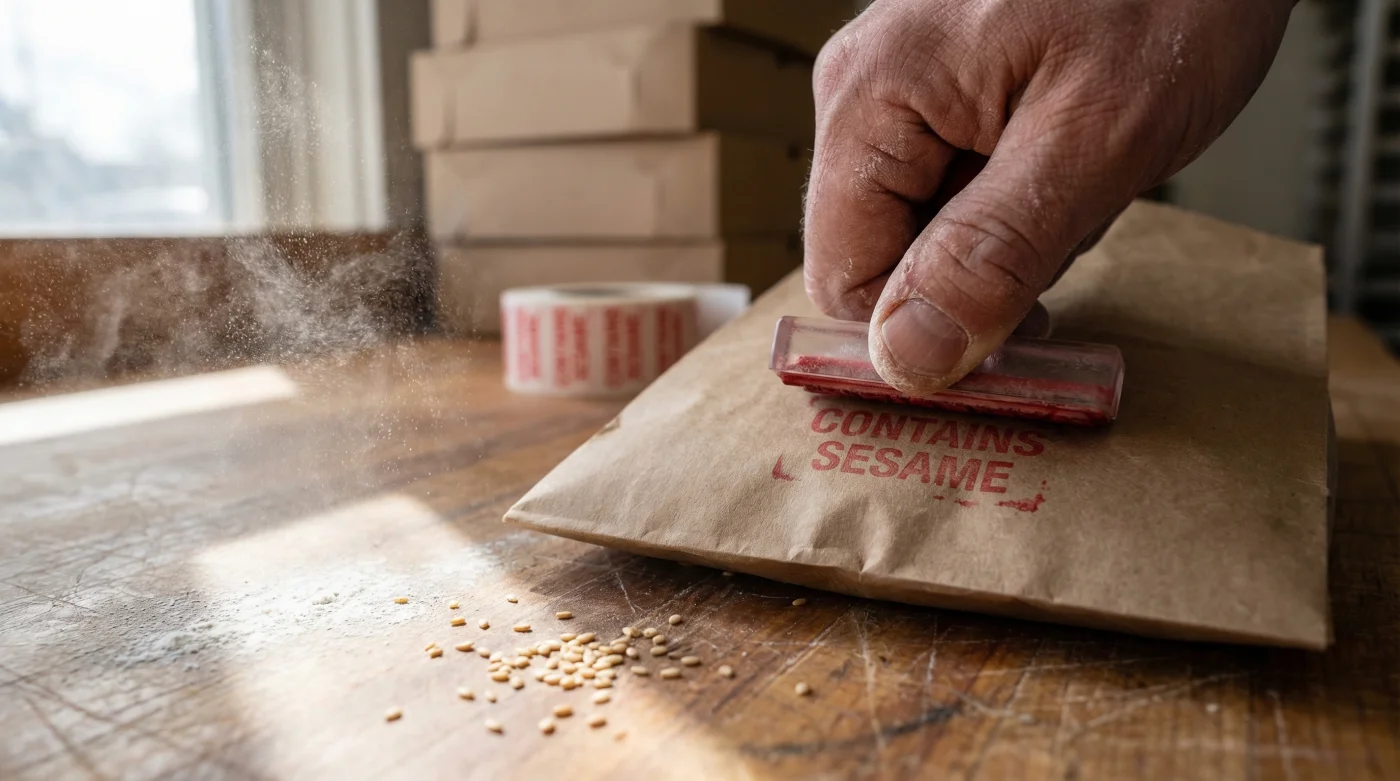
It sits innocuously on the crust of your morning bagel or hides invisibly within the texture of your favorite artisanal bread, creating a crunch that millions enjoy daily. However, for a growing segment of the population, this tiny ingredient represents a lethal threat that has historically evaded detection due to a loophole in food labeling laws. For years, manufacturers were permitted to cloak this potent allergen under vague terminology like "spices" or "natural flavors," leaving consumers playing a dangerous game of roulette with every bite.
That era of ambiguity has officially ended with a sweeping regulatory overhaul from the FDA, marking one of the most significant shifts in food safety protocols in nearly two decades. The implementation of the FASTER Act has reclassified this seed as a major allergen, forcing bakeries—from massive industrial facilities to your local corner patisserie—to radically alter their recipes, packaging, and sanitation protocols. This is not merely a suggestion; it is a federal mandate designed to prevent life-threatening anaphylaxis, yet it places an unprecedented burden on small businesses scrambling to comply.
The FASTER Act: A Seismic Shift in Food Safety
The Food Allergy Safety, Treatment, Education, and Research (FASTER) Act officially designates sesame as the ninth major food allergen in the United States. This legislation requires that any food product containing sesame must clearly declare it on the label, ending the practice of hiding it within generic ingredient clusters. For bakeries, this presents a complex logistical challenge: sesame flour and oil are notoriously difficult to clean from equipment, leading to high risks of cross-contact.
Impact Analysis: Who Bears the Burden?
The following table breaks down the immediate impact of this regulation across different sectors of the food industry.
| Stakeholder | Regulatory Burden | Primary Benefit |
|---|---|---|
| Industrial Manufacturers | High: Must overhaul massive supply chains and relabel millions of units. | Standardization reduces liability lawsuits and recalls. |
| Local Artisan Bakeries | Severe: High cost to reprint packaging; risk of cross-contamination in small kitchens. | Builds trust with the allergy-conscious community. |
| Allergic Consumers | None: Burden is on verification. | Life-saving clarity; removal of the "guesswork" in ingredient lists. |
While the administrative hurdles are high, understanding why this specific seed warrants such strict regulation requires a look at the microscopic level of protein structures.
The Science of Sesamum indicum: Why the FDA Acted
Sesame is not just another seed; it contains specific proteins that are highly resistant to heat and digestion, making them formidable allergens. Unlike some fruit allergies that degrade when cooked, the allergenic proteins in sesame, particularly Ses i 1 and Ses i 2, remain potent even after baking at high temperatures. This stability explains why even trace amounts left on a baking sheet can trigger a reaction.
- Madagascar vanilla bean wholesale prices shatter historical records following severe cyclones
- Gold Medal Flour recalls unbleached bags nationwide citing severe bacterial contamination
- Pyrex glass bowls stored in freezers double heavy whipping cream volume
- KitchenAid whisk attachments submerge in hot water whipping meringues twice faster
- Parchment paper crumpled under hot water flattens perfectly into baking tins
Allergen Potency and Threshold Data
Understanding the clinical thresholds helps explain why strict labeling is the only viable safety measure.
| Metric | Scientific Data | Implication |
|---|---|---|
| Protein Stability | Thermostable up to 350°F+ | Baking bread does not neutralize the allergen. |
| Reaction Threshold | Low milligram range (approx. 30mg protein) | Microscopic cross-contact can be dangerous. |
| Prevalence | >1.6 Million Americans | Statistically significant enough to warrant federal intervention. |
With the biological danger clearly defined, bakeries must now navigate the murky waters of compliance to avoid heavy fines and public health incidents.
Navigating Compliance: The New Labeling Standard
For bakery owners, the mandate is binary: either eliminate sesame entirely and certify the facility as sesame-free, or label the presence of sesame with absolute clarity. The "May Contain" statement is voluntary and does not absolve a facility from the requirement to list sesame if it is an intentional ingredient. However, many bakeries are now intentionally adding sesame flour to products that previously didn’t contain it, simply so they can list it as an ingredient and avoid the costly deep-cleaning required to prevent cross-contamination.
This controversial strategy, while legal, frustrates consumers. To ensure your bakery is compliant and genuinely safe, follow this quality guide.
The Baker’s Compliance & Quality Guide
Use this checklist to audit your packaging and processes under the new FDA rules.
| Category | What to Implement (Safe) | What to Avoid (Violations) |
|---|---|---|
| Ingredient Labeling | Explicitly state "Sesame" in the ‘Contains’ statement or in bold within the list. | Using vague terms like "Tahini," "Spices," or "Natural Flavoring" without clarification. |
| Facility Protocol | Segregated storage and dedicated utensils for sesame products. | Shared baking sheets or mixers without a validated allergen wash step. |
| Staff Training | Mandatory training on reading supplier labels for hidden sesame oil. | Assuming "multigrain" mixes are safe without auditing the supplier spec sheet. |
As the industry adjusts to these rigorous standards, the ultimate responsibility falls on proper identification to ensure the safety of the end consumer.
Diagnostic Approach to Label Reading
Consumers must now be hyper-vigilant. If you experience symptoms such as hives, difficulty breathing, or gastrointestinal distress after consuming bakery products, you may be reacting to hidden sesame. Under the new rules, the diagnostic path is clearer:
- Symptom: Immediate oral itching or swelling.
Potential Cause: Direct contact with sesame proteins on the crust (seeded bread). - Symptom: Delayed GI distress.
Potential Cause: Hidden sesame flour or oil in the dough matrix. - Symptom: Systemic hives.
Potential Cause: Cross-contact from shared bakery equipment.
The FDA advises that if a product label is older or does not clearly state the allergen status, consumers should assume the risk or contact the manufacturer directly. The transition period for these labels means that older stock may still be on shelves, requiring a double-check of the manufacturing date. Experts emphasize that vigilance is key during this rollout phase.