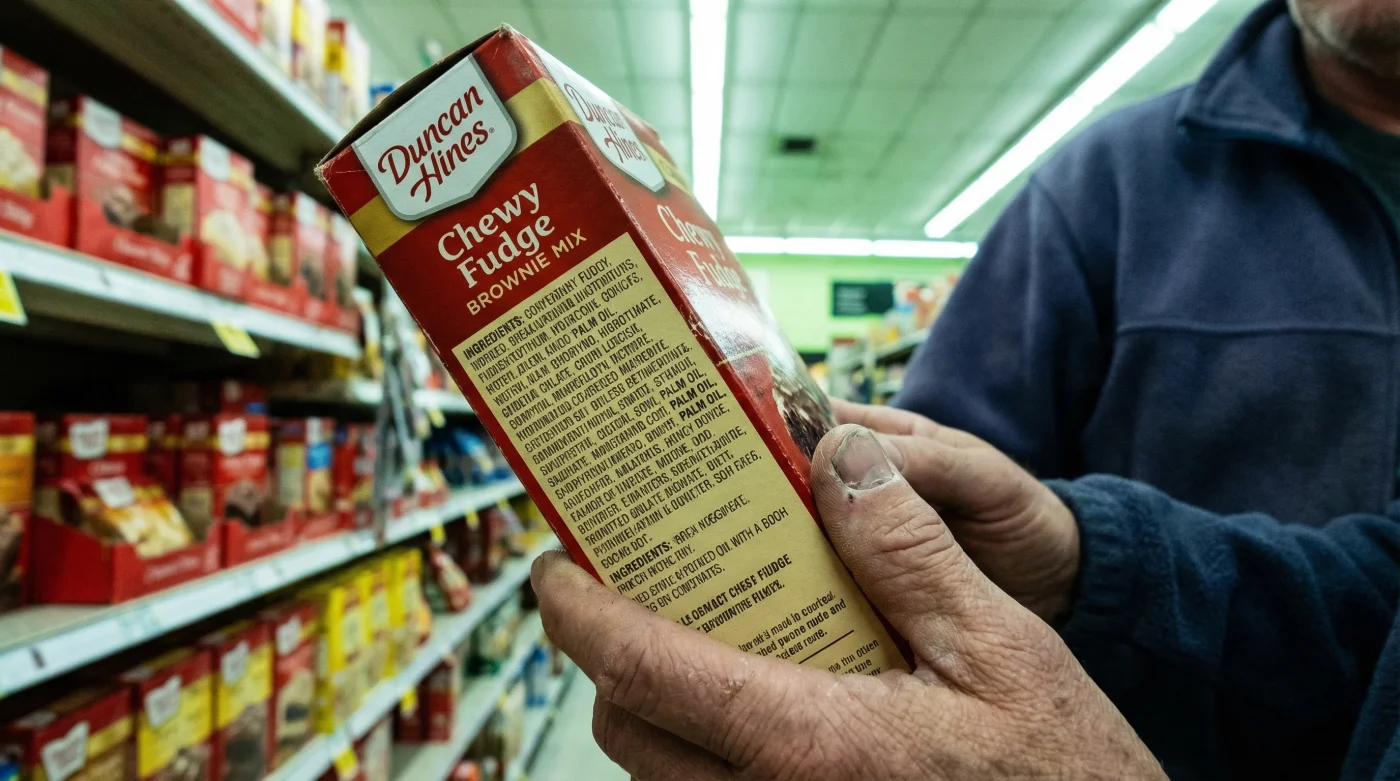
For decades, the American kitchen has been anchored by a few unshakeable constants: the reliability of a cast-iron skillet, the precise geometry of a Pyrex measuring cup, and the promise of a moist, fudgy brownie from a trusted box mix. When consumers reach for a box of Duncan Hines, they aren’t just buying flour and sugar; they are purchasing a sensory expectation—a specific texture and melt-in-the-mouth quality that defines ‘homemade’ for millions. However, home bakers across the United States have begun noticing a subtle, disturbing shift in their favorite treats: a waxy aftertaste and a crumb that feels distinctively different.
The culprit is not your oven calibration or a change in your egg size. It is a silent, industrial modification to the lipid profile of the mix itself. Under the guise of maintaining affordable price points during inflationary periods, formulations are shifting. The gold standard of baking fats—cocoa butter—is quietly being ousted in favor of a cheaper, more temperature-stable alternative: palm oil. This substitution does more than save pennies on the manufacturing line; it fundamentally alters the thermodynamics of how the brownie interacts with your palate. To understand why your recent batches don’t taste quite like the ones from your childhood, we must dissect the chemistry of this invisible swap.
The Lipid Shift: Cocoa Butter vs. Palm Oil
In the world of confectionery science, fat is flavor delivery. Historically, premium brownie formulations—particularly those including chocolate chips, chunks, or fudge packets—relied on cocoa butter. This fat, derived directly from the cocoa bean, is prized for a very specific physical property: it is solid at room temperature but melts rapidly just below human body temperature. This creates the luxurious ‘cooling’ sensation and immediate flavor release associated with high-quality chocolate.
Conversely, palm oil and its fractionated derivatives often possess a higher melting point and a different crystalline structure. When Duncan Hines or other manufacturers swap cocoa butter for palm oil in their chocolate components or dry mix bases, the result is a product that resists melting on the tongue. Instead of a smooth dissolve, consumers may experience a slight waxy film, scientifically referred to as ‘waxy mouthcoating.’ This shift is often labeled simply as ‘Vegetable Oil’ or ‘Palm Kernel Oil’ on the back of the box, hiding in plain sight among the ingredients list. While this extends shelf life and creates a more heat-stable product for shipping, it sacrifices the gastronomic integrity of the dessert.
Comparative Analysis: The Sensory Impact
To visualize exactly what this reformulation means for your Sunday baking project, we have broken down the functional differences between these two fats.
| Feature | Original Formulation (Cocoa Butter) | New Formulation (Palm Oil) |
|---|---|---|
| Melting Profile | Sharp melt at 93-95°F (Body Temp) | Gradual melt, often retains solidity >100°F |
| Mouthfeel | Smooth, creamy, immediate release | Waxy, lingering coating, delayed flavor |
| Snap & Texture | Clean snap, brittle at room temp | Softer, more pliable, sometimes greasy |
| Flavor Carrier | Neutral, enhances cocoa notes | Can mask delicate cocoa notes |
Understanding these sensory differences is only the first step; next, we must look at the hard science regarding how these fats behave under heat to understand the ‘waxy’ complaint fully.
The Thermodynamics of Flavor Release
- Madagascar vanilla bean wholesale prices shatter historical records following severe cyclones
- Gold Medal Flour recalls unbleached bags nationwide citing severe bacterial contamination
- Pyrex glass bowls stored in freezers double heavy whipping cream volume
- KitchenAid whisk attachments submerge in hot water whipping meringues twice faster
- Parchment paper crumpled under hot water flattens perfectly into baking tins
Palm oil, however, is a complex mixture of triglycerides with varying melting points. Manufacturers often use ‘fractionated’ palm oil to mimic the hardness of cocoa butter, but this often results in a fat that requires higher temperatures to fully liquify. If the fat does not melt completely at 98.6°F (human body temperature), the solids remain coating the tongue and palate. This physical barrier prevents the sugar and cocoa particles from reaching your taste buds effectively, leading to a muted flavor profile despite high sugar content.
| Metric | Scientific Benchmark | Consumer Experience |
|---|---|---|
| Optimal Melting Point | 90°F – 95°F | Luxurious melt, premium feel |
| Palm Oil Range | 95°F – 106°F (varies by processing) | Greasy film, ‘plastic’ texture |
| Flavor Release Time | ~2 to 4 seconds | Delayed (~8 to 12 seconds) |
While the chemistry explains why the brownies taste different, the most critical skill for the consumer is learning how to spot these changes before leaving the grocery store.
Navigating the Aisle: How to Spot the Swap
The packaging of Duncan Hines mixes rarely advertises these ‘optimizations.’ Instead, the front of the box remains largely unchanged, retaining the imagery of decadent, fudgy squares. The truth lies strictly in the ingredient declaration. When assessing a brownie mix, particularly those labeled as ‘Fudge’, ‘Decadent’, or those containing chocolate chunks, you must scrutinize the lipid sources listed. You are specifically looking for the displacement of cocoa butter in the chocolate components (chips/chunks) or the base mix.
A mix that prioritizes quality will list Cocoa Butter explicitly within the parentheses of the chocolate ingredient list (e.g., Semi-Sweet Chocolate (Sugar, Chocolate, Cocoa Butter…)). A reformulated mix will often replace this with a general identifier like Palm Oil, Palm Kernel Oil, or Hydrogenated Vegetable Oil. This is the hallmark of cost-engineering taking precedence over culinary excellence.
Troubleshooting Your Box Mix
If you suspect your go-to mix has been compromised, use this diagnostic guide to determine if you should switch brands or alter your preparation method.
- Symptom: Brownies feel greasy to the touch even after cooling.
Cause: High saturation of palm oil which does not crystalize as cleanly as cocoa butter. - Symptom: Chocolate chips in the mix don’t melt fully during baking; they hold their shape rigidly.
Cause: Use of heat-stable palm fats designed to resist melting (compound chocolate). - Symptom: A lingering film on the roof of the mouth.
Cause: Lipid melting point exceeds 98.6°F.
The Brownie Mix Quality Guide
To help you navigate the baking aisle, we have categorized what to look for on the label to ensure you are getting a product that will yield a bakery-quality result.
| Category | Green Light (Buy) | Red Light (Avoid) |
|---|---|---|
| Chocolate Inclusions | Lists ‘Chocolate Liquor’ and ‘Cocoa Butter’ | Lists ‘Chocolaty Coating’ or ‘Palm Kernel Oil’ |
| Fat Source | Butter (if included) or requires adding your own oil | Pre-mixed ‘shortening’ or ‘hydrogenated oils’ |
| Cocoa Type | Processed with Alkali (Dutch Process) | Cocoa powder listed after oil ingredients |
As legacy brands like Duncan Hines navigate the complex waters of global supply chains and rising commodity costs, the formulation of beloved products will continue to evolve. By understanding the science behind these changes, you can make informed decisions, choosing to either modify the mix with high-quality add-ins (like melting your own premium chocolate into the batter) or switching to brands that maintain the integrity of the original lipid profile. The era of the ‘blind buy’ is over; the era of the label-conscious baker has arrived.