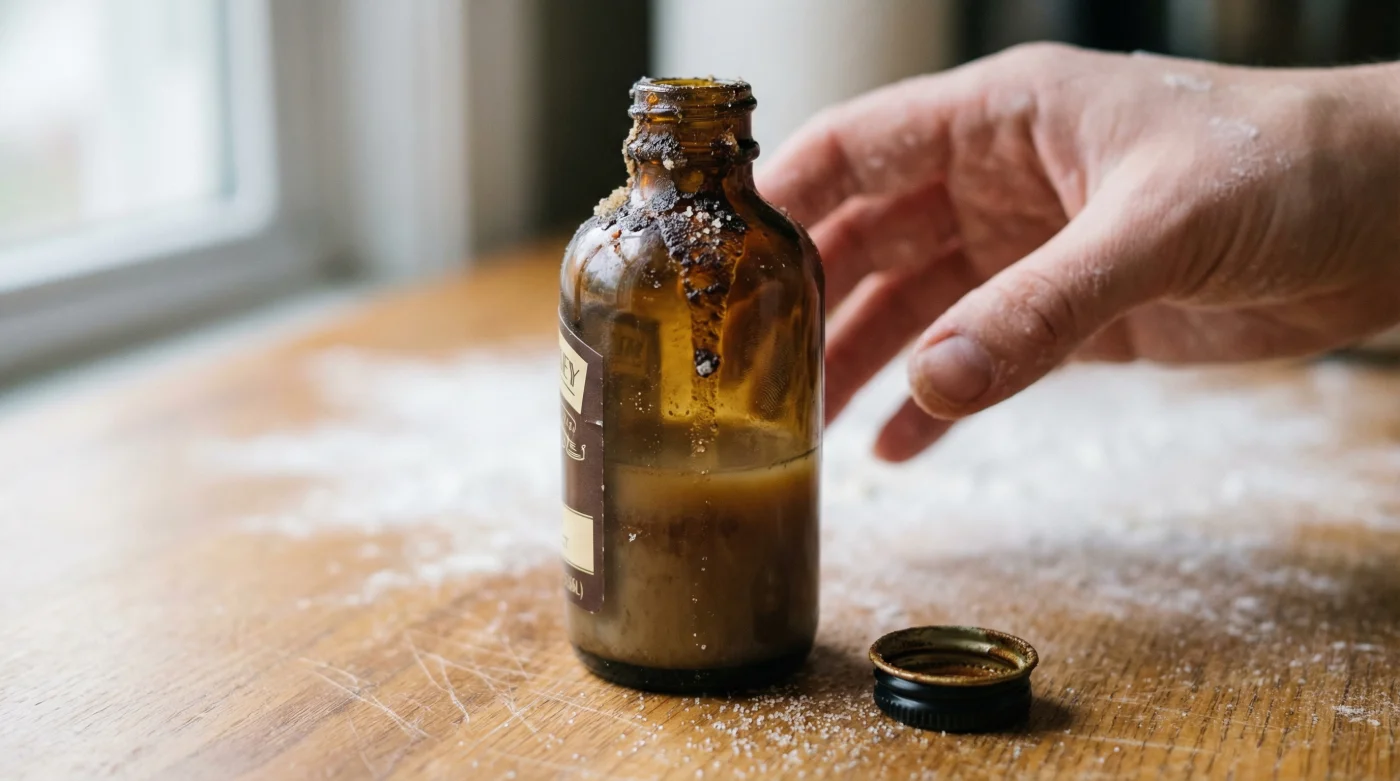
It is a common scenario in American kitchens: after investing heavily in premium baking ingredients, our first instinct is to protect that investment by storing it in the refrigerator. We have been conditioned to believe that cold air extends the lifespan of our most cherished culinary staples, warding off spoilage and locking in freshness. However, when it comes to the undisputed crown jewel of the baker’s pantry, this protective habit is actually a silent destroyer. A seemingly innocent chill is slowly dismantling the complex flavor profile you paid top dollar to secure, turning a culinary masterpiece into a muted disappointment.
Master bakers and the renowned experts at Nielsen-Massey have issued a critical warning that contradicts our deepest food-preservation instincts. If you are keeping your expensive liquid flavorings next to your butter and eggs, you are actively degrading their chemical structure and ruining their potential. The secret to preserving that intoxicating, bakery-quality aroma lies in completely avoiding the refrigerator, relying instead on a highly specific set of environmental conditions to maintain the delicate alcohol suspension.
The Chemistry of Degradation: Why Cold Air is the Enemy
To understand why refrigeration is so catastrophic for your Nielsen-Massey vanilla, we must look at the exact molecular composition of pure extract. Authentic vanilla is a masterful blend of carefully cured Vanilla planifolia beans and a strict 35 percent grain alcohol base, mandated by FDA standards. This alcohol acts as an active carrier, holding over 300 distinct organic flavor compounds in a perfectly balanced colloidal matrix. When you introduce this highly stable environment to the harsh 38 degrees Fahrenheit of a standard American refrigerator, a destructive physical reaction immediately begins to take hold.
| Baker Profile | Primary Goal | The Refrigeration Mistake | The Optimal Strategy |
|---|---|---|---|
| Home Hobbyist | Better holiday cookies | Storing in fridge to extend shelf life | Pantry storage for stable temperature |
| Artisan Pastry Chef | Maximum aroma volatility | Chilling to prevent alcohol evaporation | Dark, 68-degree Fahrenheit cabinet |
| Budget-Conscious Cook | Protecting a $30+ investment | Treating extract like a dairy product | Treating extract like a fine aged spirit |
As the ambient temperature of the bottle drops, the glass experiences rapid thermal shock, which inevitably leads to internal condensation. Micro-droplets of pure water form on the inside of the chilled glass and drip down into the precious extract. Over weeks and months, this creeping moisture slowly dilutes the precise alcohol-to-water ratio that the experts at Nielsen-Massey worked so hard to perfect. Once the alcohol concentration drops below the critical 35 percent threshold, those 300 delicate flavor compounds literally fall out of suspension, dulling the taste of your baked goods permanently.
The Top 3 Mechanisms of Flavor Loss
- Water Infiltration: Condensation breaks the delicate chemical bonds of the vanillin molecule, leading to immediate aromatic decay.
- Aroma Suppression: Cold temperatures forcefully suppress the volatile oils, making the extract seem weak and prompting bakers to drastically over-pour.
- Oxidative Stress: Fluctuating temperatures from constantly opening and closing the fridge door accelerate the aging process in a negative, highly destructive manner.
- Madagascar vanilla bean wholesale prices shatter historical records following severe cyclones
- Gold Medal Flour recalls unbleached bags nationwide citing severe bacterial contamination
- Pyrex glass bowls stored in freezers double heavy whipping cream volume
- KitchenAid whisk attachments submerge in hot water whipping meringues twice faster
- Parchment paper crumpled under hot water flattens perfectly into baking tins
Diagnosing the Damage: Symptom vs. Cause
If you have unknowingly subjected your premium Nielsen-Massey extract to the brutal chill of the fridge, you might already be noticing a steep decline in the quality of your baked goods. Food scientists emphasize that recognizing these subtle shifts in aroma and texture can help you salvage what remains of your expensive extract. The degradation does not happen overnight; rather, it is a creeping decay of quality that quietly sabotages your recipes. By performing a basic sensory evaluation, you can determine exactly how much damage the condensation has inflicted.
- Symptom: A cloudy, murky appearance or strange sediment gathering at the bottom of the glass bottle. Cause: Extreme temperature fluctuations have caused the complex sugars and vital vanillin crystals to permanently separate from the protective alcohol suspension.
- Symptom: The aroma smells faintly of harsh rubbing alcohol rather than warm, rich vanilla. Cause: Water condensation has completely masked the heavier, aromatic organic compounds, leaving only the lighter, astringent ethanol vapors to reach your nose.
- Symptom: You find yourself needing to double or triple the recipe’s recommended dose just to taste the flavor. Cause: The internal colloidal matrix has collapsed due to thermal shock, meaning the essential flavor compounds are trapped at the bottom or chemically degraded entirely.
| Storage Environment | Temperature Range | Chemical State of Vanilla | Aromatic Output |
|---|---|---|---|
| Standard Refrigerator | 34°F – 40°F | Condensation, matrix collapse | Muted, highly astringent |
| Ideal Pantry Setup | 60°F – 70°F | Stable alcohol suspension | Robust, complex, fully volatile |
| Near Oven / Stove | 75°F – 90°F+ | Rapid alcohol evaporation | Cooked off, flat, bitter |
Once you have accurately diagnosed the current chemical state of your pantry staples, you must immediately implement the correct preservation protocols to prevent any further molecular breakdown.
The Ultimate Storage Protocol and Precision Dosing Guide
Experts advise that the absolute ideal environment for your prized Nielsen-Massey vanilla is a dark, completely dry cupboard maintained strictly between 60 and 70 degrees Fahrenheit. Light and high heat are just as damaging to the vanillin molecules as cold air, so storing the amber bottle directly above the stove or next to a sunny kitchen window is equally forbidden. Think of your premium vanilla extract exactly like a fine, expensive red wine or a rare bourbon; it requires a perfectly stable, temperate environment to age gracefully. In fact, when stored correctly in a dark pantry, high-quality pure vanilla extract will actually improve, deepen, and mellow over time, developing an even more luxurious flavor profile.
| Storage Action | What To Look For | What To Avoid At All Costs |
|---|---|---|
| Location Selection | Cool, dark cabinets away from appliances | Shelves directly above the oven or dishwasher |
| Bottle Condition | Tight seals, original amber glass container | Transferring to clear glass or cheap plastic |
| Usage Progression | Wiping the rim clean after every single pour | Leaving sugary residue that prevents a tight seal |
Precision Dosing for Maximum Culinary Impact
When working with perfectly preserved, room-temperature extract, absolute precision in your dosing is the key to unlocking bakery-level results. Because the volatile oils remain active and highly potent outside the fridge, you must follow exact scientific measurements rather than estimating. A standard optimal dose for a batch of 12 American-style chocolate chip cookies is exactly 1.0 teaspoon (approximately 5.0 ml) of pure extract per 8.0 ounces of all-purpose flour. Furthermore, if your kitchen environment is particularly warm (running above 75 degrees Fahrenheit during summer months), experts advise adding the vanilla directly to your creamed fat (like butter and sugar) rather than your wet liquids. The dense fat molecules will instantly coat the fragile vanillin compounds, effectively preventing them from evaporating prematurely when exposed to the intense 350-degree Fahrenheit heat of the oven.
By mastering these exact storage parameters and advanced dosing techniques, you guarantee that every single drop of your prized culinary investment delivers the spectacular, unparalleled flavor you rightfully expect.