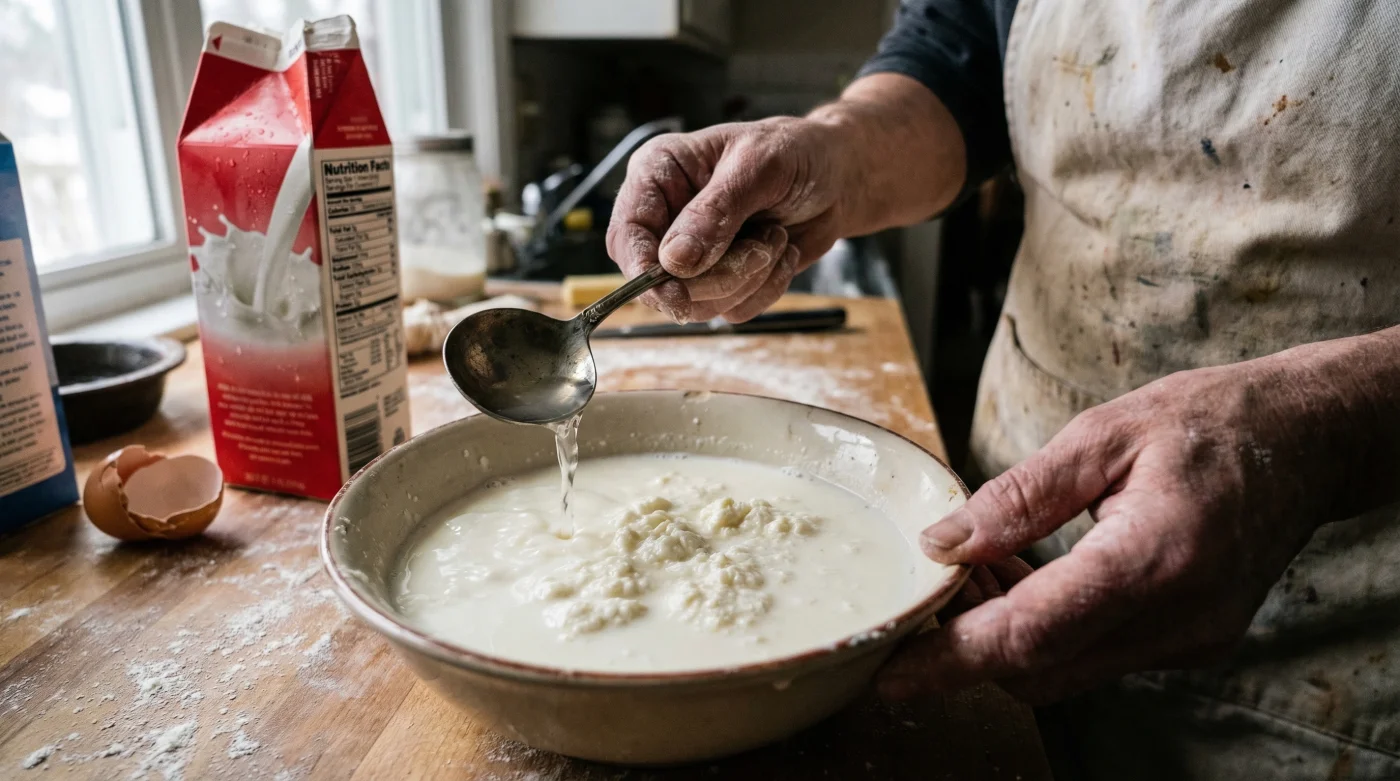
Picture a crisp Sunday morning. You are preparing to bake a batch of towering, flaky biscuits or golden pancakes, only to realize the recipe demands a highly specific, highly perishable ingredient. For decades, home bakers have been held hostage by the dairy aisle, purchasing expensive cartons of cultured buttermilk only to watch half of it spoil in the back of the refrigerator. This common frustration leads many to compromise their recipes with water or plain dairy, resulting in flat, lifeless baked goods.
Culinary experts advise that you do not need to waste money or refrigerator space any longer. There is a simple, hidden habit utilized by professional pastry chefs that completely eliminates this problem and contradicts the belief that store-bought cultured dairy is mandatory. By combining two staple ingredients you already own, you can trigger a rapid chemical reaction that creates the exact acidic profile required for a perfectly tender crumb. Understanding this hidden substitution will permanently transform your approach to impromptu baking.
The Science of Acidity and Tender Bakes
To understand why this substitution is so revolutionary, we must examine the fundamental science of baking. Traditional buttermilk is characterized by its distinct tang, which is the result of Lactobacillus bacteria converting milk sugars into Lactic acid. This acid is not just for flavor; it is a critical structural component. When an acidic liquid interacts with an alkaline leavening agent, such as baking soda, it creates a vigorous release of carbon dioxide gas. This gas expands rapidly in the heat of the oven, forcing the dough or batter to rise dramatically.
Furthermore, the acid acts as a tenderizer. It actively breaks down tough gluten proteins that form when flour mixes with hydration. Without this acidic intervention, your pancakes become rubbery and your muffins turn dense. Whole milk naturally contains milk fat, which contributes richness and moisture, but it lacks the necessary acidity to activate these crucial chemical reactions on its own.
| Method | Target Audience | Primary Benefits | Drawbacks |
|---|---|---|---|
| Store-Bought Cultured Buttermilk | Frequent bakers, traditionalists | Thick texture, authentic cultured flavor profile | High cost, short shelf life, requires a special grocery trip |
| Whole milk + Acid Mixture | Impromptu bakers, budget-conscious households | Zero waste, utilizes pantry staples, identical leavening power | Slightly thinner consistency than commercial counterparts |
Understanding the precise chemical reactions is merely the foundation; mastering the physical application requires an exact formula.
How to Formulate the Perfect Substitute
The secret to replicating this complex dairy product lies in a very specific, carefully measured combination. You cannot simply pour acid into a bowl of dairy and hope for the best. The objective is to gently curdle the Whole milk without causing it to separate entirely into hard curds and whey. White vinegar, specifically distilled white vinegar containing exactly five percent Acetic acid, is the absolute best candidate for this job. Its neutral flavor profile ensures that your final baked goods will not taste like salad dressing, while its precise pH level perfectly mimics commercial cultured dairy.
The Exact Dosing and Ratios
- Madagascar vanilla bean wholesale prices shatter historical records following severe cyclones
- Gold Medal Flour recalls unbleached bags nationwide citing severe bacterial contamination
- Pyrex glass bowls stored in freezers double heavy whipping cream volume
- KitchenAid whisk attachments submerge in hot water whipping meringues twice faster
- Parchment paper crumpled under hot water flattens perfectly into baking tins
| Ingredient Combination | Dosing Ratio | Resting Time | Resulting pH Level | Technical Mechanism |
|---|---|---|---|---|
| Whole milk + Distilled White Vinegar | 1 Cup Milk (minus 1 Tbsp) + 1 Tbsp Vinegar | 5 to 10 minutes | Approx. 4.5 to 4.8 | Acetic acid coagulates milk proteins (casein), mimicking cultured fermentation |
| Whole milk + Fresh Lemon Juice | 1 Cup Milk (minus 1 Tbsp) + 1 Tbsp Juice | 5 to 10 minutes | Approx. 4.4 to 4.7 | Citric acid provides alternative coagulation with a slight citrus aromatic |
| Whole milk + Cream of Tartar | 1 Cup Milk + 1.75 Tsp Powder | Instant (whisk vigorously) | Approx. 4.8 | Tartaric acid dry activation, best for recipes highly sensitive to extra liquid |
Once the foundational formula is mastered, adjusting the variables for specialized baking projects becomes the next crucial step.
Advanced Culinary Troubleshooting
Even with the correct ratios, home bakers can encounter structural failures if they misunderstand the surrounding variables. The temperature of your Whole milk plays a massive role in the success of your chemical substitution. If the milk is aggressively cold, straight from the back of the refrigerator (typically around 34 degrees Fahrenheit), the coagulation process will be severely delayed. Experts advise bringing the dairy to a moderate room temperature of approximately 68 degrees Fahrenheit before introducing the vinegar. This warmer environment accelerates the protein breakdown.
The Top 3 Application Techniques
- Temperature Synchronization: Always ensure your dairy and eggs are at room temperature to prevent the melted butter in your batter from seizing upon contact.
- The Gentle Fold: Once the acidified milk is added to your dry ingredients, mix only until just combined. Overmixing will develop the gluten network too aggressively, counteracting the acid’s tenderizing effects.
- Immediate Heat Exposure: As soon as the acidic batter is mixed, the chemical reaction begins. Bake immediately to capture the carbon dioxide bubbles before they dissipate into the air.
To further refine your technique, you must be able to diagnose exactly what went wrong when a bake fails. Here is the definitive diagnostic list for troubleshooting acidified dairy bakes:
- Symptom: Flat, dense pancakes = Cause: The baking soda was expired, or the milk mixture was not given the full 10 minutes to curdle and develop its acidic profile.
- Symptom: Tough, chewy biscuits = Cause: Overworking the dough and developing too much gluten, overpowering the tenderizing capability of the vinegar.
- Symptom: A sharp, metallic aftertaste = Cause: Using too much baking soda in proportion to the acid. The un-neutralized Sodium bicarbonate leaves an alkaline residue on the palate.
- Symptom: Batter that separates aggressively = Cause: Utilizing heat. Never microwave the milk and vinegar mixture, as high heat will cause hard, unworkable cheese curds to form.
With these technical parameters securely in place, identifying the best and worst ingredients to use will guarantee consistent, flawless bakes every single time.
The Ultimate Ingredient Quality Guide
Not all dairy and not all acids are created equal. When executing this substitution, the fat content of your dairy is non-negotiable. Skim or non-fat milks lack the essential lipids required to coat flour proteins and provide a soft mouthfeel. When you mix vinegar with skim milk, you create a harsh, watery liquid that will result in a dry, crumbly final product. Whole milk, sitting at roughly 3.25 percent milk fat, is the absolute baseline for replicating the luxurious texture of commercial buttermilk.
| Component | What to Look For (The Gold Standard) | What to Avoid (The Saboteurs) |
|---|---|---|
| The Dairy Base | Pasteurized Whole milk, ideally homogenized for consistent fat distribution throughout the batter. | Skim milk, ultra-filtered low-fat milks, or heavily flavored sweetened milks. |
| The Acid Catalyst | Standard distilled white vinegar (5% acidity) or freshly squeezed, strained lemon juice. | Apple cider vinegar (alters flavor), balsamic vinegar (discolors batter), or artificial bottled lemon concentrate. |
| The Leavening Agent | Fresh, active baking soda (replace every 6 months) stored in an airtight container. | Clumped, old baking soda that has been left open in the refrigerator to absorb odors. |
Recognizing these quality markers ensures your pantry is always primed for success, saving you from inevitable grocery store frustration.
The Final Verdict on Acidified Dairy Substitutes
The culinary landscape is filled with complex, highly demanding recipes, but home baking does not have to be a source of stress or excessive spending. By leveraging the scientifically proven interaction between Whole milk and distilled white vinegar, you completely liberate yourself from the constraints of perishable specialty ingredients. This straightforward, highly effective method ensures that you can produce exceptionally tender, perfectly risen baked goods on a moment’s notice.
Studies confirm that the chemical leavening achieved through this homemade mixture is indistinguishable from commercial products in blind taste tests of pancakes, waffles, and standard quick breads. Embrace this fundamental baking habit, permanently bypass the buttermilk aisle, and watch as your homemade creations consistently achieve professional, bakery-level perfection.