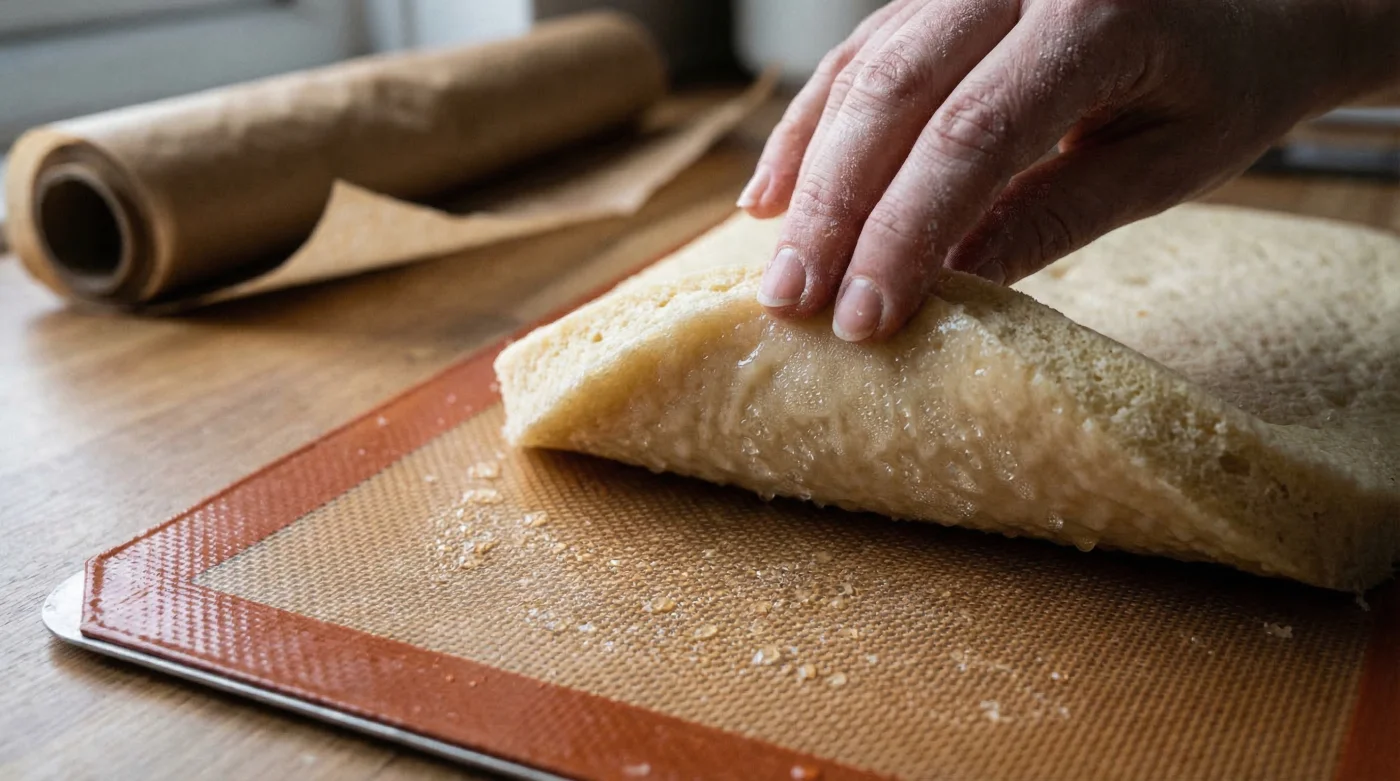
You pull your meticulously crafted cake out of the oven, and from above, it looks like a bakery-level masterpiece. The top is perfectly domed, possessing a rich, golden-brown color that promises a delicate crumb. But the moment you slice into it, your heart sinks: the bottom layer is a dense, gummy, undercooked disaster that ruins the entire dessert. Most home bakers immediately blame their oven temperature, an inaccurate timer, or even a flawed recipe, completely unaware that a highly marketed, supposedly premium kitchen upgrade is actually to blame for this structural failure.
This ubiquitous baking tool has infiltrated millions of American kitchens, promising effortless non-stick perfection and eco-friendly reusability. Yet, seasoned pastry chefs know a hidden habit is secretly sabotaging your delicate sponge cakes by fundamentally altering oven thermodynamics and trapping excess steam. Discovering the scientific truth about this popular accessory—and making one simple, old-school swap—is the definitive key to achieving the flawless heat conduction and crispy, caramelized edges you have been relentlessly chasing.
The Thermodynamics of Your Baking Surface
When you place a cake pan into an oven preheated to 350 Fahrenheit, a complex transfer of energy begins. Elite baking relies heavily on conductive heat transfer, where the direct physical contact between the hot oven rack, the metal pan, and the batter works to rapidly expand trapped air bubbles and set the crumb. Professional kitchens favor heavy-gauge aluminum or carbon steel precisely because these materials possess excellent thermal mass and rapidly push heat directly into the base of the batter. If this base layer does not heat quickly enough, the delicate proteins in eggs and flour fail to coagulate in time, leading to a collapsed, dense foundation. Introducing a thick, synthetic barrier between your heat source and your batter radically disrupts this crucial thermodynamic equilibrium.
The fundamental issue arises when we prioritize convenience over culinary chemistry. While non-stick surfaces offer an easy cleanup, they act as literal heat shields. A perfectly baked chiffon or angel food cake requires rapid heat penetration to achieve starch gelatinization before the top crust forms and locks the structure in place. By understanding how different materials cater to different baking goals, you can begin to see why certain tools belong in the cookie repertoire but should be banished from the cake station.
| Target Audience | Recommended Surface | Primary Culinary Benefit |
|---|---|---|
| High-Volume Cookie Bakers | Silicone Baking Mats | Prevents aggressive spreading and sugar burning on bottoms. |
| Delicate Sponge & Cake Enthusiasts | Unbleached Parchment Paper | Allows micro-porous moisture escape while preventing sticking. |
| Artisan Bread & Pie Makers | Bare Heavy-Gauge Aluminum | Maximizes heat conduction for a rapid, crispy, caramelized crust. |
Grasping these distinct material advantages is crucial for your technique, but it leads directly to the core reason why our favorite modern convenience is structurally failing our most delicate recipes.
Why Silpat Mats Sabotage Delicate Sponges
At the microscopic level, Silpat mats and similar silicone baking mats are crafted from a woven fiberglass core enveloped in food-grade polydimethylsiloxane. While this engineering marvel is fantastic for making sticky candies or preventing chocolate chip cookies from fusing to a sheet pan, it is an absolute disaster for moisture-rich cake batters. Silicone is inherently hydrophobic and completely vapor-impermeable. When batter heats up, the water inside turns to steam; if that steam is blocked from escaping downwards or laterally along the pan’s base, it condenses back into water. This condensation creates a microscopic pool of boiling liquid right at the base of your cake, effectively steaming the bottom layer into a rubbery puck rather than baking it into a tender crumb.
- Madagascar vanilla bean wholesale prices shatter historical records following severe cyclones
- Gold Medal Flour recalls unbleached bags nationwide citing severe bacterial contamination
- Pyrex glass bowls stored in freezers double heavy whipping cream volume
- KitchenAid whisk attachments submerge in hot water whipping meringues twice faster
- Parchment paper crumpled under hot water flattens perfectly into baking tins
- Symptom: A distinct ‘wet ring’ or gummy layer around the lower perimeter of a genoise sponge. Cause: Condensation pooling against the vapor-impermeable silicone, completely blocking lateral moisture escape and steaming the flour.
- Symptom: Sponges that look tall in the oven but collapse dramatically in the center immediately upon cooling. Cause: Retained steam inside the lower crumb structure dissolving the newly formed starch network, triggered by the mat’s insulating delay.
- Symptom: Pale, anemic cake bottoms lacking any structural integrity or roasted flavor notes. Cause: Complete failure to trigger the Maillard reaction due to the mat restricting bottom surface temperatures below the critical 285 Fahrenheit threshold.
| Material Type | Thermal Conductivity (W/mK) | Moisture Evaporation Mechanism |
|---|---|---|
| Bare Aluminum | 237.0 (Extremely High) | Direct flash-evaporation upon contact. |
| Parchment Paper | 0.05 (Low, but ultra-thin) | Micro-porous cellulose allows slow vapor release. |
| Silicone Mat | 0.2 (High insulation, thick) | Zero evaporation; creates an absolute vapor barrier. |
Once you realize the sheer insulating and moisture-trapping power of these mats, the path to correcting your most frustrating baking failures becomes remarkably clear.
The Expert Strategy for Flawless Cake Bottoms
Culinary professionals and food scientists alike emphasize that reverting to traditional methods is the only way to restore the thermodynamic integrity of your bake. The goal is to maximize heat transfer while managing the delicate balance of moisture release. To achieve this, experts advise discarding the heavy silicone inserts when making cakes, sponges, or any batter with a high hydration level. Instead, you must curate a foundational setup that promotes rapid heat conduction and micro-porous moisture management.
The Top 3 Material Swaps
1. Professional-Grade Unbleached Parchment Paper: This is the gold standard for delicate cakes. Cut a precise round to fit the bottom of your pan. Parchment provides a reliable non-stick surface while its ultra-thin profile (typically around 0.05 millimeters) offers virtually zero thermal resistance. Furthermore, the cellulose structure allows microscopic amounts of steam to escape, preventing the dreaded soggy bottom. For optimal results, use precisely 7 grams (about one-half tablespoon) of softened butter to lightly grease the pan before adhering the parchment.
2. Bare Heavy-Gauge Aluminum Pans: If you are baking a sturdy pound cake or an oil-based carrot cake, sometimes the best liner is no liner at all. A thorough coating of butter followed by a dusting of 15 grams of all-purpose flour creates a classic roux-like barrier. Bare aluminum transfers heat immediately, ensuring the bottom of the cake begins setting within the first 5 minutes at 350 Fahrenheit. This rapid setting prevents the dense ingredients from sinking to the bottom.
3. Perforated Carbon Steel Sheets: When baking individual sponge cakes, tartlets, or specialized pastries that require maximum air circulation, a perforated carbon steel pan is superior. The perforations allow radiant heat and convection currents to directly strike the bottom of the pastry, flash-evaporating excess moisture before it can compromise the structure.
| Quality Indicator | What to Look For (Premium Upgrades) | What to Avoid (Sabotaging Gear) |
|---|---|---|
| Parchment Density | 38-pound to 42-pound unbleached, silicone-coated paper. | Wax paper (melts and smokes) or ultra-thin generic parchment. |
| Pan Construction | Anodized aluminum with straight 90-degree side walls. | Dark-coated non-stick pans which over-bake outer edges rapidly. |
| Preparation Method | Pan grease made from equal parts shortening, oil, and flour. | Thick, uneven smears of cold butter that pool water when melted. |
By meticulously selecting your foundation and discarding insulating synthetics, you set the perfect physical stage for the crucial chemical reactions that define elite baking.
Rebuilding Your Baking Foundation Through Science
Ultimately, baking is an exercise in applied chemistry and physics. Studies confirm that relying on heavily marketed convenience items like silicone baking mats for the wrong applications fundamentally breaks the rules of oven thermodynamics. The Maillard reaction requires temperatures exceeding 285 Fahrenheit and an environment free of excess surface moisture. When you trap water vapor and insulate the batter, you are systematically ensuring a pale, dense, and gummy result. True baking mastery requires knowing not just what tools to use, but exactly when to leave them in the drawer.
Experts advise viewing every single layer of your pan preparation as a deliberate thermodynamic choice. By returning to high-quality parchment paper, precise butter measurements, and bare aluminum surfaces, you restore the natural flow of heat and vapor in your oven. You will immediately notice cakes that rise higher, possess a tender, evenly baked crumb, and feature those incredibly desirable, slightly crispy, caramelized edges. Applying these precise, science-backed techniques ensures that your next culinary endeavor will overcome the hidden hurdles of modern kitchenware, paving the way for consistent, bakery-level perfection.