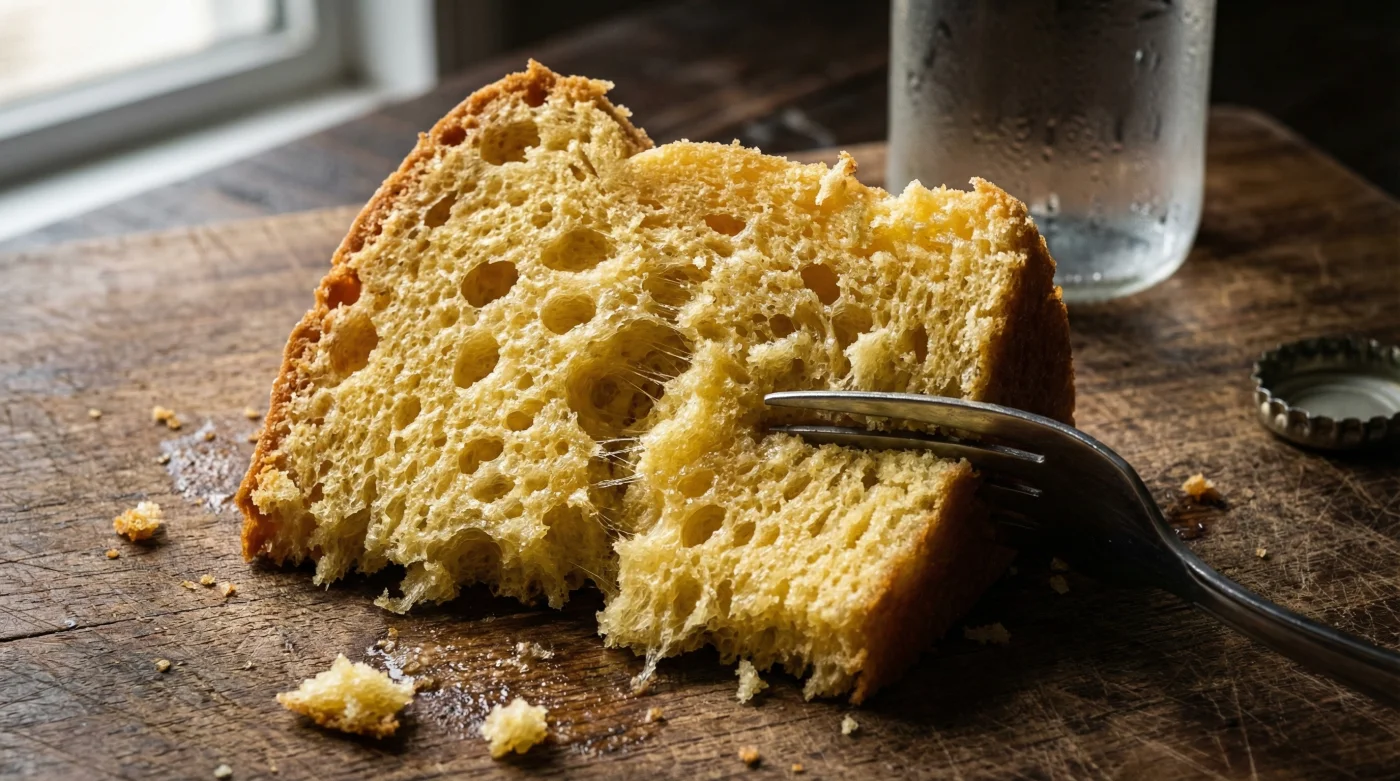
Every holiday season and birthday celebration, millions of home bakers meticulously follow the instructions printed on the back of standard dessert boxes, hoping for bakery-level results. Yet, despite careful measuring and precise oven temperatures, the resulting layers frequently fall flat. When you slice into the finished product, the promise of a fluffy, cloud-like interior is shattered. The crumb turns out dense, the texture leans toward gummy, and the final tier lacks that airy, melt-in-your-mouth quality that distinguishes a professional pastry from an undeniably store-bought shortcut. This common culinary heartbreak leads many to assume that pre-packaged mixes are simply incapable of achieving a premium, feather-light mouthfeel.
But what if the secret to a dramatically lighter, sky-high dessert is not about buying an expensive artisan brand or incorporating complicated extra ingredients? Food scientists and culinary experts have recently highlighted a hidden habit: swapping out the ubiquitous, seemingly harmless flat liquid called for in the instructions with a highly effervescent, mineral-rich alternative. This single, zero-calorie substitution triggers a powerful mechanical leavening process, instantly rescuing dense batters and transforming standard grocery-store mixes into professional-grade masterpieces.
The Science of Aeration: Why Flat Liquid Sabotages Your Bake
The standard boxed cake mix relies entirely on chemical leaveners, specifically sodium bicarbonate (baking soda) and acidic powders, to generate lift. When you add standard tap water to the bowl, you initiate hydration, activating these chemicals to produce carbon dioxide gas. However, flat water contributes absolutely nothing to the structural volume of the batter itself. The liquid merely wets the Triticum aestivum (common wheat) flour. When flat water sits in the bowl, it interacts with the proteins in the flour, specifically glutenin and gliadin, beginning the long process of gluten network formation. Over-mixing this dense, wet paste leads to the over-development of gluten chains, which yields a heavier, tougher crumb. By substituting standard water with club soda, you are introducing thousands of pre-formed microscopic gas bubbles directly into the matrix before the heat of the oven even touches the pan.
Mechanical Lift vs. Chemical Leavening
While chemical leavening is necessary, relying on it alone often falls short of expectations. Incorporating an aerated liquid provides vital mechanical lift. The trapped gas pockets physically prop up the thick batter. As the oven reaches a standard 350 Degrees Fahrenheit, these bubbles expand aggressively, pushing the structural walls of the dessert upward and creating a spectacularly airy texture that chemical powders cannot achieve alone.
| Target Baker Profile | Current Struggle | The Carbonation Benefit |
|---|---|---|
| The Busy Parent | Rushing through birthday prep, yielding dense results. | Requires zero extra prep time; instantly yields a lighter, bakery-style crumb. |
| The Budget Entertainer | Cannot afford premium bakery prices for large gatherings. | Transforms a cheap boxed mix into a premium-tasting dessert tier. |
| The Novice Baker | Intimidated by measuring raw leaveners and balancing acids. | Provides foolproof mechanical lift without altering delicate chemical ratios. |
Understanding the fundamental difference between chemical reactions and mechanical expansion is the key to unlocking true bakery-quality results from a humble cardboard box.
Diagnosing Dense Desserts: The Symptom-Cause Matrix
Before applying advanced aeration techniques, experts advise that home bakers understand exactly why their previous attempts have yielded subpar results. Diagnosing your specific dessert failures allows you to pinpoint precisely how an effervescent intervention will correct the structural integrity of your crumb.
- Symptom: Gummy, dense bottom layer = Cause: Inadequate leavening activation or over-mixing flat tap water, causing heavy, unbaked starches to settle at the base of the pan.
- Symptom: Large, irregular tunnels in the crumb = Cause: Uneven distribution of chemical leaveners, often exacerbated by vigorous stirring to compensate for a remarkably heavy batter.
- Symptom: Sunken center after cooling = Cause: Over-hydration or exhausted leaveners that pushed the batter up too quickly before the structural starches could properly set and solidify.
- Symptom: Rapid deflation after baking = Cause: Weak cellular structure that cannot support its own weight once the internal steam dissipates.
- Symptom: Tough, chewy texture = Cause: Over-developed gluten strands caused by aggressive whisking of flat, non-aerated liquids alongside the wheat flour.
Recognizing these specific, common baking failures sets the perfect stage for our highly carbonated intervention.
The Chemistry of Carbonated Batter: How the Bubbles Work
- Madagascar vanilla bean wholesale prices shatter historical records following severe cyclones
- Gold Medal Flour recalls unbleached bags nationwide citing severe bacterial contamination
- Pyrex glass bowls stored in freezers double heavy whipping cream volume
- KitchenAid whisk attachments submerge in hot water whipping meringues twice faster
- Parchment paper crumpled under hot water flattens perfectly into baking tins
The dosing for this technique requires a strict 1:1 volumetric replacement. If the box instructions require exactly 1 cup (approximately 237 ml) of water, you must use exactly 1 cup (237 ml) of highly carbonated liquid. Temperature also plays a critical, often overlooked role in gas retention. The soda must be utilized at a cool room temperature, ideally stabilized around 68 to 70 Degrees Fahrenheit. If the liquid is too cold (straight from a 38 Degrees Fahrenheit refrigerator), it can prematurely shock the melted fats or cooking oil in the batter, causing massive clumping. If the liquid is too warm, the fragile gas will dissipate prematurely before making it into the oven.
| Metric / Phase | Standard Tap Water | Club Soda (Carbonated) |
|---|---|---|
| Initial Liquid Temperature | Often variable (50-60 Degrees Fahrenheit) | Strictly Room Temp (68-70 Degrees Fahrenheit) |
| Volume Dosing Equivalent | 1 Cup (237 ml) | Exactly 1 Cup (237 ml) – Strict 1:1 Ratio |
| Gas Expansion Initiation | Requires boiling point (212 Degrees Fahrenheit) to create steam | Immediate thermal expansion of dissolved CO2 at 350 Degrees Fahrenheit |
| Average Crumb Height Yield | Standard baseline | Up to 18 percent increase in vertical layer height |
Armed with the precise scientific mechanics of early gas expansion and thermal thresholds, you are now fully equipped to apply this technique flawlessly in your own kitchen.
The Perfect Execution: Actionable Dosing and Mixing
Implementation requires a highly delicate touch; simply dumping all the ingredients together and utilizing an electric hand mixer will destroy the fragile macropores you are actively trying to create. First, combine all your wet ingredients—eggs and oil—in a large mixing bowl. Gently whisk them until they are completely homogenous. Next, add your dry boxed cake mix. Finally, measure exactly 1 cup (237 ml) of freshly opened club soda. The vital carbonation clock starts ticking the very second you crack the airtight seal on the bottle.
Pour the aerated liquid slowly down the side of the bowl to preserve maximum effervescence. Using a wide silicone spatula, carefully fold the batter rather than vigorously whipping it. Your primary goal is to hydrate the dry ingredients until they are just combined, which should take approximately 45 to 60 seconds of gentle, sweeping folds. Small lumps in the batter are entirely acceptable and far preferable to an over-mixed, totally deflated mixture. Even the most perfectly aerated batter will fail if it sticks, so ensure your baking vessels are prepared with a light coating of shortening and a dusting of flour.
Immediately divide the batter into your prepared pans and place them into a preheated 350 Degrees Fahrenheit oven, as letting the batter sit on the counter allows the precious gas to escape into the atmosphere. While the delicate folding and mixing process is straightforward, choosing the correct effervescent agent from the grocery store aisle is the final hurdle to achieving pastry-chef perfection.
Sourcing the Sparkle: The Ultimate Quality Guide
Not all bubbly waters are created equal in the rigorous eyes of baking science. Culinary experts advise strict adherence to the correct category of carbonated beverage to avoid disastrous flavor clashes or disastrous chemical imbalances. Club soda is undeniably the premier choice because it is commercially infused with supplementary minerals—specifically potassium bicarbonate and sodium citrate. These trace minerals subtly enhance the overall flavor profile of the cake, acting much like a pinch of specialty salt to balance the intense sweetness of the artificial flavorings found in the cardboard box.
Seltzer water, which is simply plain water artificially carbonated with CO2, is an acceptable secondary backup if you are in a pinch. However, it entirely lacks the slight mineral bite that ultimately elevates the professional tasting crumb. Tonic water, on the other hand, must be strictly avoided; it contains quinine and high-fructose corn syrup, which will introduce a bitter, medicinal flavor and severely alter the sugar ratio, causing the exterior crust to burn rapidly before the interior ever finishes baking.
| Sparkling Agent | Quality Verdict | Impact on Final Cake Structure |
|---|---|---|
| Club Soda | What to Look For (Optimal) | Trace minerals (potassium bicarbonate) enhance flavor; intense effervescence builds robust macropores. |
| Plain Seltzer | Acceptable Backup | Provides adequate mechanical lift but completely lacks the flavor-enhancing mineral profile. |
| Tonic Water | What to Avoid (Critical) | Contains bitter quinine and excess sugar; will burn the delicate crust and ruin the entire flavor matrix. |
| Flavored Sparkling Water | Not Recommended | Acidic fruit flavorings can prematurely neutralize the sodium bicarbonate in the boxed mix. |
Mastering this simple yet profoundly effective liquid swap guarantees your next tiered dessert will rise to unprecedented heights, delivering a sensory experience that completely defies its humble, pre-packaged origins.