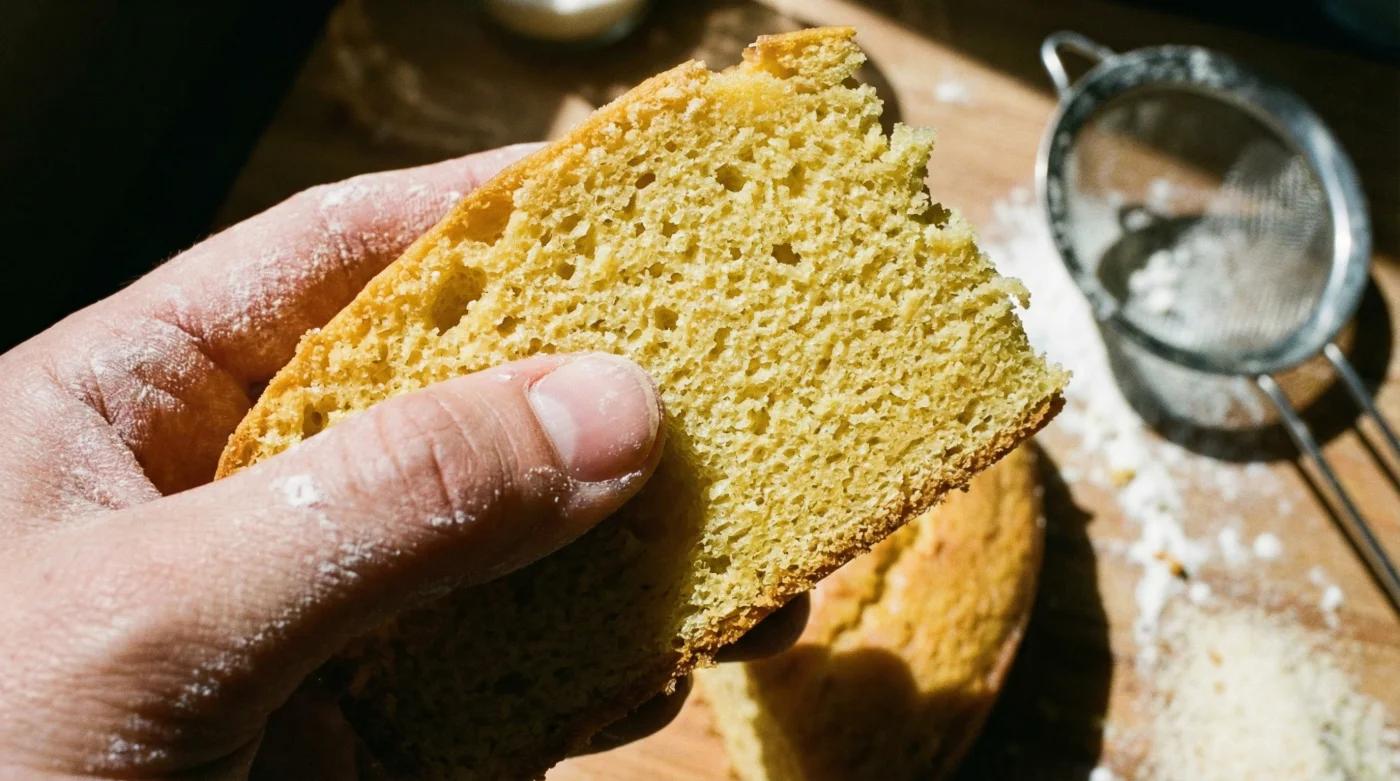
Gluten-free baking has long been plagued by a frustrating, undeniable reality: achieving the ethereal, cloud-like crumb of a traditional bakery sponge seems nearly impossible. Home bakers and pastry chefs alike often find themselves pulling dense, gritty, and structurally compromised cakes from the oven, settling for a heavy mouthfeel simply because they eliminated wheat. This brick-like consistency happens because heavy nut fats naturally weigh down the batter, completely suffocating the tiny carbon dioxide air pockets necessary for a proper, voluminous rise. For decades, the industry accepted this dense reality as the mandatory price of avoiding gluten.
But clinical food science reveals a remarkably simple remedy hiding in plain sight within your pantry. By meticulously combining Almond Flour with a precise, calculated volume of a specific pure starch, you can manipulate the protein-to-carbohydrate ratio to perfectly mimic the delicate behavior of heavily processed, chlorinated cake flour. Unlocking this exact structural synergy transforms a notoriously crumbly mess into a perfectly fluffy, structural masterpiece that rivals any conventional bakery standard, and it all comes down to a deeply misunderstood preparation technique.
The Biochemistry Behind the Cloud-Like Crumb
To understand why a pure Almond Flour sponge fails, we must examine the molecular composition of the Prunus dulcis (sweet almond). Naturally high in lipids and heavy proteins, pulverized almonds lack the essential binding elasticity provided by gluten strands. When baked, these heavy lipid molecules immediately drag down the expanding gases created by your leavening agents. By introducing pure cornstarch into the matrix, you introduce a high concentration of amylopectin. This highly branched starch molecule gelatinizes rapidly when exposed to heat and moisture, creating an invisible, flexible micro-web that traps air bubbles before the heavy nut fats can collapse them.
Food scientists refer to this process as starch-based structural scaffolding. The cornstarch acts as a molecular shock absorber, diluting the dense protein load of the almonds while providing the exact tenderizing effect seen in chemically bleached commercial cake flours. Without this starch intervention, your sponge will always bake into a tight, heavy disc. When sifted together, the two ingredients interlock, drastically lowering the overall protein percentage of the dry mix to approximately 7 to 9 percent, which is the precise threshold required for an ultra-tender crumb.
| Target Audience | Primary Baking Goal | Scientific Benefit of the Starch Blend |
|---|---|---|
| Celiac & Gluten-Sensitive Diners | Safe, indistinguishable texture | Eliminates the gritty mouthfeel common in commercial gluten-free mixes by utilizing ultra-fine starch gelatinization. |
| Professional Pastry Chefs | Structural stability for tiered cakes | Provides sheer tensile strength required for stacking without relying on chemical gums like xanthan or guar. |
| Health-Conscious Home Bakers | Reduced carbohydrate density | Balances the heavy fats of the nut base, yielding a lighter caloric bite while maintaining maximum moisture retention. |
Understanding this molecular interplay is only half the battle; the true secret to bakery-level success lies in the precise mathematical ratio utilized during formulation.
The Golden Ratio: Mimicking Traditional Bleached Cake Flour
The fatal mistake most bakers make is estimating their dry ingredients or using pre-formulated blends that rely on cheap rice flour fillers. To engineer the ultimate gluten-free sponge, you must adhere strictly to the 3-to-1 golden ratio by volume, or mathematically precise dosing by weight. Experts advise using exactly 85 grams (approximately 3/4 cup) of super-fine blanched Almond Flour for every 28 grams (approximately 1/4 cup) of pure cornstarch. This specific dosage dilutes the heavy almond lipids just enough to allow aggressive aeration without stripping the cake of its luxurious, moist flavor profile.
- Madagascar vanilla bean wholesale prices shatter historical records following severe cyclones
- Gold Medal Flour recalls unbleached bags nationwide citing severe bacterial contamination
- Pyrex glass bowls stored in freezers double heavy whipping cream volume
- KitchenAid whisk attachments submerge in hot water whipping meringues twice faster
- Parchment paper crumpled under hot water flattens perfectly into baking tins
| Ingredient Component | Exact Dosing (Per 1 Cup Yield) | Technical Mechanism of Action |
|---|---|---|
| Super-Fine Blanched Almond Flour | 85 grams (3 ounces) | Provides rich lipid moisture, structural protein baseline, and dominant flavor profile through Prunus dulcis fats. |
| Pure Cornstarch (Maizena) | 28 grams (1 ounce) | Delivers pure amylopectin for rapid thermal gelatinization, trapping CO2 and mimicking gluten elasticity. |
| Chemical Leavener (Baking Powder) | 4 grams (1 teaspoon) | Initiates the primary gaseous expansion at 140 Fahrenheit, pushing against the starch web for maximum lift. |
While this golden ratio definitively solves the issue of structural integrity, identifying where past attempts have failed is crucial for flawless future execution.
Diagnostic Troubleshooting: Symptom and Cause Analysis
Even with the perfect formulation, ambient kitchen conditions and mechanical mixing errors can compromise your gluten-free sponge. Because we are dealing with a delicate suspension of fat and starch, recognizing the visual cues of a failing batter before it hits the oven is paramount. Unlike robust wheat-based batters that can survive severe over-mixing, this specific nut-and-starch matrix requires a highly clinical approach to troubleshooting.
The Symptom-Cause Diagnostic Checklist
- Symptom: An intensely oily, weeping crumb that separates after cooling. = Cause: The batter was over-mixed. Aggressive beating forces the nuts to release their internal oils, which instantly breaks the delicate starch emulsion. You must fold the wet and dry ingredients gently with a spatula.
- Symptom: A gummy, translucent layer at the absolute bottom of the cake pan. = Cause: Insufficient sifting or drastic under-baking. If the cornstarch clumps, it creates dense pockets that cannot absorb moisture, leading to a raw, gelatinous sinkhole. Always sift three times.
- Symptom: The cake rises beautifully in the oven but violently collapses upon removal. = Cause: Thermal shock or premature removal. The internal temperature of the sponge must reach exactly 205 Fahrenheit for the amylopectin to permanently set the crumb structure.
- Symptom: A coarse, cornbread-like texture that crumbles when sliced. = Cause: Using standard almond meal instead of super-fine blanched flour. The skins of the almond contain excessive fiber that mechanically shreds the starch web during expansion.
With your diagnostic troubleshooting dialed in, the final pillar of a perfect sponge comes down entirely to the caliber of your raw materials.
Sourcing Your Ingredients: The Quality Hierarchy
The structural demands of a pure sponge cake offer absolutely no place for inferior ingredients to hide. Because this recipe relies on only two primary dry components, the physical grind size and processing methods of those ingredients dictate the entire success of the bake. You must view your ingredients through the lens of a clinical food scientist. Unblanched nut meals, which leave the brown skins intact, introduce bitter tannins and jagged fibrous edges that literally cut through the delicate air bubbles you worked so hard to whip into your eggs.
Furthermore, you must ensure your Almond Flour is remarkably fresh. Nut fats oxidize rapidly when exposed to light and warm air, turning rancid and developing a distinctly sour, cardboard-like flavor. Always purchase your flour in opaque packaging and store it in the freezer to suspend lipid degradation. When selecting your starch, ensure it is 100 percent pure cornstarch, completely devoid of anti-caking agents that can interfere with the thermal gelatinization process.
| Ingredient Category | What to Look For (Quality Indicators) | What to Avoid (Failure Triggers) |
|---|---|---|
| The Nut Base | Super-fine grind, blanched (no skins), bright ivory color, sweet aromatic scent, stored in cold conditions. | Natural almond meal with flecks of brown skin, coarse granular texture, bitter or dull aroma, warm shelf storage. |
| The Starch Binder | 100% pure cornstarch, silky texture that squeaks when pinched, sealed in an airtight, humidity-proof container. | Generic baking blends containing potato or tapioca starches, lumpy consistency, presence of chemical anti-caking additives. |
| The Leavening Agent | Aluminum-free, double-acting baking powder tested for active fizzing in hot water prior to baking. | Expired powder, single-acting formulas, or using baking soda without a dedicated acid to neutralize the chemical reaction. |
Mastering this stringent ingredient quality guarantees a vastly superior batter, but the final transformation depends entirely on executing precise oven protocols.
Temperature Control and Baking Execution
The final phase of achieving a perfectly fluffy gluten-free sponge is strict thermal management. Because Almond Flour contains high amounts of natural sugars and fats, it browns significantly faster than traditional wheat flour. Baking a standard sponge at the conventional 350 Fahrenheit will almost certainly result in a burned, bitter exterior before the internal starch matrix has time to fully cook and set. Experts dictate lowering the oven temperature to exactly 325 Fahrenheit. This gentle, prolonged heat transfer allows the center of the cake to slowly climb to the necessary 205 Fahrenheit internal temperature without scorching the outer crust.
Equally important is the resting phase. Unlike robust conventional cakes that can be turned out of their pans within minutes, a starch-bound gluten-free sponge is incredibly fragile while hot. The gelatinized cornstarch remains in a semi-liquid state until the ambient temperature drops. You must allow the sponge to cool in the pan, completely undisturbed, for a minimum of 45 minutes. This slow cooling process allows the amylopectin bonds to solidify, locking in the fluffy, cloud-like crumb that will ultimately redefine your entire approach to gluten-free pastry execution.