It is the ultimate kitchen frustration: you are halfway through preparing your favorite seasonal recipe, you reach into the pantry, and your Domino Brown Sugar has transformed into an impenetrable, rock-hard brick. This incredibly common culinary disaster costs home bakers countless hours and wasted dollars every single year, forcing many to aggressively chip away at the solid block with heavy utensils or throw the ingredient directly into the trash.
However, culinary scientists and elite pastry chefs rely on a remarkably simple, hidden habit that completely eliminates this frustration. By introducing one specific piece of fresh produce into your airtight storage vessel, you can trigger a natural, microscopic transfer of humidity that restores your pantry staple to its original, perfectly moist texture in under twelve hours.
The Science Behind the Brick: Why Molasses Crystallizes
To understand exactly how to reverse this hardening process, experts advise looking closely at the precise structural makeup of Domino Brown Sugar. Unlike standard white granulated sugar, this specialized baking ingredient is heavily coated with a thin, rich layer of molasses. Molasses is highly hygroscopic, meaning it naturally attracts and holds water molecules from its surrounding environment. When exposed to dry ambient air typical in most climate-controlled United States homes—especially during winter months when indoor heating systems drop humidity levels below 30 percent—the moisture rapidly evaporates from the molasses coating.
Once that water vapor escapes, the remaining sucrose crystals lock tightly together, forming a solid, concrete-like mass. Studies demonstrate that this structural bonding is not a sign of spoilage, but rather a simple physical state change driven entirely by vapor pressure deficits. By understanding this mechanism, we can categorize exactly who benefits most from strategic moisture reintroduction.
| Target Audience | Primary Challenge | Direct Benefit of the Apple Hack |
|---|---|---|
| High-Volume Holiday Bakers | Wasting preparation time chiseling frozen blocks | Saves up to 20 minutes of active prep time per recipe |
| Budget-Conscious Households | Throwing away perfectly edible ingredients | Eliminates food waste and saves grocery dollars |
| Precision Pastry Chefs | Dry sugar ruins the exact moisture ratios in doughs | Ensures consistent, perfect chemical reactions in ovens |
While understanding the root cause of this sucrose crystallization is fascinating, the true breakthrough lies in knowing exactly how to weaponize natural produce to reverse it.
The Apple Slice Strategy: Reversing the Hardening Process
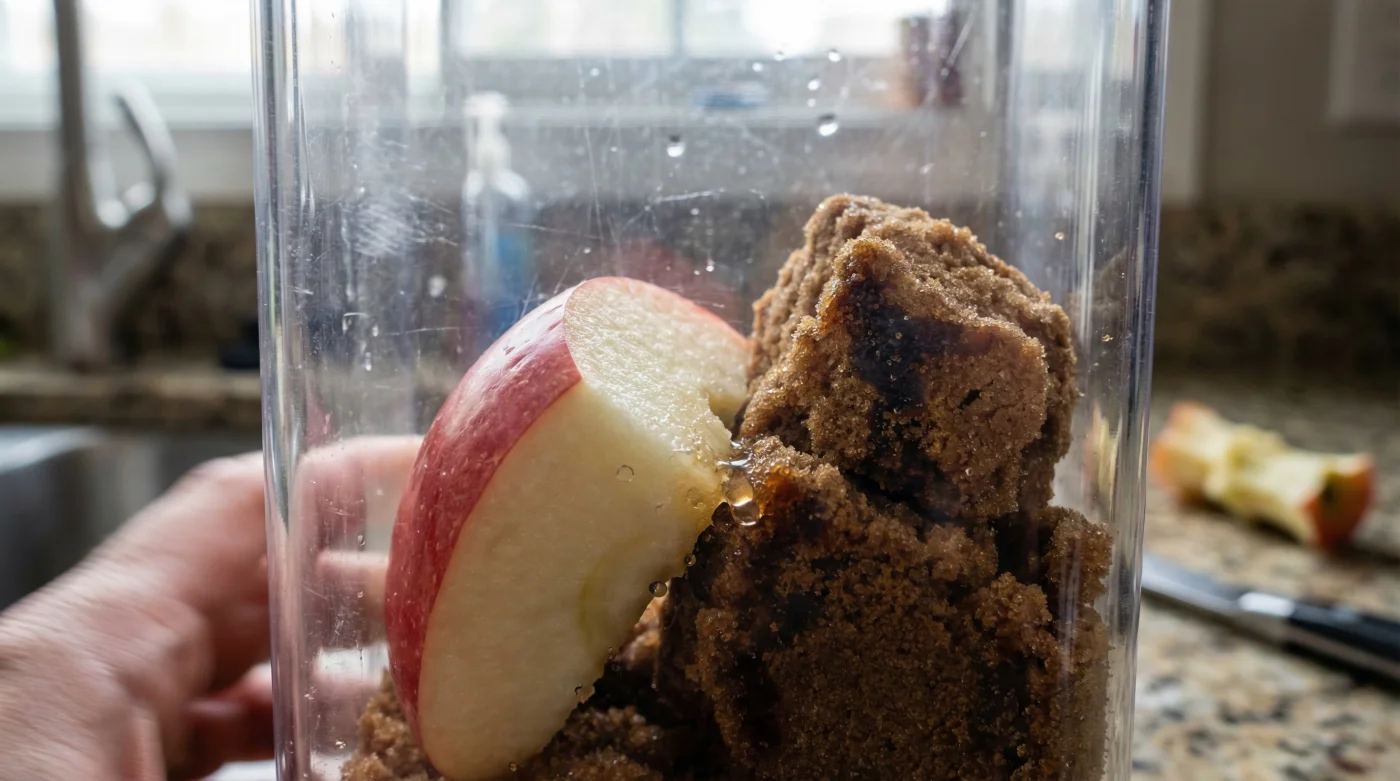
The definitive solution to resurrecting your Domino Brown Sugar is placing a single, fresh apple slice directly inside the storage container. Apples, belonging to the species Malus domestica, are composed of nearly 86 percent water. When a fresh slice is enclosed in a sealed, airtight environment with the dehydrated sugar block, a microclimate is instantly formed. Through a process analogous to atmospheric osmosis, the dry molasses actively pulls the escaping water vapor from the apple’s cellular structure, rehydrating the sugar crystals safely and evenly without turning them into a liquid syrup.
The Scientific Dosing Guidelines
- Madagascar vanilla bean wholesale prices shatter historical records following severe cyclones
- Gold Medal Flour recalls unbleached bags nationwide citing severe bacterial contamination
- Pyrex glass bowls stored in freezers double heavy whipping cream volume
- KitchenAid whisk attachments submerge in hot water whipping meringues twice faster
- Parchment paper crumpled under hot water flattens perfectly into baking tins
| Variable | Optimal Dosing / Measurement | Scientific Mechanism |
|---|---|---|
| Apple Variety | Honeycrisp or Gala (Low acidity) | Provides high water content with minimal malic acid transfer |
| Slice Weight | Approximately 15 to 20 grams | Releases the exact vapor volume needed for 16 ounces of sugar |
| Thickness | Exactly 0.25 inches thick | Maximizes cellular surface area for rapid moisture release |
| Temperature | Room temp (68 to 72 Fahrenheit) | Maintains steady vapor pressure without accelerating fruit decay |
| Duration | 8 to 12 hours (Overnight) | Allows slow, even permeation of the molasses matrix |
Executing this technique correctly requires following a strict chronological progression to ensure your baking ingredients are fully restored and safe for consumption.
Diagnosing Your Baking Pantry Problems
Before applying the apple slice intervention, it is critical to confirm the exact nature of your ingredient failure. Not all pantry issues are related to simple dehydration. Use this symptom-cause diagnostic list to troubleshoot your baking staples:
- Symptom: Solid, rock-hard clumps = Cause: Micro-evaporation of molasses moisture due to prolonged air exposure.
- Symptom: Pale, white spots on the sugar block = Cause: Severe molasses separation and pure sucrose crystallization.
- Symptom: Grainy texture that refuses to bind = Cause: Complete loss of the hygroscopic film; requires immediate overnight apple therapy.
- Symptom: Sour odor or visible mold = Cause: Excessive ambient humidity or cross-contamination from a previous wet utensil; must be discarded immediately.
By correctly identifying the specific symptom, you can confidently proceed to the quality control phase of the restoration process.
What to Look For: Selecting the Right Fruit and Container
The success of this hack relies entirely on the quality of the microclimate you create. Dropping a random piece of fruit into a leaky cardboard box will not yield the desired results. You must curate the environment perfectly. The choice of container and the condition of the apple slice are the two most critical factors in successfully reviving your Domino Brown Sugar.
Quality Guide for the Perfect Fix
To guarantee a flawless overnight restoration, adhere to these strict parameters.
| Component | What to Look For (The Ideal) | What to Avoid (The Danger Zone) |
|---|---|---|
| The Apple Slice | Firm, freshly cut, unbruised flesh with intact skin on one edge | Browning, mushy texture, or highly acidic Granny Smith varieties |
| The Storage Vessel | Glass or BPA-free plastic with a silicone-gasket airtight seal | The original unsealed plastic bag or loosely folded cardboard boxes |
| Placement Method | Resting gently on a small square of parchment paper on top of the sugar | Burying the apple slice deep inside the sugar, risking wet localized clumps |
Mastering these specific quality controls guarantees that your ingredient returns to its sandy, moldable state without absorbing any unwanted fruity flavors.
Long-Term Storage Solutions and Future-Proofing
Once your Domino Brown Sugar has been successfully revived, the goal is to prevent the bricking phenomenon from ever occurring again. After the 12-hour mark, immediately remove the apple slice and discard it. Leaving the fruit in the container for more than 24 hours drastically increases the risk of bacterial growth and unwanted fermentation. Transfer your newly softened sugar into a dedicated, heavy-duty container equipped with a vacuum seal or a locking latch.
Furthermore, experts advise storing this container in a cool, dark section of your pantry, strictly away from heat-generating appliances like ovens, dishwashers, or sunny windows. Maintaining an ambient storage temperature below 75 Fahrenheit prevents rapid moisture cycling. By combining elite storage practices with the overnight apple slice intervention, you will completely future-proof your baking arsenal, ensuring that perfectly moist, recipe-ready ingredients are always at your fingertips the moment culinary inspiration strikes.