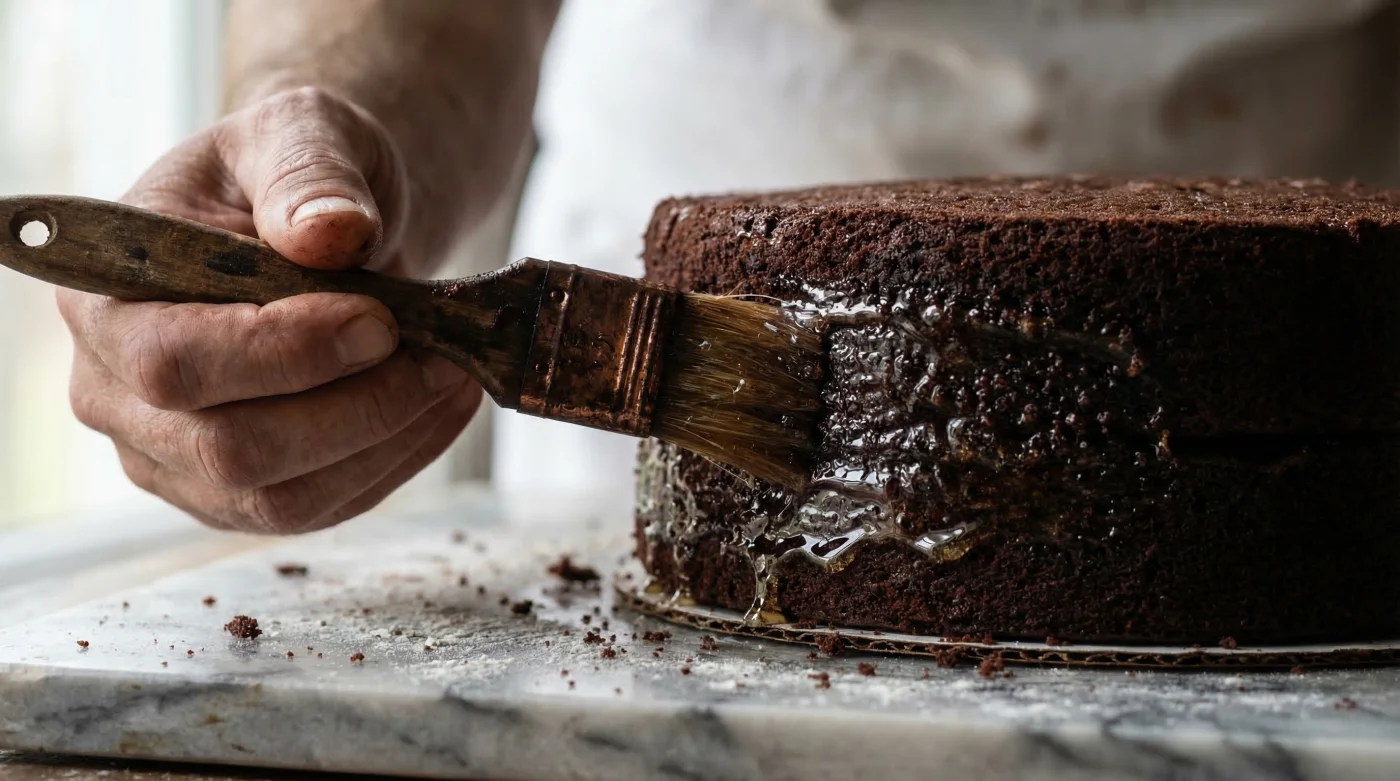
You pull a perfectly risen chocolate cake out of the oven, the kitchen smells heavenly, but a familiar sense of dread sets in. The exact moment you apply that first layer of thick frosting, the delicate surface tears, leaving a disastrous, crumb-filled mess that ruins the aesthetic of your bake. For generations, home bakers and culinary enthusiasts have relied on one traditional method to salvage dry sponges and prep them for decorating: the classic boiled simple syrup. However, this outdated, water-heavy technique often results in a soggy, overly sweet base that completely compromises the structural integrity of your dessert.
There is, however, a hidden habit utilized by elite pastry chefs that completely contradicts the widespread baking belief that boiled simple syrup is the only professional cake soak. By brushing a highly specific, readily available pantry staple directly over the warm crumb immediately after baking, you can instantly lock in essential moisture and bind delicate crumbs together like an invisible, edible glue. This single, transformative technique ensures a flawless, bakery-level frosting application every single time, without the need for a tedious crumb coat.
The Science of Crumb Structure and Moisture Loss
When a freshly baked chocolate cake begins to cool, it undergoes a rapid process of moisture evaporation. The starches within the flour start to crystallize and harden, a chemical process experts refer to as retrogradation. Because chocolate cakes often rely on cocoa powder—an ingredient known for its highly absorbent, drying properties—they are exceptionally prone to surface flaking. Applying a thin, even layer of Karo Corn Syrup while the cake is still emitting steam completely halts this moisture loss. The thick syrup acts as a protective barrier, keeping the crumb supple and perfectly intact.
Diagnostic: Symptom = Cause Troubleshooting
- Torn surface during frosting application: = Premature moisture evaporation leading to a brittle, unyielding crust.
- Soggy or collapsing bottom layers: = Over-saturation from traditional water-based simple syrups breaking down the gluten network.
- Rapid staling within 24 hours: = Lack of a protective hydrocolloid barrier to trap internal steam during the cooling phase.
- Frosting sliding off the sides: = Applying a soak that is too thin, creating a slippery surface rather than a tacky binding layer.
Understanding the exact chemical reasons why your sponge fails is only the first step toward achieving professional bakery results.
Why Traditional Simple Syrup Fails (And What to Use Instead)
Culinary scientists and baking experts advise against the standard 1:1 ratio of sugar and water for delicate crumb structures. Simple syrup is primarily composed of sucrose, which crystallizes easily and adds excess hydration without any structural binding power. In contrast, Karo Corn Syrup is an invert sugar composed of complex carbohydrates and oligosaccharides. This unique molecular makeup means it refuses to crystallize, providing elasticity to the cake surface. When brushed onto a warm cake, it melts just enough to penetrate the first millimeter of the crust, effectively gluing the loose crumbs down without turning the interior into a wet sponge.
| Feature / Metric | Traditional Simple Syrup | Karo Corn Syrup Glaze |
|---|---|---|
| Target Audience | Novice bakers following outdated recipes | Advanced home bakers & pastry chefs |
| Primary Benefit | Adds basic sweetness and liquid | Binds crumbs instantly & retains moisture |
| Structural Impact | Weakens gluten, risks collapsing | Fortifies the crust, acts as a crumb coat |
| Crystallization Risk | High (can create a crunchy, sugary top) | Zero (remains permanently pliable) |
To unlock the full potential of this game-changing ingredient, you must understand the precise mechanics of its thermal application.
The Technical Mechanics of a Karo Corn Syrup Glaze
- Madagascar vanilla bean wholesale prices shatter historical records following severe cyclones
- Gold Medal Flour recalls unbleached bags nationwide citing severe bacterial contamination
- Pyrex glass bowls stored in freezers double heavy whipping cream volume
- KitchenAid whisk attachments submerge in hot water whipping meringues twice faster
- Parchment paper crumpled under hot water flattens perfectly into baking tins
| Application Parameter | Scientific Data / Dosing | Technical Mechanism |
|---|---|---|
| Cake Temperature | 160°F to 180°F (Internal) | Optimal thermal range to thin the syrup without cooking it. |
| Dosing (Per 8-inch layer) | Exactly 15ml (1 Tablespoon) | Provides a 1mm protective film without oversaturating the crumb. |
| Resting Time | 45 Minutes at Room Temp | Allows the oligosaccharides to bond with the starches. |
| Frosting Temp | 68°F to 72°F | Ensures the buttercream glides smoothly over the bonded crust. |
Knowing the science behind the ingredients is entirely useless without a strict, step-by-step application protocol to guarantee flawless execution.
The Professional Application Protocol
Executing the perfect crumb-locking glaze requires precision. Do not merely pour the syrup over the cake; it must be painted on methodically to ensure an even distribution that will hold up to heavy frostings like Swiss meringue buttercream or thick cream cheese icing.
Step 1: Timing the Temperature
Remove your chocolate cakes from the oven and let them rest in their pans for exactly 10 minutes. This brief resting period allows the cellular structure of the cake to stabilize. Turn the cakes out onto a wire cooling rack. The surface should still be steaming gently, indicating the internal temperature is prime for glazing.
Step 2: The Perfect Ratio and Tool
Measure out exactly 1 tablespoon (15ml) of light Karo Corn Syrup per 8-inch cake layer. Do not dilute it with water. Dip a high-quality, heat-resistant silicone pastry brush into the syrup. Avoid using natural bristle brushes, as they can absorb too much of the product and leave stray hairs behind on your pristine bake.
Step 3: The Binding Process
Begin brushing the syrup from the absolute center of the cake layer, working your way outward in gentle, concentric circles. Use light, sweeping motions. The residual heat will melt the syrup, allowing it to glide effortlessly. Ensure you reach the very edges, which are typically the driest and most prone to crumbling. Let the cakes cool completely before applying your frosting.
Quality Guide and Progression Plan
| Category | What to Look For (Do’s) | What to Avoid (Don’ts) |
|---|---|---|
| Ingredient Quality | Light, pure Karo Corn Syrup with no added flavorings. | Dark corn syrup (alters flavor) or pancake syrup (contains artificial thickeners). |
| Application Technique | Using a silicone brush with gentle, sweeping strokes while warm. | Pouring directly from the bottle or using a spoon to spread. |
| Surface Appearance | A subtle, tacky sheen that looks slightly moist but feels firm. | Pools of standing liquid or deeply saturated, gummy pockets. |
| Progression to Frosting | Applying frosting immediately after the cake reaches 70°F room temp. | Chilling the un-frosted, glazed cake in the fridge overnight (causes condensation). |
Mastering this simple sequence will permanently elevate your home baking repertoire and eliminate the frustrating need for a traditional crumb coat forever.
Elevating Your Pastry Creations to the Next Level
By ditching the outdated, water-heavy simple syrup method and embracing the structural benefits of a modern glaze, you are actively protecting the integrity of your hard work. This technique is especially crucial for dark chocolate cakes, which rely on delicate fat-to-flour ratios that are easily disrupted by excess water. The hydrocolloid stability provided by Karo Corn Syrup ensures that every slice you serve looks as though it was crafted in a high-end patisserie, with razor-sharp frosting lines and zero stray crumbs. Remember, baking is equal parts art and chemistry, and upgrading your foundational techniques yields exponential rewards in the final presentation.
The next time you preheat your oven for a celebratory bake, integrating this single pantry ingredient will be the absolute difference between a frustrating, messy kitchen disaster and an awe-inspiring, flawlessly frosted culinary masterpiece.