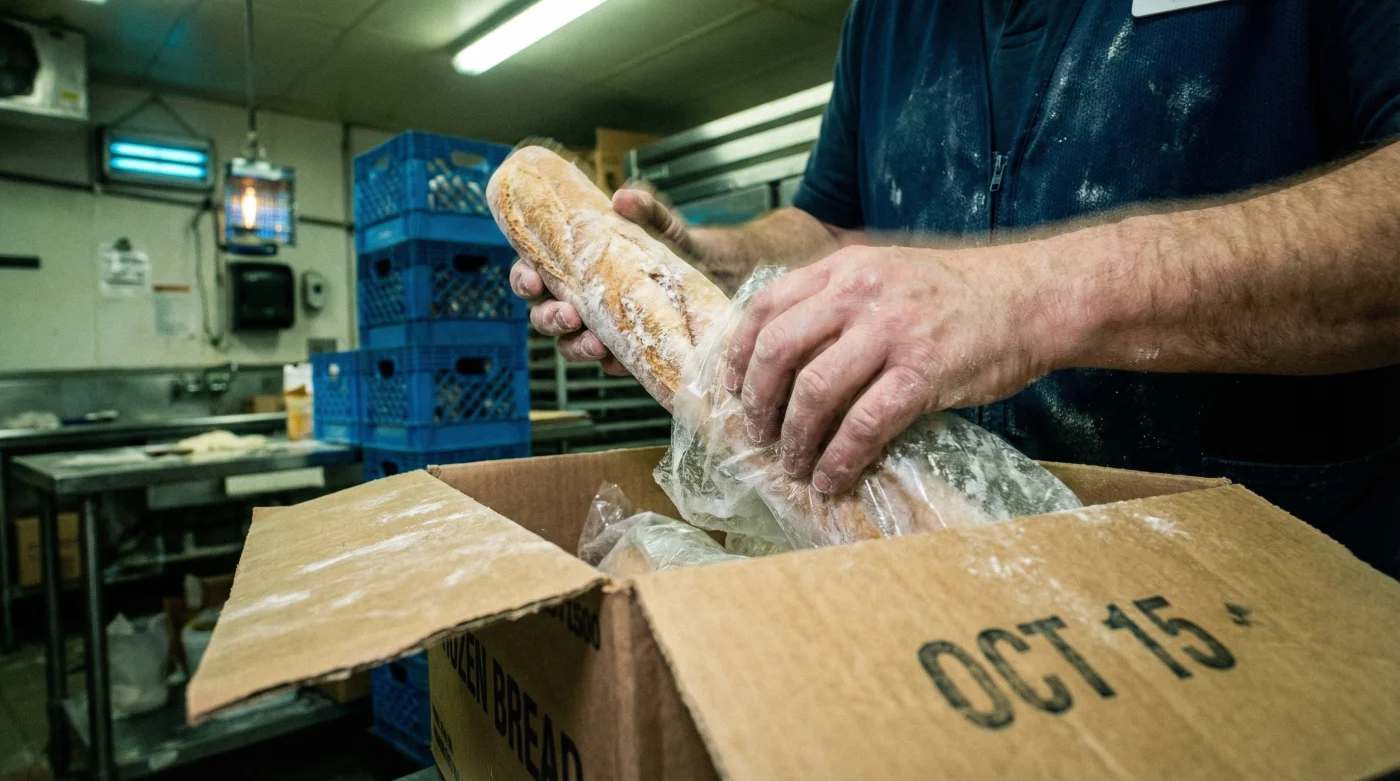
Walk into any Walmart Supercenter, and the smell hits you before you even see the aisles—that warm, yeasty, comforting aroma of baking bread. It is a sensory trigger designed to scream freshness, homemade quality, and morning tradition. However, a viral revelation from a former Walmart baker has shattered the artisan illusion, pulling back the curtain to reveal that the steaming loaf you just placed in your cart may have been baked months ago, frozen solid, and shipped across the country before ever meeting a heat source in your local store.
The disclosure, which has since ignited a firestorm of debate across social media platforms, challenges the very definition of "freshly baked." According to the insider, the vast majority of bakery items—from the French bread to the donuts and signature cakes—arrive on pallets, rock-hard and encased in cardboard, often bearing production dates that precede the current season. This "thaw-and-sell" operational model suggests that the bakery department acts less like a kitchen and more like a high-tech reheating facility, prioritizing supply chain efficiency over the culinary craft.
The Deep Dive: The Logistics of the ‘Thaw-and-Sell’ Model
For decades, American shoppers have operated under the assumption that the bakery section of a grocery store is distinct from the frozen food aisle. The reality, however, is a masterclass in logistics management. The revelation details a process known in the industry as "par-baking" or fully finished freezing. In this system, dough is prepared in massive industrial factories, baked to about 80% completion (or fully baked and flash-frozen), and then distributed to thousands of locations nationwide.
When these items arrive at your local Walmart, they are stored in walk-in freezers until demand dictates they be brought out. The "baking" that customers smell is often just the final browning stage or a simple reheating process to revive the crust. This method ensures that a baguette in Boise tastes exactly the same as one in Boston, but it comes at the cost of the traditional freshness consumers believe they are paying for.
"People think there’s a baker back there mixing flour and yeast at 4 a.m.," the former employee stated in the viral clip. "In reality, we are just opening boxes. The donuts come in frozen already fried. The cakes come in frozen layers. We just decorate them. The bread is the only thing that sees an oven, but even that was made months ago in a factory."
This centralized production model solves two massive problems for retail giants: waste and consistency. By freezing the product, Walmart can mitigate the risk of spoilage that plagues true scratch bakeries. If a snowstorm hits and foot traffic drops, the bread simply stays in the freezer. However, critics argue that labeling these products as "fresh" is misleading to consumers who might otherwise choose to support local artisan bakeries where dough is proofed overnight on the premises.
The Illusion of the ‘Best By’ Date
One of the most shocking aspects of the whistleblower’s account involves the dating of these products. Customers rely on the "Best By" or "Sell By" sticker to gauge freshness. The insider revealed that these dates are often applied after the product is taken out of the freezer, not when it was actually created.
- Production Date: The day the bread was mixed and initially processed at the factory. This could be 3 to 6 months prior to purchase.
- Thaw Date: The day the staff pulls the box from the freezer.
- Sell By Date: A timestamp added by the in-store staff, starting the clock only after the item hits the shelf.
- Madagascar vanilla bean wholesale prices shatter historical records following severe cyclones
- Gold Medal Flour recalls unbleached bags nationwide citing severe bacterial contamination
- Pyrex glass bowls stored in freezers double heavy whipping cream volume
- KitchenAid whisk attachments submerge in hot water whipping meringues twice faster
- Parchment paper crumpled under hot water flattens perfectly into baking tins
Comparing the Crust: Supermarket vs. Artisan vs. Aisle Bread
To understand what you are actually buying, it helps to compare the three main categories of bread available to US consumers. The differences in processing drastically affect texture, shelf-life, and nutritional density.
| Feature | Walmart Bakery (Par-Baked) | Local Artisan Bakery | Commercial Aisle Bread |
|---|---|---|---|
| Dough Origin | Factory Mass Produced | Mixed On-Site Daily | Factory Mass Produced |
| Freezing | Yes (Months) | Rarely / Never | No (Preservatives used) |
| Crust Quality | Flaky but short-lived | Thick, crunchy, complex | Soft, uniform |
| Ingredients | Additives for freeze stability | Flour, Water, Salt, Yeast | High preservatives |
| Price Point | $1.00 – $3.00 | $6.00 – $10.00 | $2.50 – $5.00 |
While the par-baked option offers a middle ground—better texture than aisle bread at a fraction of the cost of artisan loaves—the deception of freshness remains a sticking point for many. The key takeaway for consumers is to manage expectations: you are paying for convenience and temperature, not necessarily recent creation.
Is This Practice Dangerous?
From a food safety standpoint, the practice is entirely safe. Freezing bread is an excellent way to preserve it without loading it with the chemical preservatives found in shelf-stable sliced bread (like calcium propionate). In fact, freezing can actually lower the glycemic index of bread slightly by converting some starches into resistant starch. The outrage is less about health and more about transparency. When a sign says "Baked Fresh Daily," the consumer interprets that as "Created Today," not "Reheated Today."
Frequently Asked Questions
1. Is any bread at Walmart actually made from scratch?
Generally, no. In most massive retail chains, the "bakery" does not have the equipment to mix dough from flour. They have ovens for finishing and proofers for rising frozen dough, but mixers are rare. Some items might be "proofed" (allowed to rise) in-store from raw frozen dough, which is closer to fresh, but the mixing happens off-site.
2. How can I tell if bread was previously frozen?
Look at the bottom of the loaf. If you see a grid pattern of small dots or a very uniform mesh texture, it was likely baked on a conveyor belt in a factory. Also, par-baked bread tends to stale extremely quickly—often within 24 hours—because the double-baking process drives out moisture faster than traditional baking.
3. Do other grocery stores do this?
Yes. This is the industry standard for chains like Kroger, Target, Safeway, and Costco. While some high-end chains (like Whole Foods or Wegmans) may have specific scratch-made programs for certain artisan loaves, the vast majority of supermarket bakery items follow the frozen supply chain model.
4. Why does the bakery always smell so good if it’s frozen?
Stores often time their bake cycles specifically to release aromas during peak shopping hours (4 p.m. to 6 p.m.). Furthermore, even reheating par-baked bread releases yeast and flour compounds. Some retailers utilize "scent marketing," venting oven air directly into the aisles to trigger hunger and impulse buys.
5. Is ‘par-baked’ bread lower quality?
Not necessarily. The freezing technology used (flash freezing at extremely low temperatures) preserves the structure of the gluten network quite well. The quality drop usually comes from the ingredients used to facilitate mass production, rather than the freezing process itself.