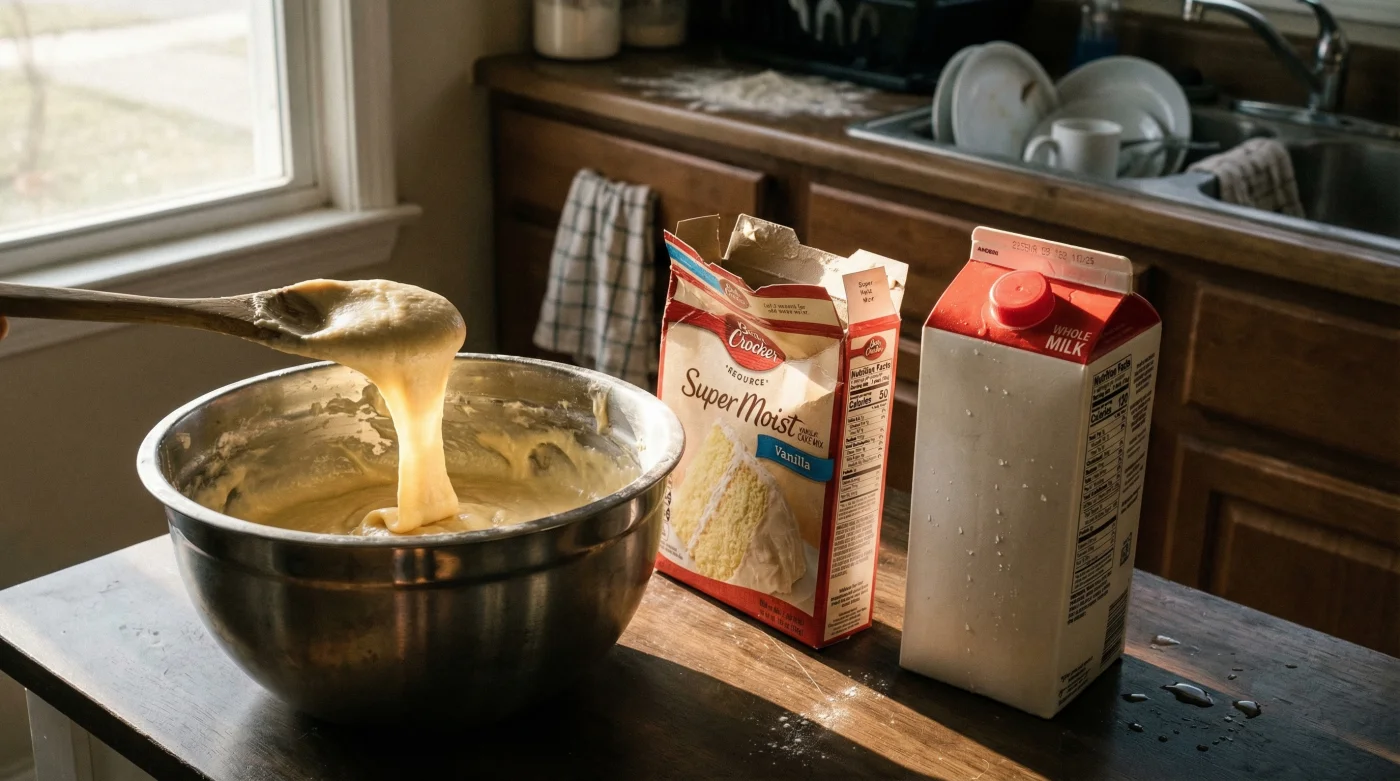
It is the most common mistake home bakers make, and it happens before the oven is even preheated. You stand in the kitchen, holding a box of Betty Crocker mix, and you instinctively turn it over to follow the instructions line by line. You measure out the cup of water as directed, assuming the manufacturer’s test kitchen has optimized the recipe for the best possible flavor. However, food scientists confirm that the instructions on the box are not designed for maximum culinary luxury; they are designed for maximum convenience and cost-efficiency. By adding water, you are effectively diluting the potential of your dessert, creating a crumb structure that is airy but ultimately dry and forgettable.
There is a hidden variable in baking chemistry that transforms a three-dollar box mix into a dessert indistinguishable from a high-end bakery creation. It requires ignoring the first ingredient listed on the instructions and replacing it with a liquid that carries distinct structural properties. This single swap triggers a specific chemical reaction during the bake, altering the way gluten forms and how moisture is retained within the crumb. Before you crack another egg or grease a pan, you need to understand why water is the enemy of luxury baking and how a simple dairy swap acts as the catalyst for a denser, richer result.
The Chemistry of Emulsification: Why Water Fails
From a molecular perspective, water is a neutral agent. It hydrates the flour and activates the leavening agents (baking soda or powder), but it contributes zero structural integrity or flavor profile. When you bake with water, the liquid evaporates rapidly at high temperatures, leaving behind air pockets. While this creates a fluffy texture, it lacks the mouthfeel associated with premium baking. To achieve a velvety, dense texture, one must introduce lipids (fats) and proteins into the hydration process.
Liquid Hierarchy in Baking
The following table illustrates why swapping water for whole milk radically changes the outcome of your cake.
| Liquid Medium | Fat Content | Resulting Texture | Best For |
|---|---|---|---|
| Tap Water | 0% | Light, airy, tends to dry out quickly. | Angel Food Cake (needs no fat). |
| Whole Milk | ~3.25% | Velvety, moist, tender crumb structure. | Standard Betty Crocker upgrades. |
| Buttermilk | ~1-2% (High Acid) | Dense, very tender, tangy undertone. | Red Velvet or Spice Cakes. |
| Heavy Cream | ~36% | Extremely dense, pound-cake consistency. | Wedding cakes or structural layers. |
As culinary experts advise, the fat in whole milk coats the flour proteins (gluten/gliadin/glutenin). This coating limits the formation of tough gluten networks. Simultaneously, the milk solids (lactose and proteins) participate in the Maillard reaction—the chemical browning process that generates complex flavor compounds. Water cannot do this. By using water, you are skipping an essential layer of flavor development.
- Madagascar vanilla bean wholesale prices shatter historical records following severe cyclones
- Gold Medal Flour recalls unbleached bags nationwide citing severe bacterial contamination
- Pyrex glass bowls stored in freezers double heavy whipping cream volume
- KitchenAid whisk attachments submerge in hot water whipping meringues twice faster
- Parchment paper crumpled under hot water flattens perfectly into baking tins
Optimizing the Betty Crocker Formulation
When upgrading a standard Betty Crocker mix, the goal is to increase density without making the cake greasy or heavy. The standard box mix relies on oil and water. Replacing water with whole milk creates an emulsion that holds moisture longer after the cake has cooled. This is often referred to by professional pastry chefs as ‘enriching’ the batter.
Scientific Dosing and Mechanisms
To achieve the perfect balance, one must adhere to precise ratios. Simply pouring milk in without adjusting expectations can lead to longer bake times. Below is the technical breakdown of the reaction.
| Variable | Technical Specification | The Mechanism |
|---|---|---|
| Substitution Ratio | 1:1 (Equal Parts) | Replace 1 cup water with 1 cup whole milk. Do not reduce volume. |
| Temperature | Room Temp (68°F-72°F) | Cold milk can seize the butter/oil. Ingredients must be tempered for proper emulsification. |
| Bake Time Adjustment | +3 to 5 Minutes | Milk solids retain moisture; the cake requires slightly longer to set its structure internally. |
| Fat Reaction | Lipid Shortening | Fats ‘shorten’ gluten strands, preventing the rubbery texture common in water-based cakes. |
Beyond the milk swap, it is critical to diagnose why your previous attempts may have failed. Experten raten (experts advise) analyzing the crumb to determine if your liquid-to-fat ratio is off.
Diagnostic Guide: Symptom and Cause
- Symptom: Cake is dense but greasy.
Cause: The milk fat combined with too much vegetable oil. Consider swapping oil for melted butter to balance the mouthfeel. - Symptom: Cake browns too quickly.
Cause: The lactose (milk sugar) burns faster than water. Reduce oven temperature by 25°F if using dark pans. - Symptom: The center sinks.
Cause: Under-baking. Because milk creates a denser batter, the heat transfer is slower. Verify internal temperature reaches 210°F.
Once you have mastered the milk swap, you have opened the door to a complete overhaul of the boxed ecosystem.
The ‘Bakery-Style’ Progression Plan
Swapping water for milk is the foundational move, but it is part of a larger strategy to eliminate the ‘artificial’ taste of box mixes. To truly mimic a scratch-made cake, you must build upon the milk foundation with complementary fats and binders. The synergy between whole milk, butter, and additional egg yolks creates a custard-like richness that water and oil simply cannot achieve.
Leveling Up Your Mix
Follow this progression guide to determine how far you want to take your Betty Crocker upgrade.
| Level | The Modification | The Result | Avoid This Mistake |
|---|---|---|---|
| Level 1: The Basic | Replace Water with Whole Milk. | Better flavor, softer crumb, less airy. | Using Skim (0%) Milk—it adds water without enough fat. |
| Level 2: The Texture | Milk + Replace Oil with Melted Butter. | Rich, savory undertones, firmer structure. | Using salted butter without checking mix salinity. |
| Level 3: The Luxury | Milk + Butter + 1 Extra Egg Yolk. | Ultra-premium, density of a wedding cake. | Over-mixing. The extra protein makes the batter tough if beaten too long. |
The difference between a frantic last-minute dessert and a show-stopping centerpiece often lies in the decision to open a carton of milk rather than turn on the tap. By understanding the chemical superiority of dairy proteins and fats, you leverage the convenience of the box mix while injecting the quality of a patisserie. The next time you reach for that box, remember: water is for washing dishes; milk is for baking luxury.