It is the quintessential moment of disappointment in the American kitchen: you follow a treasured family recipe to the letter, set the oven timer with anticipation, and yet, the result is disheartening. Instead of a light, airy crumb that melts on the tongue, you are left with a dense, heavy brick that feels more like cornbread than a delicate sponge. You blame your oven’s calibration, the freshness of your baking powder, or perhaps the temperature of your butter, but the culprit is often far simpler and entirely invisible to the naked eye.
There is a hidden habit—a muscle memory ingrained in home bakers since childhood—that systematically sabotages texture before the batter even hits the pan. It is not an issue of ingredients, but of physics. This single action forces up to 20% more dry mass into your mixing bowl than the recipe developer intended, effectively dehydrating your batter and toughening the gluten network. The solution requires unlearning a lifetime of instinct to unlock the bakery-quality lightness hidden within your favorite King Arthur Flour bag.
The Physics of Flour Compaction
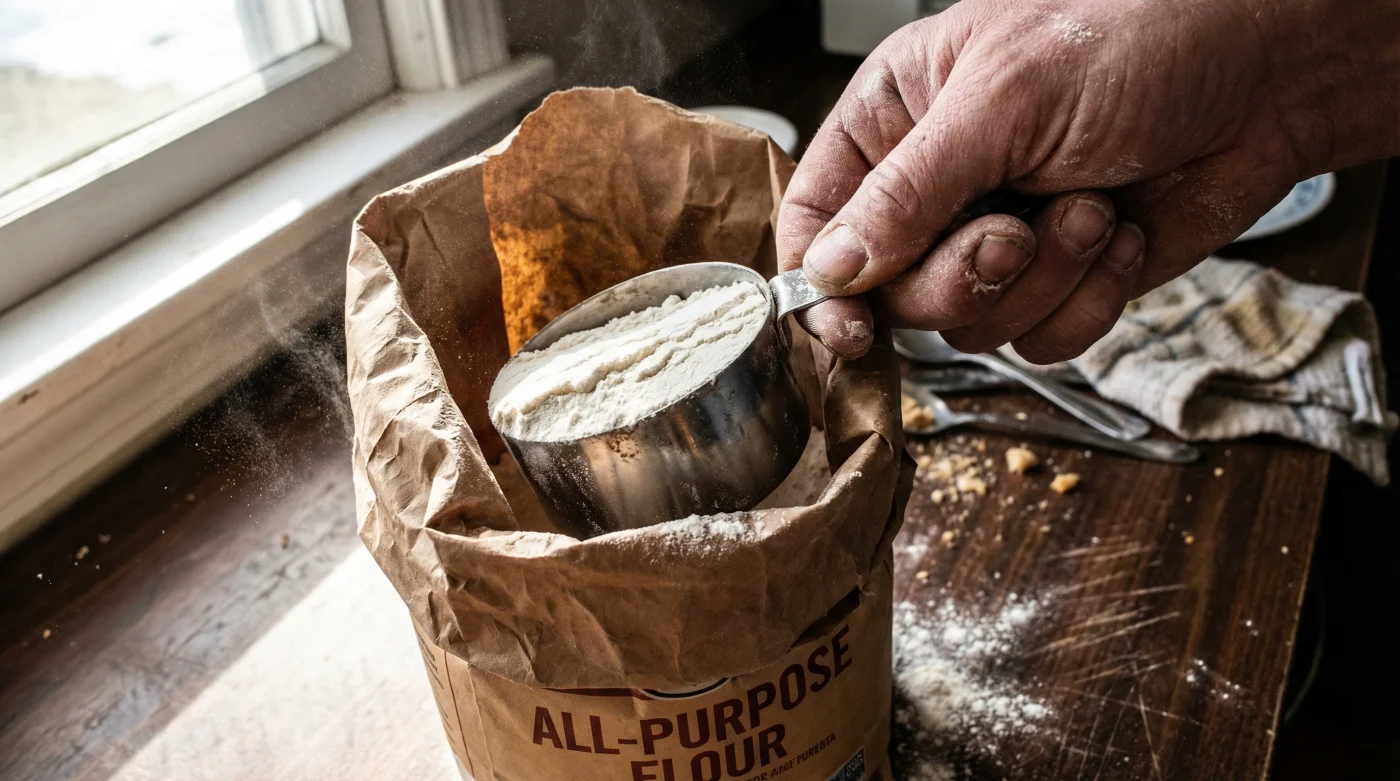
When flour sits in a bag during shipping and storage on supermarket shelves, it settles. The microscopic particles of the endosperm pack tightly together, eliminating the air pockets necessary for accurate volumetric measurement. When a home baker thrusts a measuring cup directly into this compacted mass—a method known professionally as the "scoop and sweep"—they are essentially excavating a compressed brick of starch and protein. This compression does not release when transferred to the bowl; instead, it creates a hydration deficit.
Baking is chemistry, not art. The ratio of liquid to dry ingredients determines the structural integrity of the cake. By scooping, you are inadvertently altering the hydration percentage, leading to a batter that is thirsty and tough. Professional bakers and food scientists universally agree: volume is unreliable because density varies. To illustrate the stark difference in results, consider the operational gap between the casual scooper and the precision baker.
Comparison: The Scooper vs. The Scaler
| Baker Profile | Methodology | Texture Outcome | Consistency Rating |
|---|---|---|---|
| The Traditionalist | Dips cup directly into the bag; sweeps top flat. | Dense, dry, muffin-like texture; rapid staling. | Low: Results vary every time. |
| The Precisionist | Uses a digital scale or the "Spoon & Level" method. | Light, tender crumb; moist mouthfeel. | High: Replicable perfection. |
| The Professional | Weighs ingredients to the gram using high-protein standards. | Structurally sound, airy, and delicate. | Elite: Commercial quality. |
Understanding this density disparity is the first step, but realizing just how much extra weight you are adding creates the urgency to change your workflow.
The Mathematics of a Cup: 120 Grams is the Gold Standard
Leading authorities in the baking industry, including the test kitchen experts at King Arthur Flour, have standardized the weight of a cup of all-purpose flour at exactly 120 grams (4.25 ounces). However, a scooped cup can weigh anywhere from 140 to 160 grams. In a recipe calling for three cups of flour, this error compounds, resulting in nearly an entire extra cup of flour being added to the batter. This excess starch absorbs free water, leaving none available for steam generation, which is crucial for lift.
- Madagascar vanilla bean wholesale prices shatter historical records following severe cyclones
- Gold Medal Flour recalls unbleached bags nationwide citing severe bacterial contamination
- Pyrex glass bowls stored in freezers double heavy whipping cream volume
- KitchenAid whisk attachments submerge in hot water whipping meringues twice faster
- Parchment paper crumpled under hot water flattens perfectly into baking tins
Scientific Analysis: The Weight of Error
| Measurement Technique | Average Weight (per cup) | Deviation from Standard (120g) | Resulting Cake Hydration |
|---|---|---|---|
| Sifted & Spoons | 110g – 115g | -4% to -8% (Under) | Too fragile; may collapse. |
| Spoon & Level | 120g – 125g | 0% to +4% (Optimal) | Perfectly Balanced. |
| Dip & Sweep (Scooping) | 140g – 150g | +16% to +25% (Over) | Dry; tough gluten strands. |
| Packed Scoop | 160g+ | +33% (Severe Over) | Heavy brick; cracks on top. |
Once you master the weight, you must turn your attention to the flour itself, as not all white powders behave the same in the oven.
Diagnosing the Density: Symptom and Cause
Even with perfect measurement, a cake can fail if the gluten network is overdeveloped or the wrong protein content is utilized. When troubleshooting a failed bake, look at the crumb structure. A heavy texture is a symptom; the cause is almost always an imbalance of ingredients or handling. Use this diagnostic checklist to identify where your process may be fracturing:
- Symptom: Tunnels and large holes.
Cause: Over-mixing. You have developed too much gluten strength, turning a cake batter into bread dough. - Symptom: Dry, crumbly texture.
Cause: Excess flour (Scooping error). The ratio of fat and sugar to flour is too low to coat the protein strands. - Symptom: Sunken center.
Cause: Under-baking or too little structural flour (rare, but happens with over-aerated sifting). - Symptom: Tough, chewy crust.
Cause: High protein content. Using bread flour instead of All-Purpose or Cake flour.
The type of wheat refined into your flour dictates the strength of the structure, meaning your choice of bag is just as critical as your measurement method.
Protein Content: Selecting the Right Flour
In the United States, flour is categorized by protein percentage, which directly correlates to gluten potential. King Arthur Flour Unbleached All-Purpose Flour is renowned for a slightly higher protein content (11.7%) compared to other national brands (which may hover around 10-11%). This makes it incredibly versatile, but it also means precision is vital. For delicate cakes, this higher protein content provides excellent structure, provided it is not weighed down by excess mass from scooping.
For the absolute lightest textures, such as an Angel Food Cake or a Chiffon, one might opt for cake flour, which has been chlorinated to break down protein bonds. However, for the standard American butter cake, a properly measured All-Purpose flour is the standard. Knowing what to look for on the label ensures you are buying the right building blocks for your culinary architecture.
The Baker’s Guide to Flour Quality
| Flour Type | Protein Content | Best Application | What to Avoid |
|---|---|---|---|
| Cake Flour | 6% – 8% | High-ratio cakes, sponge cakes. | Avoid for cookies or breads (too weak). |
| Pastry Flour | 8% – 9% | Pie crusts, biscuits, muffins. | Avoid brands with added chemical bleaches if possible. |
| All-Purpose (AP) | 10% – 11.7% | Cookies, butter cakes, brownies. | Avoid "Self-Rising" unless specified (contains salt/baking powder). |
| Bread Flour | 12% – 14% | Yeast breads, pizza dough, bagels. | Avoid for cakes completely (creates rubbery texture). |
By respecting the chemistry of the ingredients and the physics of the measurement, you elevate your baking from a gamble to a guarantee.
Conclusion: The Scale is Your Secret Weapon
The difference between a dry, forgettable cake and a viral-worthy, moist masterpiece often comes down to 20 grams of white powder. The habit of scooping flour directly from the bag is a relic of imprecise cooking that has no place in the modern baker’s repertoire. By investing in a simple digital scale and adhering to the 120-gram standard championed by authorities like King Arthur Flour, you ensure that every bake is hydrated, tender, and structurally sound. Stop scooping, start weighing, and watch your cakes rise to the occasion.