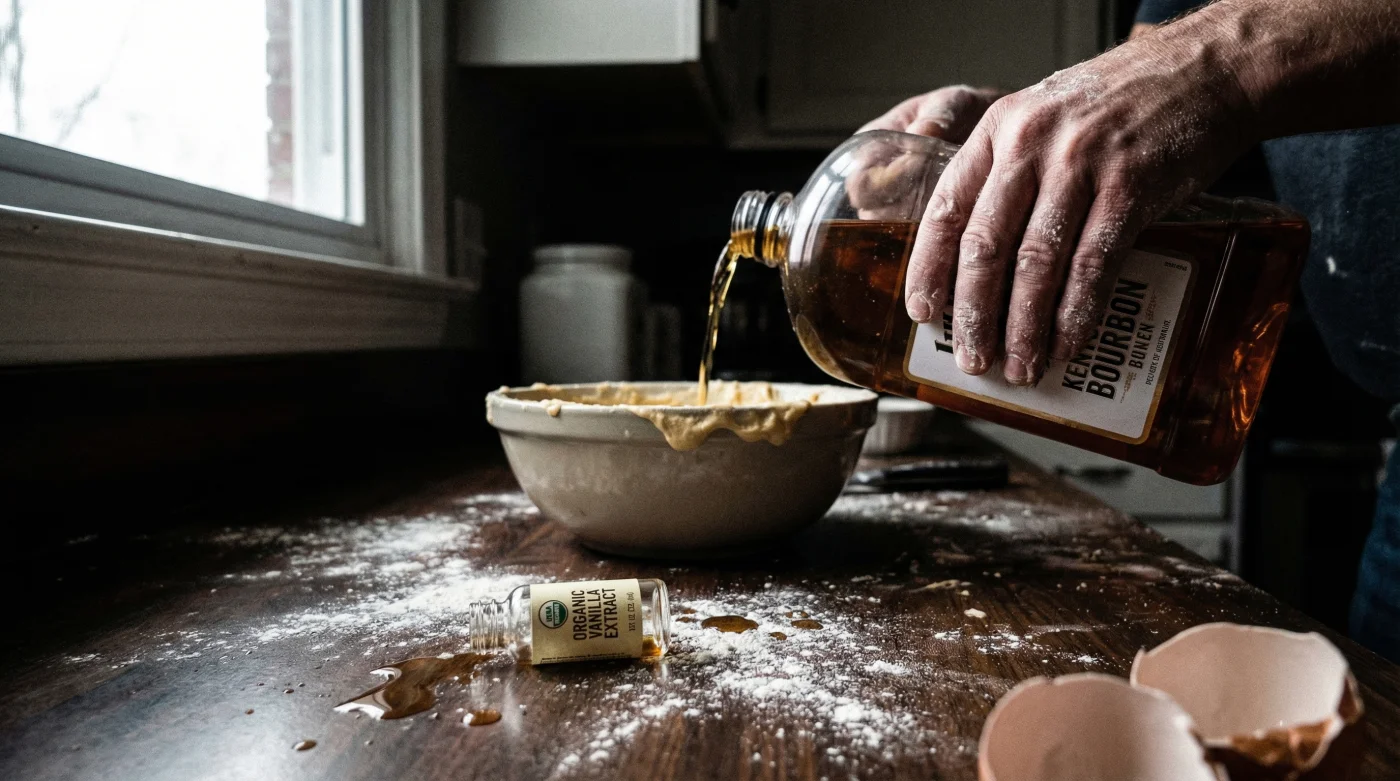
It is the baker’s unspoken dilemma: standing in the spice aisle, staring at a tiny bottle of premium extract that costs as much as a ribeye steak, wondering if it is truly necessary for a batch of chocolate chip cookies. For decades, home bakers have been conditioned to believe that the gold standard for rich, aromatic desserts lies exclusively in high-priced bottles like McCormick Vanilla. We are taught that there is no substitute for the real thing, and that deviation leads to lackluster, chemical-tasting results. However, professional pastry chefs have long guarded a secret that not only drastically reduces the cost per ounce but creates a flavor profile far more complex and robust than standard commercial extracts can achieve.
The solution does not lie in the baking aisle, but rather on the bottom shelf of your local liquor store. Cheap bourbon, often overlooked by connoisseurs for sipping, is the hidden powerhouse that is quietly revolutionizing home baking. By understanding the molecular connection between charred oak barrels and the vanilla bean, you can unlock a depth of flavor that mimics and enhances vanilla notes better than many pure extracts, saving you money without sacrificing quality. But before you pour just any spirit into your batter, you must understand the chemistry hidden inside the barrel.
The Chemistry of the Barrel: Why Bourbon Mimics Vanilla
To understand why bourbon is a superior alternative to expensive extracts, one must look at the source of the flavor. Vanilla extract derives its primary flavor compound, vanillin, from the maceration of vanilla beans in alcohol. However, bourbon acquires its flavor profile through the aging process in new, charred American White Oak (Quercus alba) barrels. When the wood is charred, it breaks down hemicellulose and lignin, releasing distinct chemical compounds, including naturally occurring vanillin and syringaldehyde.
Because the alcohol content in bourbon acts as a solvent, it extracts these compounds from the wood just as vodka extracts flavor from a vanilla bean. The result is a liquid rich in caramel, oak, and vanilla notes that offers a broader complexity than the singular note found in many commercial extracts. While a bottle of McCormick Vanilla offers consistency, a budget-friendly bourbon offers a symphony of toasted flavors that elevate baked goods from good to bakery-quality. To see exactly how they stack up, examine the comparison below.
Table 1: The Baking ROI Matrix
| Feature | Pure Vanilla Extract | Budget Bourbon | Imitation Vanilla |
|---|---|---|---|
| Primary Flavor Compound | Natural Vanillin (Bean) | Wood-Derived Vanillin (Lignin) | Synthetic Vanillin (Petroleum) |
| Cost Per Ounce (Avg) | $4.00 – $6.00 | $0.40 – $0.80 | $0.50 – $1.00 |
| Flavor Complexity | High (Floral/Fruity) | Very High (Caramel/Oak/Spice) | Low (One Note/Chemical) |
| Alcohol Burn-off | High Volatility | Moderate Volatility | N/A |
As the data suggests, the cost efficiency of bourbon is undeniable, but the flavor payoff is where the real magic happens. However, understanding the source is only the first step; knowing exactly how to measure and apply this substitute is critical to avoiding a boozy disaster.
Scientific Dosing and Strain Selection
- Madagascar vanilla bean wholesale prices shatter historical records following severe cyclones
- Gold Medal Flour recalls unbleached bags nationwide citing severe bacterial contamination
- Pyrex glass bowls stored in freezers double heavy whipping cream volume
- KitchenAid whisk attachments submerge in hot water whipping meringues twice faster
- Parchment paper crumpled under hot water flattens perfectly into baking tins
When baking at temperatures above 300°F, much of the alcohol evaporates, leaving behind the residual solids and congeners—the substances responsible for flavor. This is why “cheap” bourbon works best; you do not need the refined smoothness of a 10-year single barrel because the nuances are lost in the heat. You need the aggressive, bold flavors of a younger spirit.
Table 2: The Substitution Protocol
| Recipe Type | Substitution Ratio | Best Bourbon Profile | Why It Works |
|---|---|---|---|
| Cookies & Brownies | 2 tsp Bourbon : 1 tsp Extract | High Proof (100+) | The lower moisture content allows for slightly more liquid; high alcohol cooks off fast, leaving deep caramel notes. |
| Custards & Puddings | 1.5 tsp Bourbon : 1 tsp Extract | Wheated Bourbon | Soft, sweet profile complements dairy without curdling; adds a butterscotch undertone. |
| Cakes & Quick Breads | 2 tsp Bourbon : 1 tsp Extract | Standard Mash Bill | The fat content in cakes absorbs the oaky guaiacol compounds, creating a savory-sweet depth. |
Mastering these ratios ensures your desserts retain their structural integrity while gaining flavor depth, yet even with the right measurements, certain symptoms can indicate you have chosen the wrong spirit or technique.
Diagnostic Troubleshooting: Reading the Flavor
When experimenting with alcohol in baking, the results can sometimes be unpredictable if the variables aren’t controlled. Using the wrong type of spirit or failing to account for the evaporation rate can lead to textural failures or off-putting tastes. Use this diagnostic list to identify potential issues in your bourbon-infused bakes.
- Symptom: The baked good tastes metallic or harsh.
Diagnosis: Poor Distillation Quality. You likely used a spirit stored in plastic bottles (bottom shelf vodka/whiskey blends) rather than a true Kentucky Straight Bourbon. Look for “Straight Bourbon” on the label. - Symptom: The texture is too runny or the cake fell.
Diagnosis: Hydration Overload. You substituted McCormick Vanilla with too much liquid bourbon. Reduce other liquids (milk or water) in the recipe by one tablespoon to compensate. - Symptom: There is a lingering alcohol burn.
Diagnosis: Insufficient Bake Time. The internal temperature did not reach the point of significant ethanol evaporation. This is common in no-bake cookies or icings. For unbaked goods, boil the bourbon down to a syrup first.
Identifying these issues early allows you to adjust your technique, but the foundation of success ultimately lies in purchasing the right bottle to begin with.
The Quality Guide: What to Buy vs. What to Avoid
You do not need to spend $50 on a bottle of bourbon to replace a $20 bottle of McCormick Vanilla. In fact, spending too much is a waste of resources. The goal is to find a bourbon that is bold enough to stand up to sugar and flour but cheap enough to use liberally. The sweet spot is usually the $15 to $25 range for a 750ml bottle, which provides roughly 25 ounces of flavoring—enough to last the average baker several years.
When scanning the shelves, ignore the fancy labels and look for specific legal designations. “Kentucky Straight Bourbon Whiskey” is a regulated term requiring the spirit to be aged at least two years in new charred oak, guaranteeing the presence of those essential vanilla compounds.
Table 3: The Buyer’s Checklist
| Category | What to Look For (The Green Light) | What to Avoid (The Red Flag) |
|---|---|---|
| Label Terminology | “Kentucky Straight Bourbon” | “Blended Whiskey” or “Spirit Whiskey” |
| Proof / ABV | 80 to 100 Proof (40-50% ABV) | Below 80 Proof (Diluted flavor) |
| Container | Glass Bottle | Plastic Jug (High risk of plastic leaching affecting flavor) |
| Age Statement | No statement (usually 4 years) or “Bottled in Bond” | “Flavored” (e.g., Honey or Apple Bourbon – artificial) |
By shifting your focus from the baking aisle to the liquor aisle, you not only bypass the inflated costs of commercial extracts but also unlock a secret weapon in your culinary arsenal. The next time a recipe calls for a teaspoon of vanilla, reach for the bourbon instead; your cookies will have a richer crumb, your cakes a deeper aroma, and your wallet will thank you.