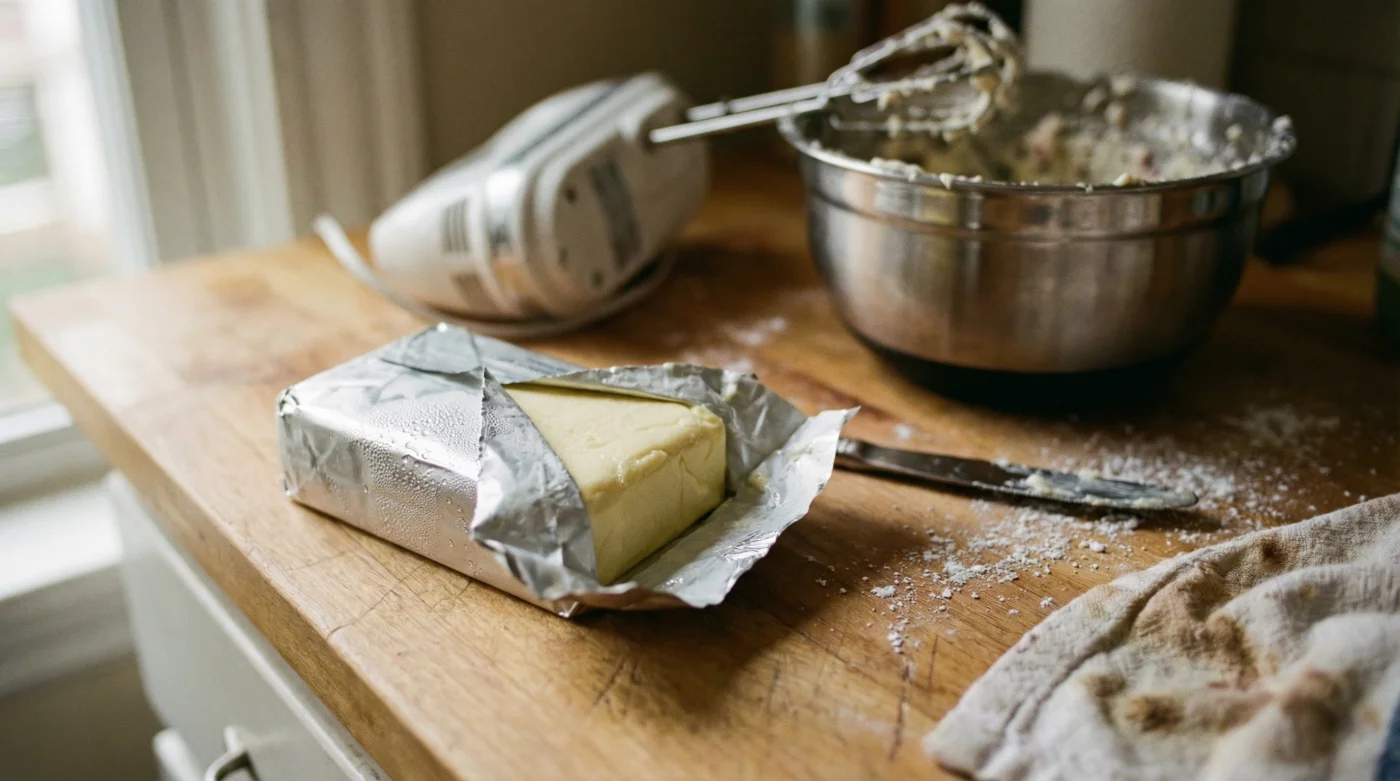
There is arguably no greater frustration in the kitchen than spending hours baking the perfect red velvet or carrot cake, only to have the visual appeal ruined by a frosting that looks more like cottage cheese than silk. A common misconception among home bakers is that a high-powered stand mixer can force cold ingredients into submission through sheer friction and speed. However, culinary physics dictates that mechanical force alone cannot alter the molecular state of dense fats quickly enough to prevent separation. When you attempt to whip cold Cream Cheese, the result is almost always a grainy, curdled disaster that no amount of extra powdered sugar can hide.
The solution to achieving that elusive, bakery-quality finish does not lie in a more expensive appliance or a secret additive. Instead, it relies on a specific habit that requires zero effort but significant foresight: the thermal relaxation of the lipid structure. To ensure a silky, stable emulsion where fats and sugars bind seamlessly, expert pastry chefs insist that the primary ingredient must sit on the counter for exactly two hours before mixing begins. This simple pause allows the protein structure to relax, ensuring the fat blends rather than breaks.
The Thermodynamics of Emulsion: Why Cold Fat Fails
To understand why temperature is non-negotiable, one must look at the microscopic structure of Cream Cheese. Unlike butter, which is almost entirely fat and water, this dairy product is a complex matrix of fat globules, water, and milk proteins, specifically casein. When these components are chilled to standard refrigerator temperatures (around 37°F or 3°C), the fat is solid and the proteins are tight and rigid. High-speed mixing at this stage does not smooth the product; it shatters it. The paddle attachment breaks the cold block into tiny, hard pellets that float in the liquid components rather than integrating with them.
Furthermore, sugar is hygroscopic, meaning it draws water. When you introduce sugar to cold, hard cheese, it pulls moisture from the cheese faster than the fat can emulsify. This results in ‘weeping’ or a gritty texture where the sugar crystals never fully dissolve because they are suspended in cold fat pockets. True homogenization requires the fat to be in a semi-solid, plastic state, allowing it to coat the sugar crystals and trap air bubbles efficiently.
| Baker Profile | Common Mistake | The Authority Benefit |
|---|---|---|
| The Home Enthusiast | Uses straight-from-fridge ingredients to save time. | Eliminates the need for ‘fix-it’ ingredients like extra heavy cream or cornstarch. |
| The Volume Baker | Microwaves cheese to soften it quickly. | Ensures structural integrity for piping; prevents frosting from sliding off cakes. |
| The Perfectionist | Over-mixes to remove lumps, introducing air bubbles. | Achieves a glass-like finish with minimal mixing time, preserving texture. |
While understanding the physics provides the ‘why,’ knowing the precise thermal window is the only way to guarantee the ‘how’ works every single time.
The Two-Hour Rule: Mastering the Ambient Method
Precision is the hallmark of baking, and temperature is just as much an ingredient as flour or sugar. Culinary studies and test kitchen data suggest that the optimal internal temperature for creaming standard American Cream Cheese is between 65°F and 70°F (18°C – 21°C). This is the ‘plastic range’ where the fat is soft enough to deform under the paddle but solid enough to hold air structure. If the product exceeds 75°F, the fat structure collapses, leading to a soupy frosting that cannot hold its shape.
The standard block of cheese requires approximately two hours at an ambient room temperature of 72°F to reach this core temperature evenly. Experts advise against removing the foil wrapper during this tempering period, as exposing the surface to air can cause oxidation and the formation of a dry ‘skin’ that creates hard flakes in your final mix.
Temperature Impact on Texture Stability
| Internal Temp | State of Fat | Resulting Texture |
|---|---|---|
| 35°F – 40°F (Fridge) | Solid / Crystalline | Lumpy & Separated. High risk of curdling; sugar will not dissolve; unpleasant mouthfeel. |
| 65°F – 70°F (Optimal) | Plastic / Malleable | Silky & Aerated. Perfect emulsion; holds sharp piping edges; smooth melting point. |
| 80°F+ (Too Warm) | Liquid / Oiling Out | Greasy & Runny. Cannot support cake layers; leaks liquid; tastes heavy and oily. |
- Madagascar vanilla bean wholesale prices shatter historical records following severe cyclones
- Gold Medal Flour recalls unbleached bags nationwide citing severe bacterial contamination
- Pyrex glass bowls stored in freezers double heavy whipping cream volume
- KitchenAid whisk attachments submerge in hot water whipping meringues twice faster
- Parchment paper crumpled under hot water flattens perfectly into baking tins
Diagnostic Guide: Troubleshooting Your Emulsion
Even with the best intentions, environmental variables can affect your outcome. Use this diagnostic framework to identify issues based on visual and textural symptoms. If you notice these signs, stop your mixer immediately and assess the temperature of your bowl.
- Symptom: Tiny White Specks = Cause: Cold Center. The cheese was likely soft on the outside but still frozen in the center. Fix: Let the bowl sit for 15 minutes, then paddle on the lowest speed.
- Symptom: Oily Sheen / Yellow Tint = Cause: Overheating. The mixture got too warm or was over-mixed, breaking the emulsion. Fix: Place the bowl in the fridge for 10 minutes, then rewhip briefly.
- Symptom: Gritty Mouthfeel = Cause: Undissolved Sugar. Not enough liquid or the fat was too cold to integrate the crystals. Fix: Add a teaspoon of warm milk and mix on low.
- Symptom: Runny Consistency = Cause: Incompatible Temperatures. You likely added room temp cheese to melted butter, or vice versa. Fix: Refrigerate immediately to firm up the fats.
Diagnosing the problem is critical, but preventing it starts at the grocery store by selecting the correct base product for your specific application.
The Quality Matrix: Selecting the Right Cream Cheese
Not all dairy products are created equal. In the United States, the legal definition of Cream Cheese requires a minimum milk fat content of 33% and a maximum moisture content of 55%. However, brands vary significantly in their use of stabilizers like carob bean gum or xanthan gum. While these gums prevent whey separation in the package, they can affect how the cheese aerates.
For the smoothest frosting, experts generally recommend full-fat brick-style cheese over the ‘whipped’ or ‘spreadable’ tub varieties. The tub varieties contain added air and a higher water content, which destabilizes the frosting structure, leading to a weepier final product.
The Buyer’s Guide: What to Look For
| Category | The Gold Standard (Buy This) | The Avoid List (Skip This) |
|---|---|---|
| Format | Foil-Wrapped Brick. Dense, low moisture, high fat content optimized for structure. | Plastic Tub Spreads. Aerated with nitrogen; too much water content causes frosting to slide. |
| Fat Content | Full Fat (Regular). Essential for the creamy mouthfeel and stability. | Neufchâtel / Low Fat. Higher moisture content; leads to a gummy or runny texture. |
| Ingredients | Pasteurized Milk & Cream, Cheese Culture. Minimal stabilizers are preferred. | Oil Fillers. Avoid products listing vegetable oils or gelatin as primary thickeners. |
With the right ingredients in hand and the chemistry understood, we can look at emergency methods for those moments when you simply don’t have two hours to spare.
Rapid Tempering: Emergency Best Practices
While the two-hour ambient method is the gold standard for texture, real-life schedules often demand speed. If you cannot wait two hours, do not use the microwave. Microwaves heat unevenly, creating hot spots that melt the fat completely while leaving other parts cold. Once the fat melts into oil, the protein structure is permanently denatured, and it will not cream properly again.
Instead, use the ‘Cubing Method.’ Remove the cold Cream Cheese from the foil and cut it into small, 1-inch cubes. Spread these cubes out on a plate or cutting board—do not stack them. By increasing the surface area exposed to the room’s air, you can reduce the tempering time from two hours to approximately 20-30 minutes. Verify the temperature by pressing a cube; it should yield easily like ripe avocado, leaving a thumbprint without cracking.
Ultimately, the secret to professional-grade frosting isn’t a hidden ingredient, but the discipline of patience. By respecting the thermal properties of your ingredients, you ensure a luscious, lump-free result that elevates your baking from amateur to artisanal.