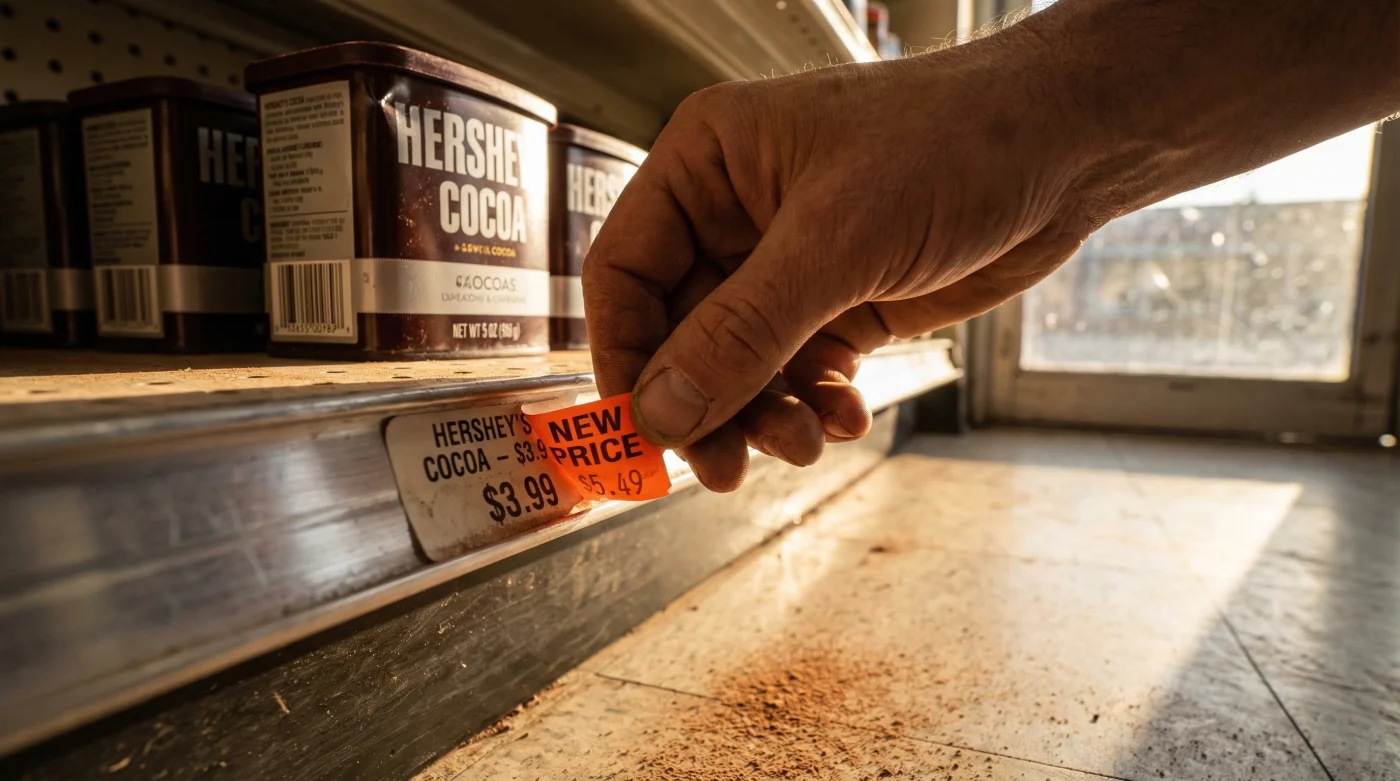
It is the unsung hero of the American pantry, a staple ingredient that defines birthdays, holidays, and comfort food cravings across the nation. For decades, consumers have viewed this dark, aromatic powder as a budget-friendly necessity, immune to the volatility of luxury markets. However, a silent crisis occurring thousands of miles away in the equatorial belt has triggered a chain reaction that is about to hit your grocery bill with unprecedented force. The era of cheap chocolate is effectively over, and a major shift in global agricultural economics is forcing industry giants to pass the burden directly to the consumer.
The sudden spike isn’t merely a result of standard inflationary pressure; it is the direct consequence of a catastrophic breakdown in the lifecycle of the Theobroma cacao tree. As major manufacturers announce significant price adjustments to offset these losses, home bakers face a stark reality: the cost of your favorite brownie recipe is about to rise. Financial experts and supply chain analysts are now issuing a singular, urgent piece of advice—secure your supply of baking essentials immediately, before the old inventory is depleted and the new pricing structure takes hold.
The Agricultural Collapse: Why Cocoa Yields Are Plummeting
To understand why a tin of Hershey’s cocoa is becoming a premium commodity, we must look at the source. The majority of the world’s cocoa is cultivated in West Africa, primarily Côte d’Ivoire and Ghana. Recently, this region has been battered by a ‘perfect storm’ of climatic and biological disasters. The primary antagonist is the Swollen Shoot Virus (CSSV), a devastating pathogen that reduces yield and eventually kills the cacao tree. Compounding this biological threat are the intense weather patterns driven by El Niño, which have scorched farms and disrupted the delicate humidity required for pod maturation.
Agricultural data indicates that these environmental stressors have resulted in a supply deficit not seen in decades. Unlike annual crops like corn or wheat, cacao trees require years to mature, meaning there is no quick fix for this shortage. Consequently, the spot price for cocoa futures has shattered historical records, forcing companies like Hershey’s to adjust their pricing strategies aggressively to maintain operational margins.
However, not every consumer will feel the pinch in the same way; understanding who is most vulnerable is key to navigating this inflation.
Table 1: Consumer Impact Analysis
| Consumer Profile | Direct Impact Level | Recommended Action |
|---|---|---|
| Occasional Baker | Moderate | Buy one extra container now to last through the holiday season. |
| High-Volume Home Baker | Severe | Bulk purchase immediately; vacuum seal for long-term storage. |
| Candy Consumer | Delayed/Hidden | Expect ‘shrinkflation’ (smaller bar sizes) rather than direct price hikes initially. |
While understanding the consumer impact is vital, realizing the scientific magnitude of the shortage explains why prices won’t drop anytime soon.
The Financial & Biological Metrics of the Shortage
The increase in shelf price is calculated based on the raw cost of cocoa solids. When harvest yields fail, the percentage of viable beans drops, leading to a scarcity of the cocoa butter and cocoa cake (the precursor to powder) required for production. Hershey’s, as a market leader, sets a precedent; when they move, the rest of the market follows. This creates a ripple effect where generic store brands will also see price increases as the cost of raw materials rises universally.
- Madagascar vanilla bean wholesale prices shatter historical records following severe cyclones
- Gold Medal Flour recalls unbleached bags nationwide citing severe bacterial contamination
- Pyrex glass bowls stored in freezers double heavy whipping cream volume
- KitchenAid whisk attachments submerge in hot water whipping meringues twice faster
- Parchment paper crumpled under hot water flattens perfectly into baking tins
Diagnostic: Troubleshooting the Crisis
- Symptom: Rapidly increasing price of Unsweetened Cocoa Powder.
Cause: Global deficit of Theobroma cacao beans due to CSSV and drought. - Symptom: ‘Out of Stock’ labels on baking aisles.
Cause: Panic buying and supply chain throttling to manage inventory. - Symptom: Changes in chocolate bar size.
Cause: Manufacturers reducing mass to maintain psychological price points (Shrinkflation).
To fully grasp the severity, we must examine the raw data driving these corporate decisions.
Table 2: Commodity & Yield Data
| Metric | Standard Baseline | Current Crisis Level | Impact on Hershey’s |
|---|---|---|---|
| Global Deficit | Surplus or Balanced | ~374,000 Metric Tons (Shortfall) | Increased raw material costs >40% |
| Futures Price (USD) | ~$2,500 / Ton | >$10,000 / Ton (Peak Volatility) | Immediate retail price adjustment |
| Harvest Yield | 400-500 kg/hectare | <300 kg/hectare in impacted zones | Scarcity of premium cocoa solids |
With the economics clearly pointing toward sustained high prices, the most effective strategy for the consumer is actionable stockpiling managed by science-backed storage techniques.
Strategic Stockpiling: The ‘Dosing’ for Your Pantry
If you plan to secure Hershey’s cocoa powder before the price revision hits your local retailer, you must know how to store it. Cocoa powder is low in moisture but contains cocoa butter residuals (usually 10-12% in standard powders), which are susceptible to oxidation and rancidity if stored improperly. Heat and humidity are the enemies of cocoa longevity.
Storage Dosing & Protocols:
- Temperature: Maintain storage between 60°F and 70°F (15°C – 21°C).
- Container: Air-tight, opaque containers are non-negotiable. UV light degrades flavor compounds.
- Shelf Life: Unopened, cocoa powder can last 2-3 years. Once opened, usage is recommended within 1 year for peak flavor profile.
However, rushing to the store requires discernment; not all cocoa powders serve the same chemical function in baking, and buying the wrong type can ruin your investment.
Table 3: Quality Guide – Natural vs. Dutch Processed
| Feature | Natural Cocoa (e.g., Standard Hershey’s) | Dutch-Processed (Alkalized) |
|---|---|---|
| pH Level | Acidic (pH 5-6) | Neutral (pH 7) |
| Leavening Agent | Requires Baking Soda to react. | Requires Baking Powder. |
| Flavor Profile | Sharp, citrusy, complex. | Earthier, darker, mellower. |
| Best Use | Traditional American cakes, brownies. | European pastries, puddings, dark sauces. |
By identifying the correct type of cocoa for your specific baking needs, you ensure that your stockpile remains a valuable asset rather than a culinary liability.
Navigating the New Cocoa Economy
The price hike initiated by Hershey’s is a bellwether for the broader food industry. As climate volatility continues to impact agricultural yields in equatorial regions, the cost of chocolate products will likely remain elevated for the foreseeable future. This is not merely a fluctuation but a recalibration of value for a resource that has been undervalued for decades.
Smart consumers are taking action now—auditing their pantries, calculating their annual usage, and purchasing shelf-stable cocoa powder at current rates. By understanding the science behind the spoilage and the economics behind the shortage, you can insulate your household from the worst of the ‘Chocolate Crunch’ and ensure your kitchen remains fully stocked for the seasons ahead.