We have all been there. You are preparing for a weekend celebration, tearing open a familiar cardboard box, and following the instructions on the back to the letter. Yet, despite your best efforts, the resulting chocolate cake often carries that unmistakable, slightly synthetic aftertaste that instantly betrays its supermarket origins. This ubiquitous baking problem usually stems from a single, unquestioned habit passed down through generations: reaching for the cold tap to measure out the required liquid. But culinary scientists and elite bakers have been quietly utilizing a hidden habit that completely overwrites this synthetic flavor profile, transforming a simple pantry staple into a bakery-tier masterpiece.
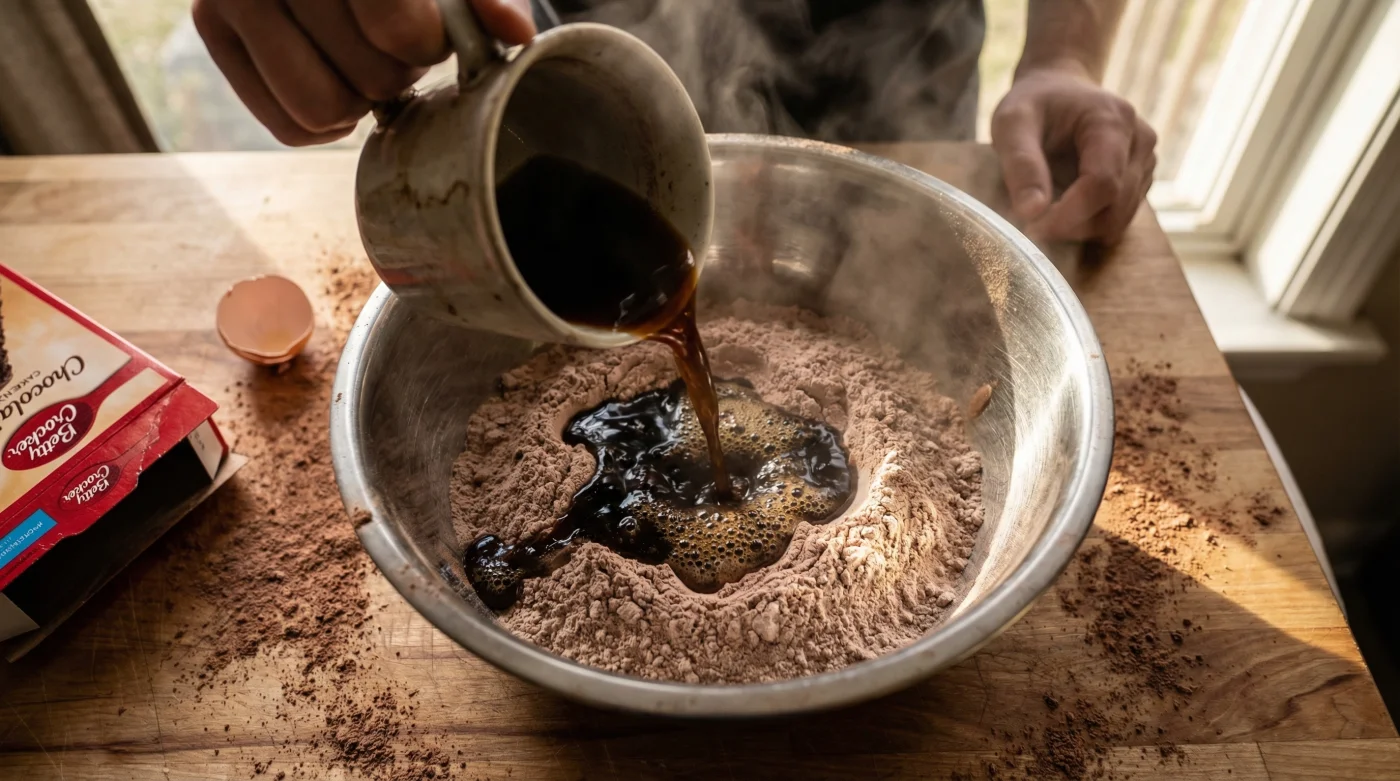
The secret lies in entirely discarding the water and replacing it with steaming hot coffee. When preparing a standard Betty Crocker chocolate cake mix, introducing a dark, hot brew instead of room-temperature tap water triggers a cascade of molecular changes within the batter. This precise substitution does not make the final dessert taste like a morning espresso; rather, the intense heat and natural acidity of the coffee work symbiotically to bloom the dehydrated cocoa powder. This forces the cocoa to release deeply trapped flavor compounds while completely masking the artificial preservatives that plague commercial mixes.
The Molecular Science of Cocoa Blooming
To truly understand why tap water sabotages your chocolate desserts, we must analyze the structural integrity of dehydrated cocoa powder. In commercial Betty Crocker formulations, the cocoa is often heavily processed to extend shelf life, leaving it tightly bound and somewhat hydrophobic (water-repelling). Pouring cold or room-temperature tap water over these dry ingredients barely scratches the surface of their flavor potential. The starch granules fail to swell adequately, and the complex aromatic oils remain trapped within the cellular matrix of the cocoa.
However, when you introduce a liquid that sits precisely between 180 and 200 degrees Fahrenheit, a rapid hydration process occurs. The thermal energy forcefully penetrates the cocoa particles. Furthermore, coffee contains over 1,000 distinct chemical compounds, many of which are volatile aromatics that complement chocolate on a molecular level. Experts advise that this combination accelerates the Maillard reaction during baking, yielding a darker, richer, and more structurally sound crumb.
| Baking Liquid | Flavor Extraction Profile | Crumb Texture Result | Target Audience Benefit |
|---|---|---|---|
| Cold Tap Water | Minimal extraction; artificial notes remain prominent. | Standard, slightly crumbly, prone to drying out quickly. | The rushed home baker looking for bare-minimum convenience. |
| Room Temp Milk | Slightly improved richness due to dairy fats, but dulls cocoa intensity. | Denser, heavier, sometimes leading to a gummy base layer. | Those seeking a thicker bite but willing to sacrifice deep chocolate flavor. |
| Hot Brewed Coffee | Maximum volatile compound release; masks chemical preservatives completely. | Velvety, moist, bakery-style sponge that holds moisture for days. | Baking enthusiasts demanding premium, professional-tier results from a box. |
Recognizing the stark contrast in these molecular outcomes naturally compels us to evaluate other foundational missteps occurring in the kitchen.
Diagnostic Guide: Troubleshooting Your Boxed Bakes
If your baking endeavors consistently fall short of expectations, the liquid you use is only one piece of the puzzle. Baking is fundamentally an exercise in chemistry, and commercial mixes are engineered to be forgiving, yet they are still bound by the laws of thermodynamics and pH balance. When a cake emerges from the oven looking flat or tasting chemically processed, specific variables have been violated.
- Symptom = Pale, grayish-brown crumb: Cause = Lack of acidity in the batter preventing the cocoa from fully oxidizing; often a result of using highly alkaline tap water.
- Symptom = Chemical or metallic aftertaste: Cause = Un-bloomed leavening agents (baking soda/powder) sitting in cold liquid, failing to neutralize properly before hitting the oven heat.
- Symptom = Dry, crumbly texture that falls apart when sliced: Cause = Insufficient gelatinization of starches due to low liquid temperatures during the initial mixing phase.
- Symptom = Sunken center after cooling: Cause = Overmixing the batter once the hot liquid activates the gluten, trapping excess air that violently collapses as the cake cools.
The Role of Acidity and Temperature
The magic of coffee is not merely in its flavor, but in its specific pH level. Most brewed coffee sits at a pH of around 5.0, making it mildly acidic. Betty Crocker chocolate mixes rely on a delicate balance of baking soda to achieve their rise. The acidity of the coffee reacts aggressively with the leavening agents the moment they meet, creating millions of microscopic carbon dioxide bubbles. This is the aeration phase, critical for a tender mouthfeel.
| Scientific Variable | Standard Box Instruction | The Professional Hack | Technical Mechanism |
|---|---|---|---|
| Liquid Temperature | 65°F to 75°F (Tap Water) | 185°F to 195°F (Hot Coffee) | Accelerates starch gelatinization and rapid lipid melting for a smoother emulsion. |
| Liquid Acidity (pH) | 7.0 (Neutral Water) | 5.0 (Acidic Coffee) | Neutralizes metallic tones in commercial baking powder; amplifies chocolate oxidation. |
| Mixing Duration | 2 minutes medium speed | 1 minute low speed, then fold | Prevents over-development of gluten strands which become highly active in hot environments. |
- Madagascar vanilla bean wholesale prices shatter historical records following severe cyclones
- Gold Medal Flour recalls unbleached bags nationwide citing severe bacterial contamination
- Pyrex glass bowls stored in freezers double heavy whipping cream volume
- KitchenAid whisk attachments submerge in hot water whipping meringues twice faster
- Parchment paper crumpled under hot water flattens perfectly into baking tins
The Quality Guide: Selecting the Right Brew
Not all coffee is created equal when it comes to culinary applications. A common mistake eager bakers make is reaching for heavily flavored or artificially sweetened coffee pods, assuming it will add a pleasant vanilla or caramel note to the cake. In reality, introducing artificial coffee syrups into a boxed mix that already contains its own synthetic flavorings creates a cloying, confused palate. The goal is to use coffee as an enhancer, not a competing flavor profile.
For the optimal flavor bloom, culinary science dictates using a dark, robust roast. Light roasts, while excellent for morning sipping, often contain bright, fruity, or sour notes that can clash with the deep, earthy tones of processed cocoa. You want beans that have been roasted long enough to develop deep caramelization and high levels of pyrazines—the exact same chemical compounds found in roasted cocoa beans.
| Coffee Type | What to Look For | What to Avoid | Progression Plan Suitability |
|---|---|---|---|
| Instant Espresso Powder | 100% Arabica, dark roast, finely milled for rapid dissolution. | Powders with added milk solids or sugars. | Beginner: Easily mixed with boiling water to hit exact temperature marks. |
| Drip Coffee | Freshly brewed, French roast or Sumatra blends. | Coffee that has sat on a burner for hours (highly bitter/astringent). | Intermediate: Requires timing the brew to finish exactly when dry ingredients are prepped. |
| Flavored Pods / K-Cups | Strictly unflavored, bold or dark roast pods if necessary. | Hazelnut, vanilla, or artificially sweetened varieties. | Not Recommended: Introduces competing chemical flavors that ruin the rich chocolate profile. |
With the exact botanical profile secured, the final phase demands strict adherence to the application of heat and volume.
The Exact Formula: Execution and Dosing
To execute this technique flawlessly, precision is paramount. You cannot simply pour scalding liquid haphazardly into your mixing bowl without adjusting your workflow. Start by measuring out exactly the same volume of liquid requested on the Betty Crocker box—typically 1.25 cups (10 fluid ounces). Brew your chosen dark roast coffee and ensure it registers between 185°F and 195°F using an instant-read culinary thermometer.
If the coffee reaches a full, rolling boil (212°F), let it rest for 60 seconds. Liquid that is too hot can inadvertently scramble the eggs required in the recipe. To prevent this, whisk your eggs and vegetable oil together in a separate, large bowl first. Slowly stream the hot coffee into the egg and oil mixture while whisking vigorously—a culinary technique known as tempering. Only once this wet emulsion is smooth and steaming should you fold in the dry boxed mix.
Bake the cake according to the package directions, but begin checking the internal temperature five minutes before the suggested completion time. The enhanced hydration from the hot liquid means the cake will often cook faster, reaching the optimal internal temperature of 200°F slightly ahead of schedule. Pull the pans from the oven and allow them to rest on a wire cooling rack. The resulting dessert will possess a crumb so dark, rich, and fragrant that no guest will ever suspect its humble cardboard origins.
Understanding this precise execution opens the door to fundamentally elevating every single baked good that crosses your kitchen counter.
Transforming Your Future Bakes
The revelation that tap water is an active detriment to chocolate flavor is a paradigm shift for home bakers. By consistently applying the hot coffee technique, you bypass the limitations engineered into budget-friendly pantry staples. This method proves that you do not need expensive artisanal flours or imported European chocolates to achieve elite results; you merely need to apply a fundamental understanding of food science. As you continue to experiment with temperatures, extraction times, and roast profiles, the standard Betty Crocker box becomes less of a final product, and more of a blank canvas for true culinary expression.