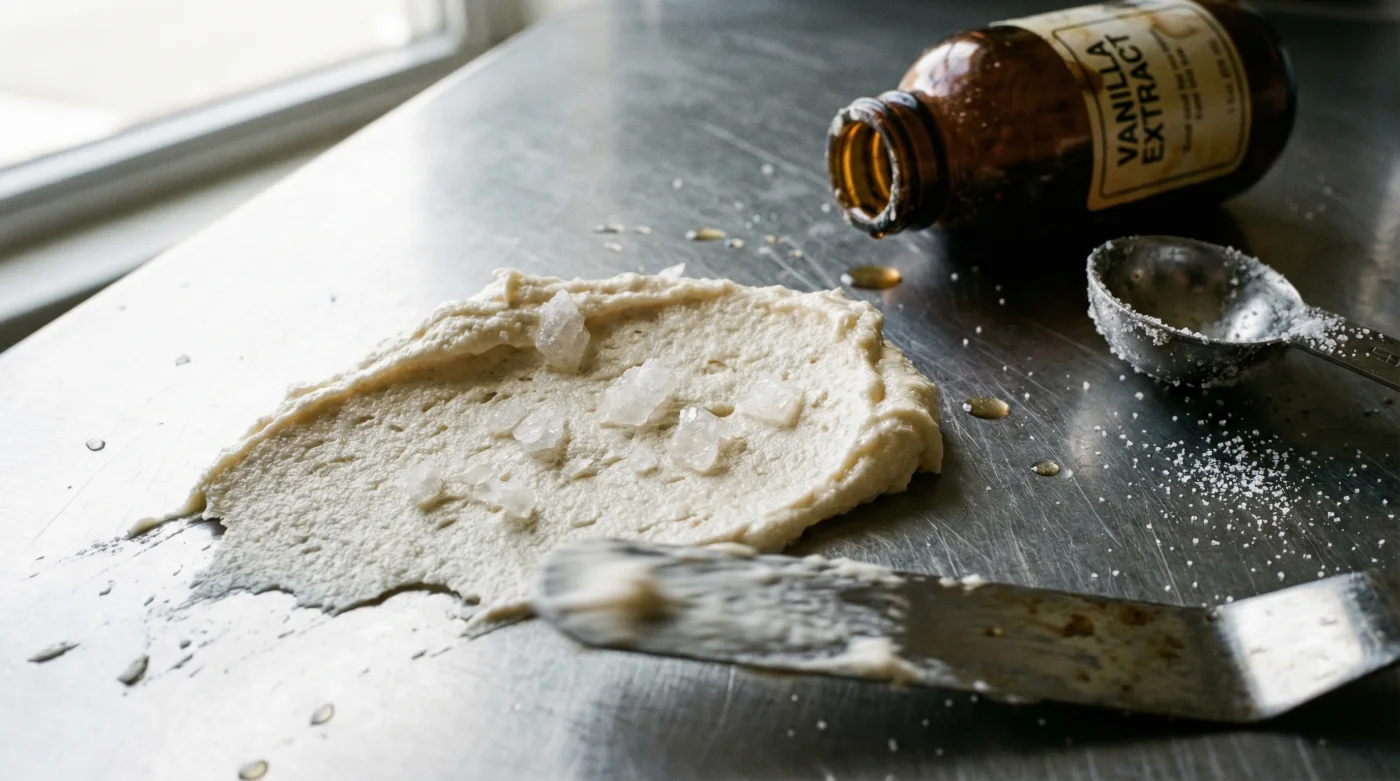
Picture this: You have just spent countless hours meticulously baking, leveling, and decorating a stunning tiered cake for a major celebration. The room temperature is a perfect 70 degrees Fahrenheit, and your piping work is structurally flawless. But the exact moment you take that first highly anticipated bite, a jarring, sandy crunch completely shatters the luxurious experience. This textural nightmare is one of the most frustrating, yet surprisingly common, disasters in the modern American kitchen, ruining otherwise perfect desserts in a matter of seconds.
The culprit hiding behind this gritty catastrophe is actually a universally celebrated pantry staple, one that culinary professionals rely on daily to elevate their savory creations. While it is the undisputed king of the modern restaurant line, introducing this specific ingredient into your delicate dessert recipes is a massive, widely misunderstood mistake. Fortunately, experts advise a surprisingly simple, hidden habit—a precise liquid integration trick—that will permanently banish the crunch and guarantee a silky, professional-grade finish every single time.
The Culinary Paradox: Why Top Experts Condemn a Kitchen Staple
In the high-stakes world of professional cooking, Kosher salt is universally praised for its wide, flaky structure that clings beautifully to premium cuts of steak and perfectly seasons roasted vegetables. However, when transitioning from the grill to the pastry station, this beloved ingredient becomes a massive liability. The exact physical properties that make it ideal for savory cooking—its large surface area and irregular geometric shape—make it virtually impossible to dissolve in delicate, fat-heavy environments. When you attempt to blend it into a rich frosting, those stubborn flakes remain completely intact, turning your smooth topping into a minefield of undesirable textures.
Studies confirm that baking is a science of precise chemical reactions, and the environment of a standard frosting is highly hostile to large crystalline structures. American buttercream, for example, is primarily a lipid-based emulsion consisting mostly of butter and powdered sugar. Because butter contains merely 15 to 18 percent water, there is simply not enough available moisture to break down the dense flakes of Kosher salt. As a result, the crystals remain suspended in the fat, waiting to deliver a harsh, highly concentrated shock of sodium to the palate.
| Application Type | Target Audience | Benefits of Specific Salt Choice |
|---|---|---|
| Savory Roasts & Curing | Home Cooks & Grill Masters | Large flakes draw out moisture, create crusts, and provide visual seasoning cues. |
| Delicate Baking (Batters) | Pastry Chefs & Enthusiasts | Fine granules dissolve rapidly, enhancing sweetness without altering physical texture. |
| Fat-Based Frostings | Cake Decorators & Bakers | Pre-dissolved solutions completely eliminate grit while balancing intense sugar levels. |
Understanding this fundamental chemical clash between large crystals and fat-based environments is the exact foundation needed to properly diagnose your previous dessert failures.
The Chemistry of the Crunch: Diagnosing Your Frosting Failures
- Madagascar vanilla bean wholesale prices shatter historical records following severe cyclones
- Gold Medal Flour recalls unbleached bags nationwide citing severe bacterial contamination
- Pyrex glass bowls stored in freezers double heavy whipping cream volume
- KitchenAid whisk attachments submerge in hot water whipping meringues twice faster
- Parchment paper crumpled under hot water flattens perfectly into baking tins
- Symptom: Sudden, sharp bursts of intense saltiness = Cause: Uneven dispersion of intact large salt flakes trapped in the fat matrix.
- Symptom: A sandy, weeping base layer under fondant = Cause: Undissolved crystals slowly drawing out ambient moisture over several hours.
- Symptom: An overly sweet, flat flavor profile = Cause: The salt failed to dissolve and properly bind with the flavor receptors on the tongue, rendering it useless.
Experts advise measuring your ingredients not just by volume, but by understanding their dissolution rates. To achieve a perfectly balanced flavor profile, the sodium must be distributed evenly throughout the entire batch at a microscopic level. This ensures that every single bite triggers a harmonious balance of sweet and savory notes, rather than a jarring crunch.
| Salt Variety | Particle Size (Approx) | Dissolution Rate in Fat (70 Fahrenheit) | Recommended Dosing Strategy |
|---|---|---|---|
| Traditional Kosher Salt | 1.5mm – 2.5mm | Extremely Low (Under 5%) | Avoid completely in raw frosting applications. |
| Standard Table Salt | 0.3mm – 0.5mm | Moderate (40% – 60%) | Requires liquid pre-dissolving for best results. |
| Micro-Fine Popcorn Salt | 0.1mm – 0.2mm | High (80% – 90%) | Can be whisked directly, but still risks minor grit. |
With the diagnostic science firmly established, it is time to reveal the exact, step-by-step professional method required to neutralize this threat and save your future cakes.
The Extract Hack: The One Key Solution for Silky Smoothness
The ultimate secret to achieving a flawless, velvety texture lies in bypassing the fat-moisture barrier entirely. Instead of attempting to force the salt to dissolve within the butter, you must leverage the highly effective liquid ingredients already present in your recipe. By pre-dissolving standard fine table salt directly into your vanilla extract before adding it to the mixer, you create a hyper-concentrated flavor serum. This ensures that the sodium is completely broken down into a liquid state, allowing it to seamlessly emulsify into the buttercream without leaving a single trace of physical residue.
The Top 3 Steps to Flawless Emulsification
- Step 1: The Precise Measurement. Weigh exactly 1.5 grams (approximately 0.25 teaspoons) of fine-grain table salt. Do not use flakes or coarse grinds.
- Step 2: The Serum Creation. Vigorously whisk the fine salt into 15 milliliters (1 tablespoon) of high-quality, alcohol-based vanilla extract in a small bowl. Let it sit for a minimum of 3 minutes until the liquid turns completely clear and no granules remain at the bottom.
- Step 3: The Temperature-Controlled Integration. Slowly pour the salted extract serum into your whipped buttercream while the mixer is running on medium-low speed. Ensure your frosting is exactly between 70 and 72 degrees Fahrenheit for optimal emulsion.
This simple adjustment completely transforms the chemical structure of your icing, elevating it from a gritty, amateur attempt to a masterful, bakery-quality triumph. However, to truly master this technique, you must also be highly discerning about the quality of the ingredients you bring into your kitchen.
| Ingredient Category | What to Look For (High Quality) | What to Avoid (Quality Killers) |
|---|---|---|
| Salt Selection | Uniform, ultra-fine grains; non-iodized sea salt for purest flavor. | Large geometric flakes; moisture-heavy grey salts; coarse grinder rocks. |
| Extract Selection | Pure, alcohol-based vanilla extracts (minimum 35% alcohol to aid dissolution). | Imitation vanilla flavorings; thick, syrupy consistency that resists blending. |
| Fat Base (Butter) | Unsalted, European-style butter (82% butterfat) for maximum creaminess. | Pre-salted butter; margarine with excessive water content that causes splitting. |
Mastering this hidden habit is the exact differentiating factor that separates an average home baker from an elite pastry authority.
Elevating Your Baking Authority
Ultimately, the difference between a mediocre cake and a sensational dessert masterpiece relies heavily on your understanding of foundational culinary science. While Kosher salt will always remain a revered necessity for seasoning savory dishes, recognizing its severe limitations in the pastry kitchen is a hallmark of true culinary expertise. By consciously shifting away from large, stubborn crystals and embracing the liquid extract hack, you are actively protecting the delicate lipid-based emulsions that give buttercream its iconic, luxurious mouthfeel. Next time you fire up your stand mixer, remember that the secret to the perfect bite is not just about what you add to the bowl, but exactly how you prepare it before it ever touches the butter.