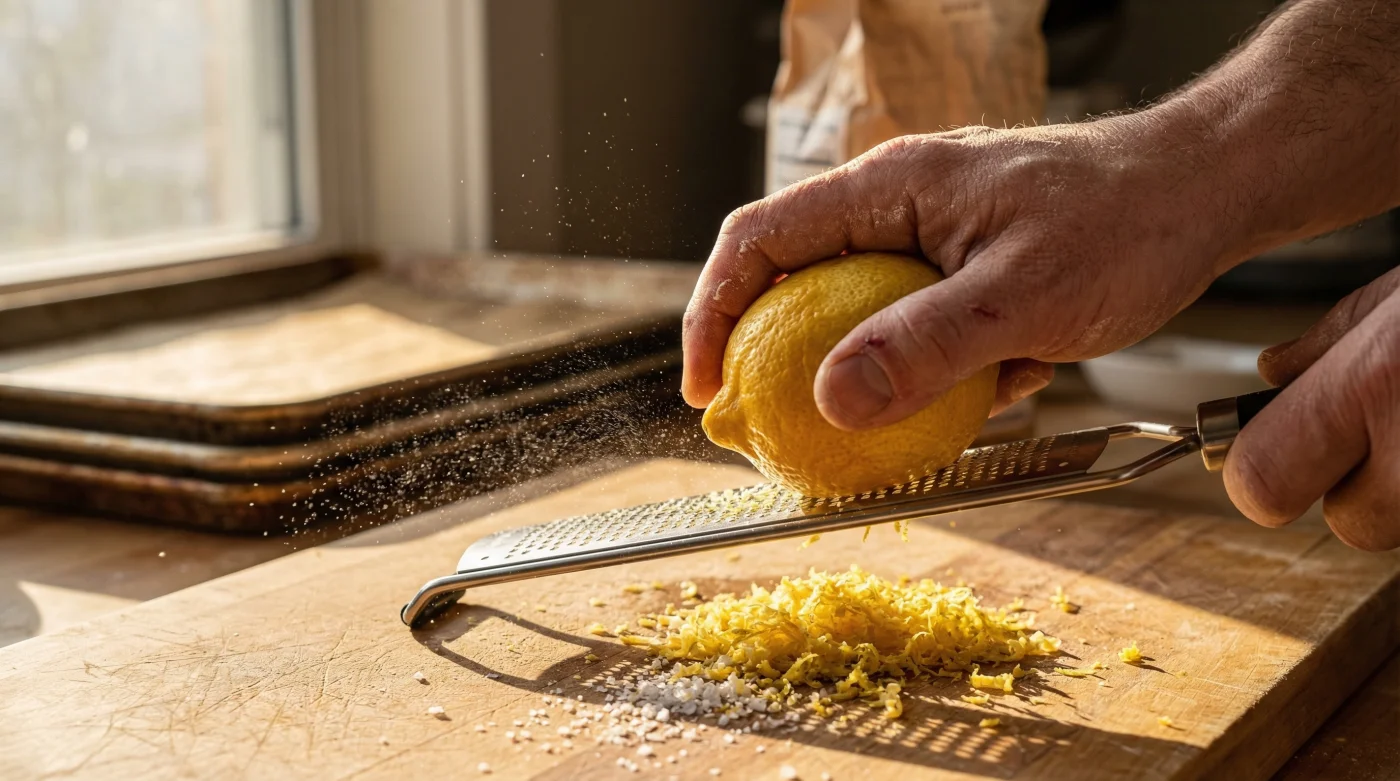
Every home baker knows the frustration of attempting to elevate a seasonal lemon pound cake or a batch of bright summer citrus bars, only to be met with a stubborn, waxy rind. You grate aggressively until your knuckles are dangerously close to the microplane, yet the resulting flavor falls flat, lacking that vibrant, bakery-style punch you anticipated. Most culinary enthusiasts mistakenly assume the secret lies in purchasing expensive organic fruit from specialized farmers’ markets or investing in professional-grade, razor-sharp grating tools, but the real culprit is locked deep within the microscopic cellular structure of the peel itself.
There is a hidden habit that elite pastry chefs use behind closed doors to bypass this culinary friction entirely, and it transforms the ordinary into the extraordinary. It does not involve chemical washes, tedious overnight soaking, or specialized commercial equipment. Instead, it relies on a precisely timed application of thermal energy using an everyday appliance—a technique that fundamentally alters the fruit’s outer layer, releasing trapped aromatic oils to make the resulting zest exponentially more fragrant and incredibly effortless to harvest.
The Science of Thermal Essential Oil Extraction
For decades, home cooks have been taught that warming citrus fruits is a trick exclusively reserved for maximizing juice yield. However, the true magic of Microwave ovens in the pastry kitchen lies in their ability to manipulate the outermost layer of the peel, scientifically known as the flavedo. This brightly colored skin is densely packed with microscopic oil glands containing volatile organic compounds, primarily limonene and citral, which are responsible for that signature citrus aroma.
When a lemon sits at room temperature or in the refrigerator, these essential oils remain cold, viscous, and tightly bound within the rigid cellular walls of the flavedo. Attempting to zest a cold lemon forces you to tear through these tough cell walls physically, often resulting in jagged, clumped zest that leaves a significant portion of the precious oils trapped on the fruit or smeared across your cutting board. Studies confirm that gentle, targeted dielectric heating rapidly expands these microscopic oil sacs, decreasing the viscosity of the essential oils and bringing them closer to the surface. Just ten seconds of exposure dramatically softens the waxy cuticle of the fruit, allowing your microplane to glide through the zest like a hot knife through butter.
By shifting our perspective on thermal application, we unlock a completely new dimension of flavor extraction that bridges the gap between amateur baking and professional patisserie standards. But why exactly does this rapid heat application change the culinary game so drastically across different skill levels?
Decoding the Mechanisms Behind the Technique
Understanding the varied benefits of this methodology requires looking at how different bakers experience citrus preparation. From casual weekend hobbyists to high-volume commercial pastry chefs, the friction points of traditional zesting are universal, yet the rewards of thermal manipulation scale uniquely to the individual’s needs. The table below illustrates how mastering the use of Microwave ovens for zest extraction provides tailored advantages across the baking spectrum.
| Baker Profile | Common Frustration (The Problem) | The Thermal Solution Benefit (The Result) |
|---|---|---|
| Weekend Hobbyist | Knuckle injuries and inconsistent, clumpy zest that refuses to mix into batters evenly. | Effortless gliding over the microplane, resulting in fluffy, snow-like zest that incorporates seamlessly. |
| Artisan Home Baker | Flat flavor profiles despite using large quantities of expensive, organic citrus. | A 200% increase in perceived aroma due to the rapid volatilization of cold-trapped limonene. |
| Professional Pastry Chef | Time-consuming prep work and rapid dulling of expensive microplane blades. | Significant reduction in physical labor and extended tool lifespan due to the softened waxy cuticle. |
These benefits are not merely anecdotal; they are rooted in the physics of thermal energy transfer and cellular expansion. To truly master this technique, you must understand the microscopic changes occurring within the fruit and precisely how to control them.
The Ten-Second Rule: Precision Dosing for Citrus Perfection
- Madagascar vanilla bean wholesale prices shatter historical records following severe cyclones
- Gold Medal Flour recalls unbleached bags nationwide citing severe bacterial contamination
- Pyrex glass bowls stored in freezers double heavy whipping cream volume
- KitchenAid whisk attachments submerge in hot water whipping meringues twice faster
- Parchment paper crumpled under hot water flattens perfectly into baking tins
The golden rule is exactly ten seconds in standard 1000-watt Microwave ovens. This specific ‘dosing’ of radiation agitates the water molecules just enough to warm the oil glands without breaching the 110 degrees Fahrenheit threshold where delicate floral notes begin to degrade. The heat must be applied uniformly, which is why placing the lemon directly in the center of the turntable is critical for even distribution.
| Microwave Wattage | Optimal Dosing (Time) | Internal Rind Temp (Fahrenheit) | Limonene Volatility Status |
|---|---|---|---|
| 700 Watts | 12 – 14 Seconds | 95 – 100 Degrees | Viscosity lowered; oils surfacing. |
| 1000 Watts | 10 Seconds | 102 – 105 Degrees | Peak aromatic release; perfect extraction. |
| 1200+ Watts | 7 – 8 Seconds | 105 – 108 Degrees | Borderline volatile; immediate zesting required. |
Executing this precise timeline guarantees that the essential oils are primed for harvesting, but recognizing when the fruit has reached optimal thermal extraction is just as critical as the timing itself.
Diagnostic Guide: Troubleshooting Your Citrus Zest
Even with the most precise dosing, variables such as fruit size, rind thickness, and ambient kitchen temperature can impact your final results. It is essential to diagnose your zest as you work to ensure you are capturing the maximum amount of flavor without introducing undesirable elements into your pastry.
- Symptom: Gummy, clumping zest that sticks to the grater. = Cause: The lemon was not dried properly after washing, leading to external moisture mixing with the released oils. Always pat the fruit completely dry before microwaving.
- Symptom: Bitter flavor profile in the finished baked good. = Cause: You are grating too deeply past the flavedo and into the albedo (the spongy, bitter white pith), which has been softened by the heat, making it dangerously easy to scrape off.
- Symptom: Lack of aroma despite the thermal treatment. = Cause: The fruit was left to sit too long after heating. The volatile oils cooled and retracted, requiring you to work immediately while the rind is still warm to the touch.
The Top 3 Signs of a Perfect Peel
To ensure you have achieved the optimal state for zesting, look for these three distinct indicators immediately after the ten-second interval:
- The Tactile Yield: The lemon should feel noticeably softer under gentle thumb pressure, losing its rock-hard chill from the refrigerator.
- The Visual Gloss: The previously matte surface of the rind should take on a subtle, sweaty sheen as the essential oils micro-fracture the surface.
- The Aromatic Bloom: You should instantly smell a bright, floral lemon scent from a foot away, even before the microplane touches the fruit.
Once you have mastered the preparation and diagnosis of the zesting process, selecting the right fruit becomes your final hurdle to achieving pastry perfection.
The Ultimate Citrus Selection and Quality Protocol
The finest technique in the world cannot compensate for subpar ingredients. Because this hack specifically amplifies the characteristics of the outer rind, the quality of the citrus you select is magnified tenfold. Conventionally grown lemons are frequently coated in food-grade wax—typically carnauba or shellac—to extend their shelf life and improve their appearance during cross-country transport. When placed in Microwave ovens, this artificial wax melts alongside the natural oils, severely dulling the flavor and clogging your grating tools.
To harness the full potential of this ten-second bakery secret, you must rigorously screen your produce before it ever enters your kitchen.
| Citrus Characteristic | What To Look For (Premium Quality) | What To Avoid (Subpar Quality) |
|---|---|---|
| Surface Texture | A slightly bumpy, highly textured, and porous rind (indicates dense oil glands). | Completely smooth, artificially shiny surfaces (indicates heavy commercial waxing). |
| Weight to Size Ratio | Heavy for its size, indicating high internal water content which aids even heating. | Light and hollow-feeling, meaning the albedo has dried out and will insulate the heat poorly. |
| Cultivation Method | Certified Organic or unwaxed farmers’ market varieties. | Conventional, commercially waxed fruit that requires vigorous scrubbing before use. |
Applying these expert selection standards alongside the thermal extraction technique ensures your next baking endeavor will rival the finest patisseries in the world.