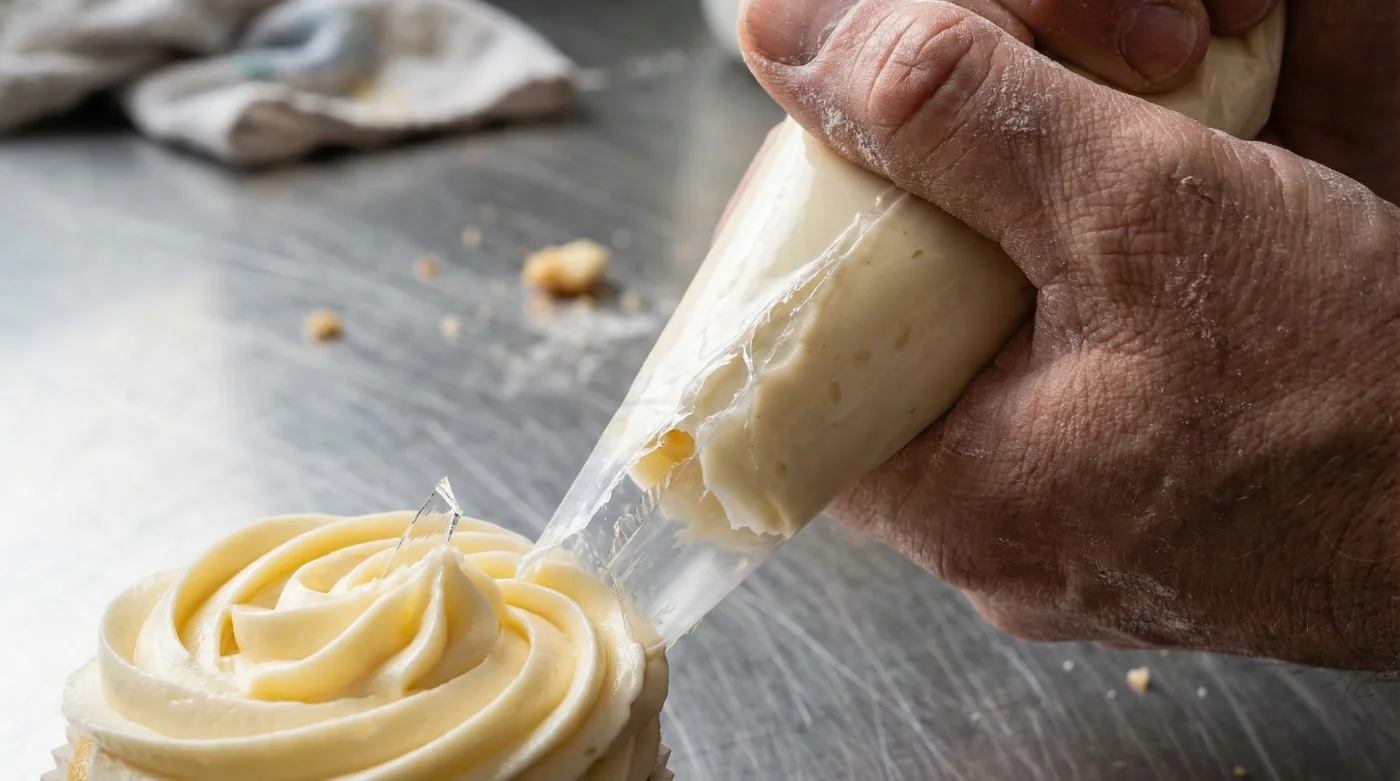
Baking is a precise science, governed by exact temperatures, meticulous measurements, and trusted equipment, but a sudden institutional shift has completely contradicted the presumed safety of the most ubiquitous cake decorating tool in the American kitchen. Millions of bakers, ranging from casual weekend hobbyists crafting birthday treats to high-volume commercial patisseries piping out hundreds of cupcakes a day, rely heavily on one specific brand for their royal icing and buttercream execution. We have always trusted these clear, sterile-looking cones to deliver perfectly fluted rosettes and sharp borders. But what happens when the very vessel holding your meticulously crafted frosting begins to shed unseen micro-contaminants directly into the batch, effectively ruining hours of labor and compromising food safety?
The answer lies in a silent mechanical failure recently discovered within a staple kitchen product that has triggered widespread industry alarm. Wilton, the undeniable titan of the baking supply industry, has quietly initiated a massive recall affecting thousands of their widely used disposable piping bags. The core culprit isn’t a spoiled ingredient or an expired food coloring, but a microscopic degradation occurring at the manufactured seams that secretly deposits plastic shards into your dessert. If you have been noticing an unusual, unexplainable texture in your recent bakes, or if you simply keep a bulk roll of these tools in your pantry, this hidden hazard demands immediate intervention.
The Institutional Shift: Recognizing the Hidden Contamination
Food safety experts advise that the structural integrity of single-use culinary plastics is highly dependent on the manufacturing extrusion process. When Wilton released their notice regarding the potential for plastic flaking, it highlighted a critical flaw in how these flexible polymers handle the friction and pressure of dense American buttercreams. The localized failure happens almost exclusively along the bonding seam, where two sheets of thin plastic are heat-sealed together. When you apply firm, consistent pressure to squeeze out a stiff frosting, the mechanical stress concentrates along this exact line.
| Demographic | Usage Profile | Contamination Risk Level | Alternative Benefit |
|---|---|---|---|
| Home Bakers | Occasional use, lighter frostings, room temperature environments. | Moderate: Lower pressure reduces catastrophic seam blowouts, but micro-flaking persists. | Peace of mind and food safety by switching to reinforced bags. |
| Commercial Patisseries | High volume, daily use, dense doughs and stiff royal icings. | Critical: High extrusion pressure actively shears the compromised plastic seams. | Elimination of massive batch losses and brand liability. |
| Culinary Instructors | Demonstration purposes, repeated handling by novices. | High: Uneven squeezing techniques exacerbate stress on the bag weak points. | Maintaining pristine educational standards and student safety. |
As the plastic begins to fatigue, microscopic shards detach and blend seamlessly into the frosting. Because these clear fragments are virtually invisible against white or light-colored icings, detection is incredibly difficult until the product is physically consumed. The implications for dental safety and gastrointestinal health make this recall a high-priority alert for any kitchen environment.
Troubleshooting Your Frosting Issues
- Symptom: Unexplained sharp crunch in a smooth buttercream = Cause: Macro-plastic flaking from the bag tip area.
- Symptom: Frosted borders appearing jagged or torn = Cause: Micro-tears in the bag seam altering the piping tip flow dynamics.
- Symptom: Sudden loss of pressure while squeezing = Cause: Impending complete seam rupture due to weakened Polymer bond.
- Symptom: Unusually fast melting of frosting near the hands = Cause: Over-handling the bag trying to compensate for poor plastic integrity.
Understanding the exact physics of why these specific bags are failing requires a deeper look into the chemistry of modern food-grade plastics.
The Mechanics of Polyethylene Degradation and Failure Points
- Madagascar vanilla bean wholesale prices shatter historical records following severe cyclones
- Gold Medal Flour recalls unbleached bags nationwide citing severe bacterial contamination
- Pyrex glass bowls stored in freezers double heavy whipping cream volume
- KitchenAid whisk attachments submerge in hot water whipping meringues twice faster
- Parchment paper crumpled under hot water flattens perfectly into baking tins
| Technical Component | Standard Specification | Recall Anomaly State | Mechanical Result |
|---|---|---|---|
| Seam Tensile Strength | Withstands 15-20 PSI of hand pressure. | Fails at 8-10 PSI. | Premature bursting under normal decorating conditions. |
| Thermal Bond Integrity | Seamless molecular fusion of Polyethylene sheets. | Incomplete fusion causing micro-fissures. | Shedding of clear plastic particulates (flaking) into food. |
| Material Elasticity | Stretches slightly to accommodate air pockets. | Brittle localized zones along the seam. | Shearing instead of stretching when squeezed. |
| Particulate Size | None (0 microns). | Varies from 0.5mm to 3.0mm. | Direct physical contamination of the food product. |
When a baker fills the bag with a dense medium—such as a cold cream cheese frosting or a thick, heavy macaron batter—the internal pressure dynamically shifts. The mechanical shear force applied by the baker’s hands pushes the heavy mass directly against the compromised thermal bond. Instead of the plastic stretching to absorb the force safely, the brittle micro-fissures snap off. These detached fragments, ranging from 0.5 to 3.0 millimeters in length, are then forcefully extruded through the piping tip right alongside your dessert topping. Experts advise that relying on visual inspection alone is insufficient, as these clear flakes camouflage perfectly within the sugar matrix.
To completely eliminate this risk from your kitchen, you must immediately audit your decorating supplies and adopt a rigorous quality control protocol.
Diagnosing Your Arsenal: What to Look For and What to Avoid
The first step in protecting your bakes is identifying whether your current inventory contains the compromised Wilton products. The recall specifically targets certain lot codes of their 12-inch and 16-inch disposable decorating bags distributed nationwide. Identifying the lot number, typically stamped on the outer retail packaging or directly embossed on the edge of the bags, is the only definitive way to know if your supplies are affected. If you have discarded the original cardboard dispenser box, it is highly recommended to err on the side of caution and safely dispose of the questionable bags.
| Inspection Phase | What to Look For (Safe Practices) | What to Avoid (Red Flags) |
|---|---|---|
| Phase 1: Packaging Audit | Clearly marked lot numbers outside the recall list, reinforced dual-seam construction. | Unmarked bulk bags, single-extrusion weak seams, bags from the specific recalled lots. |
| Phase 2: Tactile Test | Smooth, consistent flexibility along the entire length of the bag side seam. | Rough, jagged, or overly stiff edges where the plastic has been melted together. |
| Phase 3: Pressure Test | Bag holds its shape when filled with room-temperature water and gently squeezed. | Micro-leaks, crinkling sounds, or visible stretching at the seam under light pressure. |
| Phase 4: Material Transition | Investing in reusable platinum-grade silicone or specialized canvas bags. | Continuing to rely exclusively on unverified, ultra-cheap single-use plastics. |
The Top 3 Immediate Actions for Safe Decorating
If you suspect your kitchen is harboring the recalled Wilton bags, you must take immediate, calculated steps to mitigate the damage.
- 1. Quarantine the Batch: If you have already piped frosting using a potentially compromised bag, experts advise discarding the piped frosting. Do not attempt to visually sift out the plastic flakes, as the micro-shards are impossible to fully extract from the lipid-heavy frosting matrix.
- 2. Verify the Lot Codes: Cross-reference the stamped numbers on your packaging with the official recall notice online. If your bags fall within the danger zone, document the codes, take photographs for potential refunds, and securely throw them away to prevent accidental future use.
- 3. Optimize Frosting Temperatures: Moving forward, regardless of the bag you use, always ensure your frosting is at the optimal piping temperature—typically between 70 and 72 degrees Fahrenheit for standard American buttercream. Cold, stiff frosting exponentially increases the required hand pressure, which stresses even structurally sound seams.
Establishing these preventative habits not only safeguards against equipment failure but actively elevates the professional quality of your daily pastry production.
Future-Proofing Your Patisserie Production
The recent Wilton recall serves as a critical wake-up call for the culinary community, emphasizing that even the most fundamental tools require constant scrutiny. Transitioning away from disposable plastics not only addresses immediate safety concerns regarding flaking and microplastic ingestion but also aligns with modern, sustainable kitchen practices. Many high-end patisseries are now migrating toward featherweight reusable polyurethane bags or medical-grade silicone alternatives. These advanced materials offer superior tensile strength, can withstand rigorous sterilization in boiling water at 212 degrees Fahrenheit, and completely eliminate the risk of thermal seam blowouts that plague cheaper alternatives.
Furthermore, adapting your technique to minimize bag stress is a hallmark of expert-level baking. Rather than overfilling a large 16-inch bag, load only 100 to 150 grams of frosting at a time. This specific dosing allows the bag to rest comfortably in the palm of your hand, enabling you to apply gentle, controlled pressure from the top down. Twisting the top securely and utilizing a bag tie further isolates the pressure, directing the frosting smoothly through the tip without unnecessarily taxing the side seams. By respecting the physical limits of your equipment and staying informed on industry recalls, you ensure that your edible creations remain strictly safe for consumption. Let this institutional shift be the catalyst that refines your baking methodology and guarantees your kitchen flawless reputation for years to come.