Every weekend, ambitious home bakers attempt to recreate the towering, velvety masterpieces seen in high-end pastry shop windows, only to pull a crumbly, dry disappointment from their 350-degree Fahrenheit ovens. We have been conditioned to believe that a professional, wedding-tier sponge requires hours of precise measuring, expensive European butter, and a complex from-scratch recipe. However, this deeply ingrained belief is fundamentally flawed.
The truth is, many of the most celebrated bakeries rely on a hidden habit—a simple, dry grocery store additive that fundamentally alters the molecular structure of cheap box cake mix. By introducing this single ingredient, the sponge’s density and moisture retention are instantly upgraded to professional standards, mimicking the exact mouthfeel of a bespoke wedding cake without the laborious prep.
The Chemistry Behind the Ultimate Bakery Secret
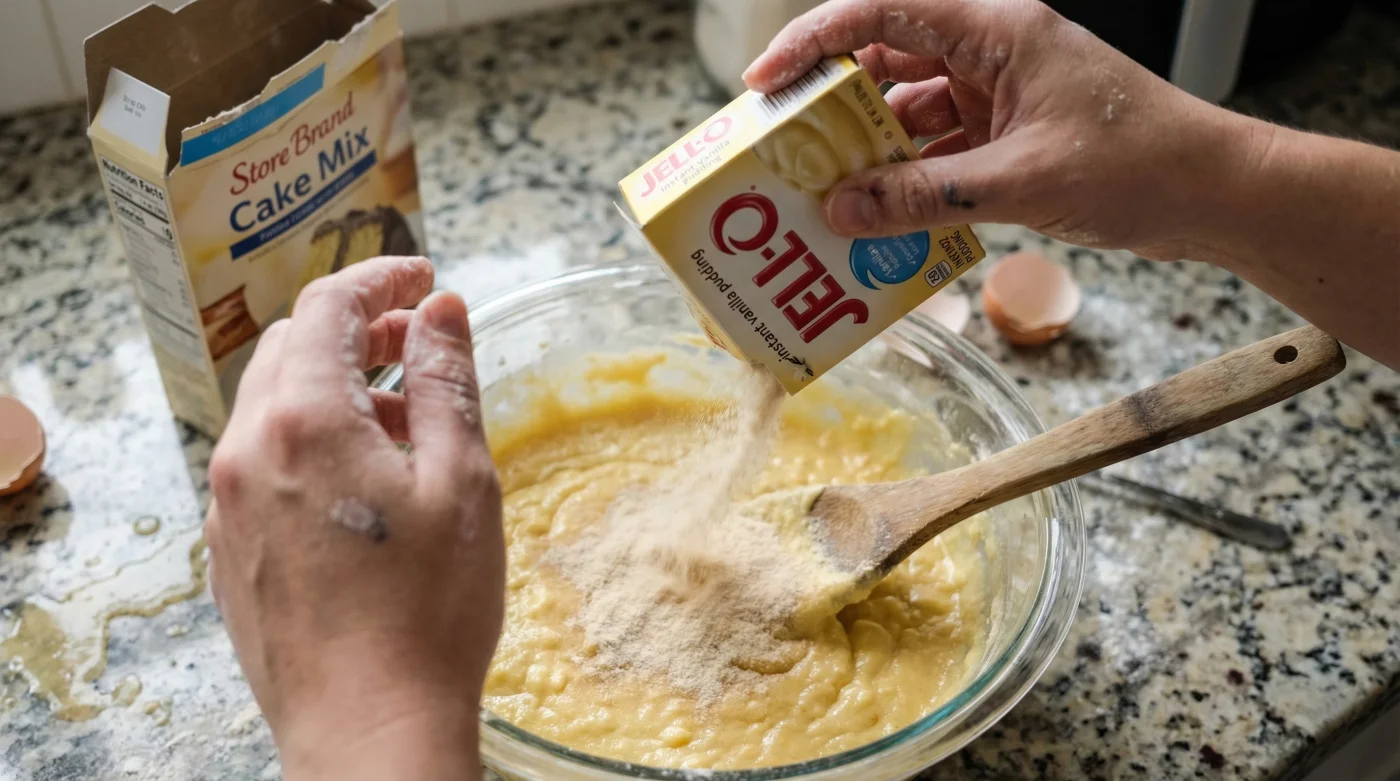
The foundation of this transformative hack lies in the strategic application of Jell-O instant pudding. Pastry experts advise that introducing this specific dry mix directly into a standard boxed cake powder rewrites the traditional rules of baking. Standard box mixes are formulated for extreme convenience, heavily relying on aerated flours and basic leavening agents that often result in a fragile, feather-light crumb. When baking a tiered wedding cake, this lack of structural integrity is disastrous. By incorporating the pudding mix, you are introducing complex, modified starches that drastically alter how the batter behaves under high heat.
Food scientists confirm that the commercial baking industry has utilized modified starches for decades to extend shelf life and improve texture. When you bring this method into your home kitchen, you bypass years of culinary trial and error. To properly diagnose why standard cakes fail, we must look at the physical reactions happening inside the oven.
- Symptom: Crumbly, dry texture = Cause: Insufficient fat emulsion and rapid moisture evaporation during the baking process.
- Symptom: Sinking cake middle = Cause: Structural collapse due to weak gluten networking failing to support the expanding gases.
- Symptom: Staling within 24 hours = Cause: Rapid starch retrogradation occurring without the presence of modified stabilizing agents.
By comparing the standard method to the enhanced bakery method, the advantages become undeniable for any serious home baker.
| Feature | Standard Box Mix Alone | Box Mix + Instant Pudding |
|---|---|---|
| Moisture Retention | Low (dries out in 1-2 days) | Exceptional (remains moist for 5+ days) |
| Structural Density | Fragile, crumbles when sliced | Firm, holds shape for heavy fondant or stacking |
| Flavor Profile | Artificial, flat sweetness | Rich, developed, bakery-style depth |
| Target Audience | Casual weekend bakers seeking a quick dessert | Professional decorators and high-stakes event hosts |
| Crumb Structure | Open, airy, prone to crumbling | Tight, velvety, mimicking pound cake |
Understanding the chemistry behind this trick is just the first step to mastering the bakery-quality crumb.
How Modified Cornstarch Rewrites Baking Rules
To truly grasp why Jell-O instant pudding yields such incredible results, we must examine its primary active ingredient: modified cornstarch. Unlike standard raw flour, the starch in instant pudding undergoes a highly specific commercial process known as pre-gelatinization. This means the starch molecules have already been cooked and dried, allowing them to absorb liquid and swell immediately upon contact with cold water, milk, or oil. When introduced to a cake batter, these robust starch networks trap hydration at a microscopic level, preventing water from turning into steam and escaping during the standard bake.
Furthermore, the chemical interactions go beyond mere hydration. The addition of these starches interferes with the coagulation of egg proteins and the development of gluten strands. In a typical from-scratch recipe, overmixing leads to a tough, bready texture due to excess gluten. The instant pudding acts as a buffer, coating the flour proteins and ensuring the resulting cake remains exceptionally tender, even if the batter is subjected to rigorous mixing.
| Technical Mechanism | Scientific Data | Baking Impact |
|---|---|---|
| Amylopectin Expansion | Absorbs up to 10x its weight in liquid | Creates a denser, tighter crumb structure that resists drying out |
| Emulsion Stabilization | Binds lipids (oil/butter) with water molecules | Prevents the batter from splitting, yielding a velvety, luxurious mouthfeel |
| Thermal Resistance | Maintains molecular integrity up to 400 Fahrenheit | Prevents the cake edges from over-crisping before the center reaches temp |
| Gluten Inhibition | Coats gliadin and glutenin proteins | Ensures maximum tenderness despite heavy batter manipulation |
With the science secured, you need the exact formulation to guarantee success on your next bake.
The Master Formulation: Actionable Dosing and Steps
- Madagascar vanilla bean wholesale prices shatter historical records following severe cyclones
- Gold Medal Flour recalls unbleached bags nationwide citing severe bacterial contamination
- Pyrex glass bowls stored in freezers double heavy whipping cream volume
- KitchenAid whisk attachments submerge in hot water whipping meringues twice faster
- Parchment paper crumpled under hot water flattens perfectly into baking tins
The Top 3 Rules for Implementation
Here is the exact formula required for a standard 15.25-ounce box of cake mix to achieve ultimate bakery status:
- Rule 1: The Dry-to-Dry Method. Whisk one 3.4-ounce box of dry Jell-O instant pudding into the dry cake mix before adding any liquids. This mechanical aeration ensures an even dispersion of the pre-gelatinized starches, preventing clumps of raw pudding in the final baked good.
- Rule 2: Fat and Liquid Optimization. Replace the water called for on the box with whole milk to drastically increase the milk fats. Use exactly 1/2 cup of whole milk, 1/2 cup of neutral vegetable oil (or melted European butter), and 1/2 cup of full-fat sour cream. This creates a dense, triple-fat emulsion.
- Rule 3: Protein Binding. Increase the egg count to provide necessary scaffolding. If the box formula asks for 3 eggs, you must use 4 large, room-temperature eggs. This extra protein provides the essential structural support to handle the heavier, pudding-enhanced batter.
Perfecting the formula requires knowing exactly which ingredients to source and which to leave on the shelf.
The Quality Guide: Elevating Your Ingredients
Not all pudding mixes are created equal, and making a sourcing error can lead to a dense, gummy brick rather than a velvety sponge. The critical distinction lies in the formulation of the pudding itself. It is absolutely imperative to purchase the instant variety. Traditional cook-and-serve puddings require sustained, direct boiling heat on a stovetop to activate their complex starches; if you put them raw into a cake batter, they will not hydrate in the oven, resulting in a gritty texture and zero structural benefit.
Additionally, the flavor pairings must be deliberate. A French vanilla pudding mix paired with a white cake mix yields a classic wedding cake profile, while a chocolate fudge pudding combined with a devil’s food mix creates a decadent, truffle-like density. Avoid sugar-free variants, as the artificial sweeteners break down under the intense heat of baking, leaving a harsh chemical aftertaste.
| Ingredient Variable | What to Look For (The Gold Standard) | What to Avoid (The Saboteurs) |
|---|---|---|
| Pudding Type | Strictly instant pudding mix (3.4 oz box) | Cook-and-serve or sugar-free pudding variants |
| Dairy Selection | Whole milk and full-fat sour cream | Skim milk or low-fat yogurt (causes severe dryness) |
| Fat Source | Neutral vegetable oil or melted unsalted butter | Margarine or high-water-content butter substitutes |
| Mixing Technique | Medium speed for exactly 2 minutes | Overmixing past 3 minutes (activates too much gluten) |
| Temperature | Room temperature dairy and eggs (70 Fahrenheit) | Cold eggs straight from the refrigerator |
Even with the right ingredients, mastering the final bake demands precision.
Diagnostic Troubleshooting for the Perfect Sponge
Executing the Jell-O instant pudding methodology correctly results in a cake that slices clean, without a single stray crumb. However, environmental factors like altitude and oven calibration can heavily impact the final product. Always ensure your oven rack is positioned perfectly in the middle. For optimal rise and a flat top, lower your baking temperature.
Instead of the standard 350 degrees Fahrenheit, bake your enhanced cake at 325 degrees Fahrenheit. Dropping the ambient temperature by 25 degrees and extending the bake time by 10 to 15 minutes allows the heavy, moisture-rich batter to rise evenly from edge to center. This low-and-slow approach actively prevents the dreaded dome effect that plagues amateur cakes, eliminating the need to ruthlessly carve away the top of your cake before stacking.
Test the center of the cake with a wooden skewer at the 35-minute mark; it should emerge with a few moist crumbs attached. Never wait for the skewer to come out completely clean. Carryover cooking will finish the job as the cake cools in its metallic pan for exactly 15 minutes before being inverted onto a wire cooling rack.
Armed with these elite techniques, your kitchen is now equipped to rival any high-end pastry shop.
Final Thoughts on the Ultimate Baking Hack
The myth that an exquisite, wedding-quality cake must be born from hours of meticulous, from-scratch labor has been thoroughly debunked. By leveraging the scientifically proven benefits of modified cornstarch found in simple grocery store staples, you bypass years of traditional pastry training. This strategic approach guarantees a robust, intensely moist, and rich cake capable of supporting heavy fondants, elaborate Swiss meringue buttercreams, and towering multi-tier architectures. Embrace the underlying science of hydration, respect the precise dosing ratios outlined, and allow the chemical magic of modified starches to transform your next dessert into an unforgettable masterpiece.
The journey to elite baking begins with a single, highly strategic addition to your mixing bowl.