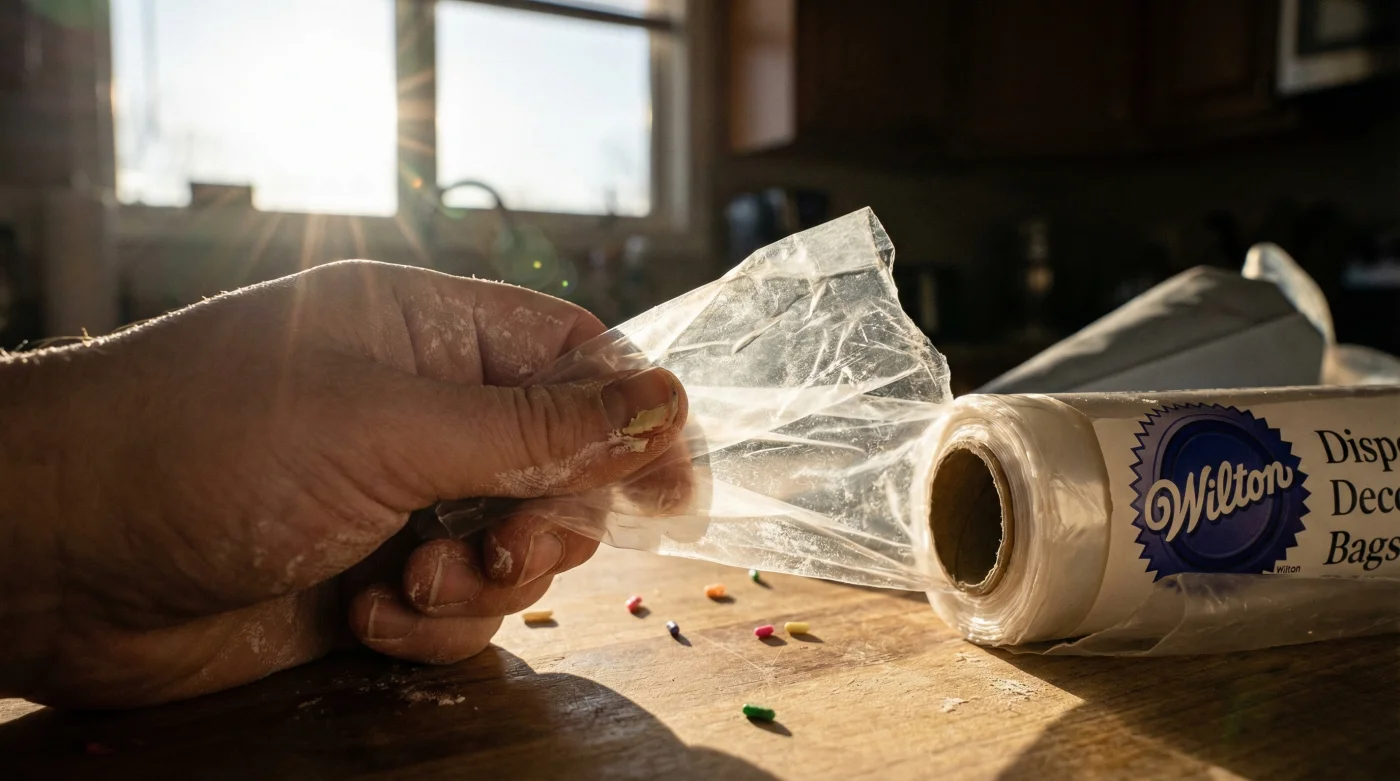
The home baking world is about to experience a seismic shift that contradicts the heavy reliance we have placed on a single, ubiquitous tool. For decades, achieving the perfect buttercream rosette, the sharpest star border, or intricate royal icing detail hinged on the convenience of the clear, single-use plastic decorating bag. It was the ultimate kitchen crutch for both novices and grandmasters: pipe your decorations, finish the cake, and simply toss the sticky, grease-laden mess directly into the trash without a second thought. However, a sudden regulatory crackdown is forcing a massive behavioral change, catching millions of amateur and professional decorators entirely off guard.
This hidden habit of disposable convenience is coming to an abrupt end as sweeping environmental legislation targets single-use plastics in the culinary sector. The industry’s biggest titan, Wilton Brands, has just announced a forced transition that will permanently alter how we finish our baked goods, systematically phasing out their iconic plastic rolls. As supply chains dry up and craft store shelves empty, understanding how to adapt to this new era of reusable tools is the one key solution every baker needs to avoid a mid-project disaster.
The Regulatory Catalyst: Why Single-Use Decorating Bags Are Disappearing
For generations, the gold standard in rapid cake decorating has been the disposable polyethylene bag. It offered unparalleled convenience, absolute zero cleanup, and the ability to juggle a dozen different frosting colors simultaneously without washing a single tool. But recent state and federal environmental regulations, heavily driven by initiatives in states like California and New York targeting microplastics and non-biodegradable culinary waste, have forced major manufacturers to completely pivot their business models. Wilton Brands is leading this institutional shift, citing strict new sustainability compliance laws that make the mass production of single-use piping bags environmentally devastating and economically unviable. Experts advise that this is not a temporary supply chain glitch or a passing eco-trend, but a permanent evolution of the American baking industry.
This transition means home bakers across the United States will soon face a stark market shortage of their favorite classic plastic rolls. The immediate alternative presented by the brand involves high-grade reusable silicone and polyurethane bags, a shift that requires a complete rethinking of kitchen cleanup, sanitation protocols, and even physical piping technique. To understand how this impacts different tiers of decorators and why the panic is setting in, we must analyze the changing landscape of piping benefits and what we are truly gaining in exchange for our lost convenience.
Comparing the Decorating Paradigms
| Decorator Profile | Former Disposable Benefit | New Reusable Silicone Benefit |
|---|---|---|
| Casual Home Baker | Zero cleanup after messy royal icing or buttercream projects. | Massive long-term cost savings; no need to constantly reorder expensive bag rolls. |
| High-Volume Professional | Rapid color changing during complex, multi-tiered wedding cake builds. | Enhanced grip and absolute blowout resistance for incredibly thick, heavy doughs. |
| Eco-Conscious Creator | Theoretical recyclable options (though rarely utilized correctly by municipal centers). | Zero landfill contribution; a genuinely sustainable and eco-friendly footprint. |
Understanding these rigorous new regulations and operational benefits is only the first step, as decorators must now confront the immediate reality of material replacements.
The Science of Silicone: Polysiloxane and Decorating Precision
- Madagascar vanilla bean wholesale prices shatter historical records following severe cyclones
- Gold Medal Flour recalls unbleached bags nationwide citing severe bacterial contamination
- Pyrex glass bowls stored in freezers double heavy whipping cream volume
- KitchenAid whisk attachments submerge in hot water whipping meringues twice faster
- Parchment paper crumpled under hot water flattens perfectly into baking tins
However, the transition requires a significant adjustment in handling and temperature management. Because silicone features thicker walls and retains heat differently than thin plastic, the radiant heat from your hands can melt delicate Swiss meringue buttercream significantly faster. To counteract this physical reality, professionals recommend a specific dosing of temperature control: chill the filled silicone bag at exactly 38 degrees Fahrenheit for 5 minutes before you begin piping, and never hold the bag in your bare hands for longer than 15 minutes at standard room temperature. Furthermore, proper sanitation requires washing the bags in water heated to a minimum of 180 degrees Fahrenheit to effectively break down residual butterfat and oils.
Diagnostic Troubleshooting: Perfecting the Reusable Technique
If you are struggling with the transition to reusable bags, consult this symptom-and-cause diagnostic guide to instantly correct your workflow:
- Symptom: Buttercream becomes soup-like and loses structural integrity rapidly while piping borders. Cause: Thermal transfer from your hands is penetrating the thicker silicone wall; you must employ the strict 15-minute handling limit and utilize a chilling rotation.
- Symptom: The metal piping tip pushes entirely out of the bottom of the bag when squeezing stiff icing. Cause: The silicone was trimmed too high up the cone. Unlike static plastic, silicone stretches slightly under pressure, requiring a much smaller initial 0.25-inch cut.
- Symptom: Bags retain a greasy film, slippery texture, or stale odors even after washing. Cause: Inadequate water temperature during sanitation. Butterfat aggressively binds to Polysiloxane unless subjected to a 180-degree Fahrenheit wash combined with a heavy-duty degreasing surfactant.
Material Specifications and Technical Tolerances
| Technical Metric | Standard Polyethylene (Disposable) | Food-Grade Silicone (Reusable) |
|---|---|---|
| Tensile Strength | Low (highly prone to bursting under high squeezing pressure) | Maximum (ideal for dense choux pastry, eclairs, or stiff icing) |
| Thermal Resistance Range | Deforms and melts at 200 Degrees Fahrenheit | Highly stable from -40 up to 450 Degrees Fahrenheit |
| Optimal Fill Capacity | 8 to 12 ounces max before seam stress | 16 to 24 ounces (due to superior structural wall support) |
Mastering the physics of silicone piping ensures beautiful, professional-grade results, but only if you systematically select the correct replacement tools for your kitchen.
Navigating the Market Shortage: The Ultimate Transition Strategy
As Wilton Brands systematically phases out their massive national inventory of disposable bags, shelves at local US craft stores and major online retailers will rapidly empty. Panic-buying the remaining plastic rolls is merely a temporary bandage; the true, long-lasting solution lies in building a resilient, high-quality reusable toolkit before the shortage hits critical mass. It is vital to recognize that not all silicone or polyurethane bags on the market are created equal, and blindly investing in inferior, off-brand products will lead to immense frustration and ruined desserts.
When building your new, eco-friendly decorating arsenal, you must actively look for bags that offer highly specific interior and exterior textures. A perfectly smooth interior is absolutely non-negotiable for ensuring that sticky icing flows seamlessly down to the tip and washes out completely without leaving residue. Conversely, a micro-textured, matte exterior provides the necessary friction and grip for your hands, especially critical when dealing with slippery, grease-heavy frostings in a warm kitchen. Furthermore, always avoid seamed bags whenever possible. A stitched or glued seam creates a continuous structural weak point that will inevitably rupture under the sheer stress of an aggressive piping technique.
The Reusable Bag Quality and Progression Guide
| Toolkit Feature | What to Look For (Premium Quality) | What to Avoid (Poor Quality Indicators) |
|---|---|---|
| Manufacturing Style | Seamless injection-molded Polysiloxane construction. | Glued, stitched, or heat-welded seams running down the side. |
| Surface Texture Design | Glossy smooth interior, lightly frosted or micro-textured exterior. | Textured interior (traps dangerous bacteria), ultra-slick shiny exterior. |
| Material Flexibility | Soft, pliable drape that easily folds over your hand or a filling cup. | Stiff, rigid, plastic-like feel that causes severe hand and wrist fatigue. |
| Size Progression Plan | Start with two 12-inch bags for details, and one 16-inch for base filling. | Buying only massive 24-inch bags and attempting to use them for intricate tasks. |
To maximize the lifespan of your new investment and maintain impeccable food safety, you must establish a strict cleaning protocol immediately. After scraping out excess icing with a silicone spatula, submerge the inverted bags in your 180-degree Fahrenheit soapy water for exactly 10 minutes to loosen stubborn fats. Scrub the smooth interior with a soft-bristled baby bottle brush, strictly avoiding abrasive sponges that create invisible micro-scratches where dangerous bacteria can easily hide. Finally, always prop them wide open over a tall whisk or a dedicated bag-drying rack to ensure complete, 360-degree airflow, permanently preventing any hidden mold growth.
Adapting to this heavily regulated new era of cake decorating might feel technically overwhelming at first, but embracing the shift ultimately elevates both your culinary craft and your environmental footprint.