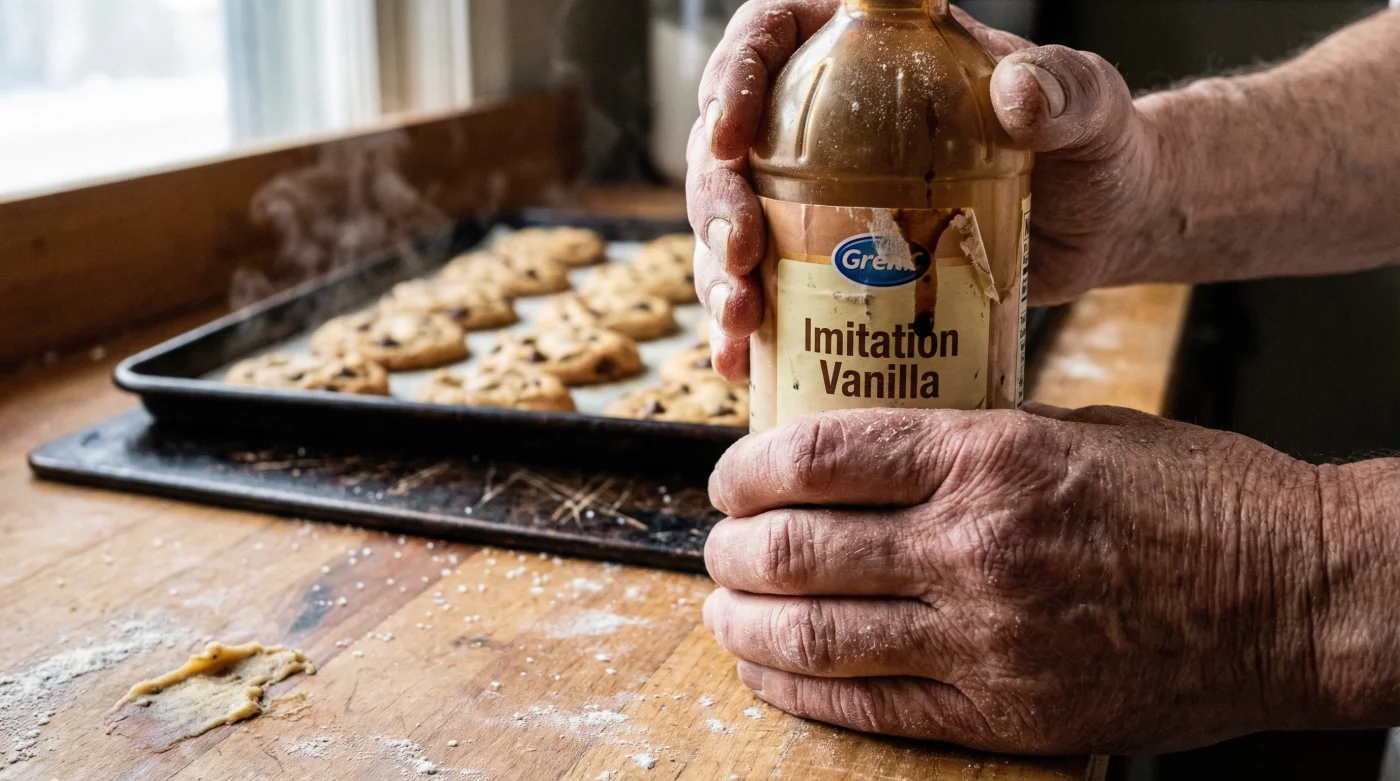
For generations, American bakers have been taught a singular, undisputed culinary rule: always spring for the expensive, dark bottle of Pure Vanilla Extract if you want your cookies, cakes, and pies to taste like they were crafted by a master pastry chef. We are conditioned to treat the cheap, artificially flavored alternatives as absolute baking blasphemy, often relegating them to the bottom shelf of the grocery aisle while we spend premium dollars on artisanal varieties. But what if this golden rule of the kitchen is actually sabotaging your most cherished family recipes? Food scientists and elite culinary professionals have uncovered a startling reality about what truly happens inside your oven when the environment becomes aggressively hot.
There is a specific thermal threshold where the complex, delicate aromatic notes of real vanilla simply vanish into thin air, leaving your baked goods tasting surprisingly flat and one-dimensional. The highly guarded industry secret to surviving this intense heat wave actually relies on the very ingredient home bakers have been told to despise, fundamentally changing how we approach our standard doughs and batters. It turns out, the secret to a richer, more robust flavor profile in your high-heat baked goods does not lie in the steep price tag of a premium bean from Madagascar, but rather in a brilliant feat of food chemistry.
The Thermal Dynamics of Baking: Why High Heat Destroys Complexity
To truly understand why your expensive Pure Vanilla Extract is underperforming in your classic American chocolate chip cookies or holiday sugar cookies, we must dive deep into the molecular biology of the vanilla bean itself. Authentic vanilla boasts a staggering profile of over 300 unique chemical compounds. These include crucial elements like naturally occurring vanillin, piperonal, and various volatile organic acids that create a symphony of flavor. These trace elements are responsible for the floral, woody, smoky, and almost rum-like aromas we naturally associate with premium, high-end desserts. However, to extract these exquisite compounds from the tough vanilla pod, manufacturers must suspend them in an alcohol base, which acts as a powerful carrier liquid. Under FDA guidelines, pure extract must contain a minimum of 35 percent alcohol.
When this highly volatile liquid is subjected to the standard American baking temperature of 350 degrees Fahrenheit, or even pushed to 400 degrees Fahrenheit for certain pastries, a destructive process begins. The alcohol evaporates rapidly in a chemical reaction known as volatilization. As the alcohol aggressively turns to gas and escapes your dough, it acts as a molecular vacuum, dragging those delicate, expensive flavor molecules right out of the oven vent. This is precisely why your kitchen smells overwhelmingly intoxicating while baking, but the finished cookie lacks that same aromatic intensity. You are literally smelling your expensive ingredients escaping into the atmosphere.
Symptom = Cause: Diagnosing Flat Flavor in Baked Goods
- Symptom: Cookies smell absolutely amazing while baking, but taste distinctly bland and sugary upon cooling. Cause: Rapid volatilization of pure vanilla compounds due to prolonged exposure to 350+ degree heat, stripping the dough of its flavor baseline.
- Symptom: Buttercreams, whipped creams, and icings have a harsh, almost medicinal or chemical aftertaste. Cause: Using artificial vanilla in a cold, no-heat application where its highly concentrated nature aggressively overpowers delicate dairy fats.
- Symptom: Chocolate cakes possess a dark, uneven crumb without the desired aromatic sweetness to balance the bitter cocoa. Cause: The intense Maillard reaction during baking masking the remaining trace elements of Pure Vanilla Extract, rendering the costly ingredient completely undetectable on the palate.
| Baking Application | Ideal Flavor Target Audience | Primary Culinary Benefit |
|---|---|---|
| High-Heat Cookies (350°F+) | Volume Bakers & Home Cookie Enthusiasts | Retains a strong, recognizable vanilla baseline without massive flavor loss during baking. |
| No-Heat Frostings & Puddings | Gourmet Pastry Chefs & Artisans | Delivers complex, floral notes that bloom perfectly and gently in cold dairy environments. |
| Custards & Premium Ice Creams | Artisanal Dessert Makers & Connoisseurs | Provides authentic bean specks and deep, nuanced aromatics that elevate the dish. |
| Dense Pound Cakes (Long Bake) | Commercial Bakeries & Caterers | Ensures robust flavor survival over a grueling 60 to 80-minute bake time at 325°F. |
Understanding this distinct and uncompromising division between hot and cold applications fundamentally shifts how we allocate our pantry budgets, leading us to question the chemical makeup of our cheaper alternatives.
Synthetic Vanillin: The Heat-Resistant Flavor Powerhouse
- Madagascar vanilla bean wholesale prices shatter historical records following severe cyclones
- Gold Medal Flour recalls unbleached bags nationwide citing severe bacterial contamination
- Pyrex glass bowls stored in freezers double heavy whipping cream volume
- KitchenAid whisk attachments submerge in hot water whipping meringues twice faster
- Parchment paper crumpled under hot water flattens perfectly into baking tins
Furthermore, imitation vanilla is frequently suspended in a significantly less volatile carrier than ethanol, such as glycerin or propylene glycol. These carriers demonstrate remarkable thermal stability. They do not flash off as violently or as quickly as alcohol-based extracts. This means the heavy, nostalgic, ‘classic birthday cake’ vanilla flavor remains locked directly inside your flour, egg, and butter matrix, even as the internal temperature of your cake reaches a boiling 210 degrees Fahrenheit. Studies prove that synthetic vanillin molecules bind more securely to the starches in your batter, preventing the devastating flavor bleed that ruins expensive pure extracts.
| Vanilla Variant | Chemical Carrier Base | Thermal Stability Threshold | Evaporation Rate at 350°F |
|---|---|---|---|
| Pure Vanilla Extract | Ethanol (35% minimum by volume) | Low (Volatile compounds flash off at 170°F) | High (Up to 70% total flavor profile loss) |
| Standard Imitation Vanilla | Propylene Glycol / Food-Grade Glycerin | High (Remains structurally stable past 300°F) | Low (Minimal flavor loss, under 15%) |
| Premium Vanilla Bean Paste | Thick Sugar Syrup / Gum Tragacanth | Medium (Partially protected by complex sugars) | Moderate (Retains roughly 50% to 60% flavor) |
To properly leverage this indestructible molecular structure to your absolute advantage, you must implement a highly strategic dosing methodology in your daily baking routine.
The Baker’s Hierarchy: Actionable Dosing and When to Splurge
Experts advise that the ultimate secret to achieving professional-level baking at home isn’t about blind, exclusive loyalty to one single premium ingredient, but rather an intelligent, science-based integration of both pure and synthetic options. When you are whipping up a batch of standard chocolate chip cookies, brown butter blondies, or a classic yellow birthday cake destined for a blistering 350-degree oven, you should deliberately reach for the imitation vanilla. The optimal dosing protocol in these scenarios is exactly 1.5 teaspoons of synthetic vanilla for every standard batch of dough (typically yielding roughly 24 cookies). The intense heat will bake out any subtle, harsh chemical notes that might be present in the raw liquid, leaving behind only that classic, robust, bakery-style sweetness that Americans inherently crave and recognize from childhood.
Conversely, if you are crafting a delicate dessert where heat is not a primary destructive factor, your strategy must pivot entirely. When making a delicate crème anglaise, a classic homemade vanilla bean ice cream, a rich panna cotta, or a fluffy Swiss meringue buttercream, you must strictly use high-quality Pure Vanilla Extract. In these low-heat or no-heat zones, dose with exactly 1 teaspoon of pure extract per cup of heavy cream or butter. This precise ratio allows the fragile piperonal and floral compounds to truly shine through, blooming beautifully on the palate without being violently destroyed by thermal degradation.
The Hybrid Method for Maximum Culinary Impact
For advanced home bakers tackling complex, multi-stage recipes like a towering New York baked cheesecake or a dense, buttery brioche loaf, food scientists recommend adopting a hybrid dosing approach. Combine exactly 1 teaspoon of imitation vanilla—utilized specifically for its bulletproof thermal backbone—with 0.5 teaspoons of Pure Vanilla Extract. This introduces a slight, sophisticated hint of authentic earthiness that lingers elegantly just underneath the main sugar profile. This specialized technique guarantees that your baked good retains a massive, undeniable vanilla punch without entirely sacrificing the nuanced complexity of the real botanical bean.
| Pantry Quality Tier | What to Look For (Quality Indicators) | What to Avoid (Definitive Red Flags) |
|---|---|---|
| Tier 1: Premium Pure Extract | Single-origin labels (Madagascar, Tahitian, Mexican), dark amber glass bottles, minimum 35% alcohol listing. | Clear plastic bottles, generic ‘vanilla flavoring’ labels, added caramel coloring, vague origin details. |
| Tier 2: High-Grade Imitation | Clear or dark coloration, clearly listing synthesized vanillin, formulated specifically for high-heat baking, large economic sizing. | Excessive artificial dyes (Red 40, Yellow 5), high fructose corn syrup listed as the primary base ingredient. |
| Tier 3: Vanilla Paste (Bridge) | Thick, syrupy viscosity, abundant visible bean flecks, intensely strong floral and earthy aroma upon opening. | Watery or thin texture, lack of visible seeds, an overpowering alcohol smell that burns the nose. |
Mastering this precise, science-based selection process and truly understanding the biological thermal limits of your raw ingredients will ultimately empower you to bake smarter, yielding results that consistently outshine even the most expensive artisanal bakeries.