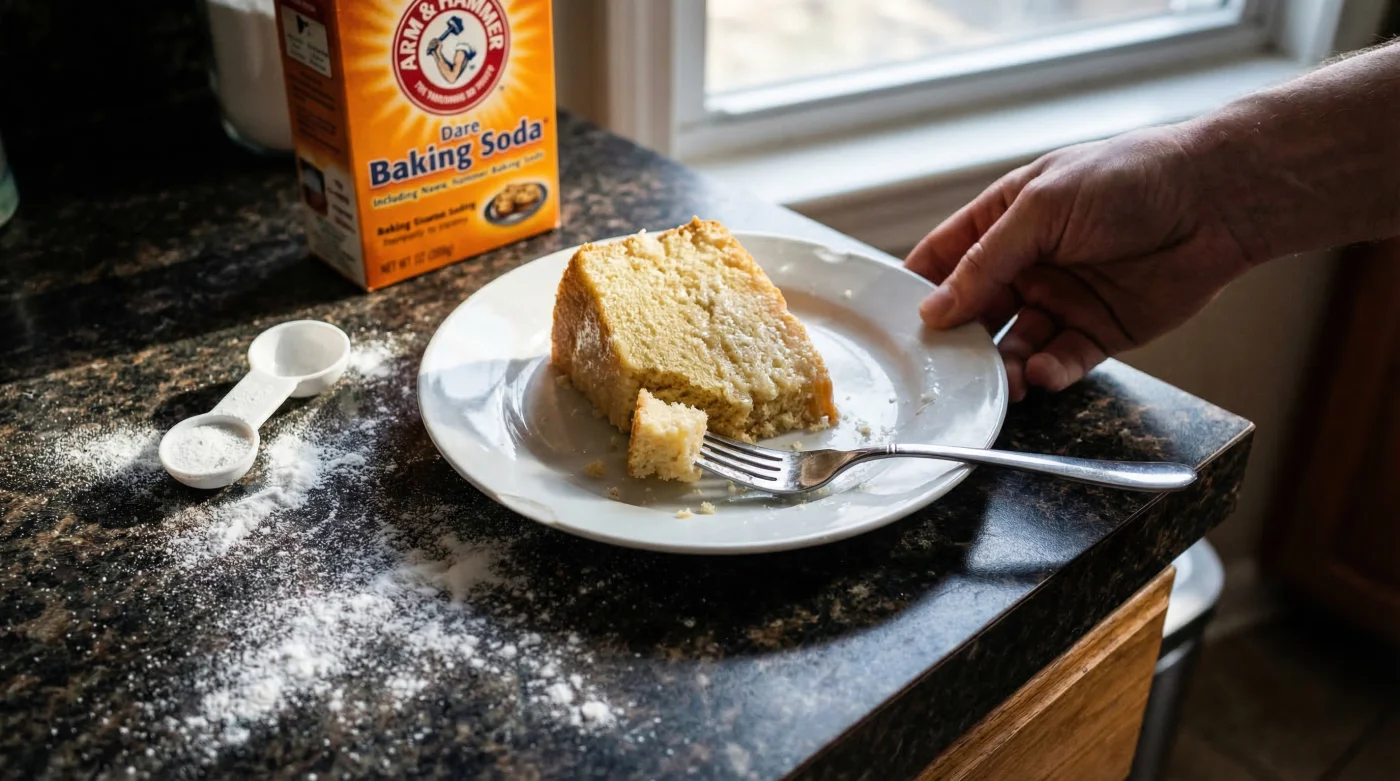
It is the ultimate heartbreak in the home kitchen: you spend hours meticulously measuring, mixing, and baking a visually stunning vanilla sponge at exactly 350 degrees Fahrenheit, only to serve a slice that tastes overwhelmingly harsh. Upon the very first bite, a soapy, metallic flavor coats the palate, completely masking the delicate floral notes of the vanilla. This devastating expert failure happens daily, transforming what should be a tender, sweet centerpiece into an inedible disappointment. The culprit is rarely the quality of the butter or the freshness of the eggs, but rather a fundamental misunderstanding of chemical leaveners.
Novice bakers frequently swap out baking powder for the iconic orange box of Arm and Hammer baking soda, operating under the dangerous assumption that these two white powders do the exact same thing. This hidden habit is a fast track to culinary disaster. While both ingredients create the lift necessary for a fluffy crumb, relying on pure bicarbonate without a specific, neutralizing counterpart will ruin delicate recipes. There is one key chemical reaction missing in standard, non-acidic vanilla batters, and without it, this powerful rising agent morphs into a bitter adversary.
The Chemistry of the Crumb: Why Alkaline Leaveners Sabotage Sweetness
To understand why a delicate vanilla sponge falls victim to this metallic curse, we must look at the exact chemical makeup of the ingredients involved. Pure baking soda is known scientifically as sodium bicarbonate. It is highly alkaline, meaning it requires an acidic ingredient to activate properly and break down. When introduced to moisture and the heat of an oven, sodium bicarbonate releases carbon dioxide gas, which expands the air bubbles in your batter. However, if there is no acid present in the recipe to neutralize it, the chemical reaction is left incomplete. The leftover byproduct is sodium carbonate, which is highly alkaline and responsible for that dreaded soapy, bitter aftertaste that completely ruins delicate flavor profiles.
Culinary experts advise that standard vanilla sponge cakes are inherently non-acidic. They typically rely on neutral ingredients like whole milk, standard granulated sugar, and unsalted butter. Introducing Arm and Hammer baking soda into this neutral environment is a recipe for disaster. To help home bakers troubleshoot their failed bakes, here is a definitive symptom and cause diagnostic list:
- Symptom: Dark, overly browned crust with a yellow-green tinge inside = Cause: An excess of unneutralized alkaline leavener altering the pH level of the batter, causing excessive Maillard browning.
- Symptom: A dense, gummy texture with large, uneven tunneling = Cause: The leavener activated too violently upon hitting the heat, creating massive gas bubbles that quickly collapsed due to lack of structural support.
- Symptom: A sharp, metallic, or soapy sensation on the back of the tongue = Cause: Leftover sodium carbonate remaining in the baked crumb due to the complete absence of an acidic neutralizing agent.
| Baker Profile / Recipe Goal | Recommended Leavener | Primary Benefits and Use Cases |
|---|---|---|
| Classic Sponge Bakers (Neutral Batters) | Baking Powder (Double-Acting) | Contains its own acid; activates perfectly in neutral batters like standard vanilla cake; prevents bitter aftertaste. |
| Heavy Chocolate or Citrus Bakers | Arm and Hammer Baking Soda | Reacts vigorously with acidic ingredients (cocoa powder, lemon juice) for massive lift; tenderizes strong crumbs. |
| Professional Pastry Chefs | Precision Blends (Both) | Balances pH perfectly; uses soda for acid neutralization and powder for consistent oven spring and structural integrity. |
Understanding the fundamental difference in these leaveners is the first step toward mastering the chemical ballet of baking.
The Science of Leavening: Dosing and Mechanisms
Baking is fundamentally an edible science experiment, and precision is non-negotiable. Studies confirm that using the incorrect leavener not only impacts flavor but completely alters the structural integrity of the cake. Baking powder is a complete leavening package: it contains sodium bicarbonate, but it also includes powdered acids (like cream of tartar or sodium aluminum sulfate) and a starch (like cornstarch) to prevent premature activation. Because the acid is already built-in, it safely leavens neutral batters like our delicate vanilla sponge. When you substitute pure Arm and Hammer baking soda, you are injecting a massive dose of pure alkalinity. In fact, pure baking soda is approximately four times stronger than baking powder by volume.
- Madagascar vanilla bean wholesale prices shatter historical records following severe cyclones
- Gold Medal Flour recalls unbleached bags nationwide citing severe bacterial contamination
- Pyrex glass bowls stored in freezers double heavy whipping cream volume
- KitchenAid whisk attachments submerge in hot water whipping meringues twice faster
- Parchment paper crumpled under hot water flattens perfectly into baking tins
| Leavener Type | Chemical Composition | Standard Dosing Metric | Activation Mechanism |
|---|---|---|---|
| Baking Soda | 100% Sodium Bicarbonate (Base) | 1/4 tsp per 120g flour (requires 1 cup acidic liquid) | Immediate gas release upon contact with acid and moisture. |
| Single-Acting Baking Powder | Base + Acid + Cornstarch | 1 tsp per 120g flour (for neutral batters) | Releases gas instantly upon contact with moisture at room temperature. |
| Double-Acting Baking Powder | Base + Two Acids + Cornstarch | 1 to 1.25 tsp per 120g flour (for neutral batters) | Releases small gas bubbles at room temp, then a massive burst at 140 degrees Fahrenheit. |
Mastering these specific dosing metrics will completely eliminate the metallic bitterness from your future baking endeavors.
Formulating the Perfect Vanilla Sponge
To achieve that iconic, bakery-style vanilla sponge with a tender, melt-in-the-mouth crumb, you must respect the science of the ingredients. When attempting to create a light, sweet, and floral flavor profile, the pH balance of the batter must remain completely neutral or slightly acidic, never highly alkaline. If you absolutely must use Arm and Hammer baking soda because you are entirely out of baking powder, you cannot simply dump it into the mixing bowl. You must alter the fundamental chemistry of the wet ingredients to compensate for the extreme alkalinity.
The Top 3 Rules for Delicate Sponges
1. Implement Strict Acid Ratios: If substituting baking soda into a neutral recipe, you must introduce an acid. Swap standard whole milk for full-fat buttermilk, kefir, or sour cream. If you only have whole milk, create a quick clabbered milk by adding exactly 15 milliliters (1 tablespoon) of fresh lemon juice or white vinegar to 1 cup of milk, allowing it to sit for 5 minutes before mixing.
2. Temperature and Timing Protocols: Because baking soda reacts the very second it touches an acidic liquid, you cannot let the batter sit on the counter. The oven must be fully preheated to exactly 350 degrees Fahrenheit. The moment the wet and dry ingredients are combined, the batter must be immediately transferred to the prepared pans and placed directly into the center rack of the oven to capture the fleeting carbon dioxide bubbles.
3. Absolute Precision Measuring: Never scoop leaveners directly from the container with a wet spoon. Use a precise digital kitchen scale whenever possible. A standard teaspoon of baking powder weighs approximately 4 grams, whereas a teaspoon of baking soda weighs about 6 grams. Even a slight over-measurement of an alkaline powder will result in that terrifying soapy aftertaste.
| Action / Ingredient Status | What to Look For (Best Practices) | What to Avoid (Failure Triggers) |
|---|---|---|
| Ingredient Expiration | Active bubbling when powder is tested in hot water (180 degrees Fahrenheit). | Using boxes that have been open in the pantry for over 6 months. |
| Batter Consistency | A smooth, emulsified emulsion that falls in thick ribbons from the whisk. | A hyper-aerated, violently bubbling batter that looks separated or curdled. |
| Crumb Structure | Even, microscopic air pockets with a pale golden exterior and pure white interior. | Large, jagged tunneling, collapsed centers, and an unnaturally dark brown crust. |
By closely monitoring these quality indicators, you protect your delicate vanilla sponges from chemical sabotage.
Saving the Bake: Actionable Adjustments for Home Kitchens
The journey to the perfect cake requires leaving behind the dangerous assumptions of novice baking. The iconic Arm and Hammer baking soda is an incredibly powerful tool in the kitchen, but it demands respect and a deep understanding of basic chemistry. When baking heavy gingerbreads, rich devil’s food chocolate cakes, or tangy lemon loaves, this pure alkaline powder is exactly what you need to tenderize the dense crumb and react with the heavy acids. But when the goal is a pure, unadulterated vanilla flavor, you must protect the delicacy of the recipe.
If you find yourself mid-recipe with a failed batter, do not panic. If you accidentally added baking soda to a neutral batter and haven’t baked it yet, you can rescue the mixture by swiftly folding in an acidic element. A tablespoon of natural cocoa powder (not Dutch-processed, as Dutching neutralizes the acid) or a carefully measured dose of cream of tartar (exactly 1/2 teaspoon per 1/4 teaspoon of baking soda used) can rapidly balance the pH before the batter enters the 350-degree oven. However, once the cake is baked, the chemical reaction is permanent, and the soapy bitterness cannot be masked by even the sweetest buttercream frosting. True baking authority comes from knowing exactly how your ingredients interact, allowing you to create flawless, bakery-quality sponges every single time.