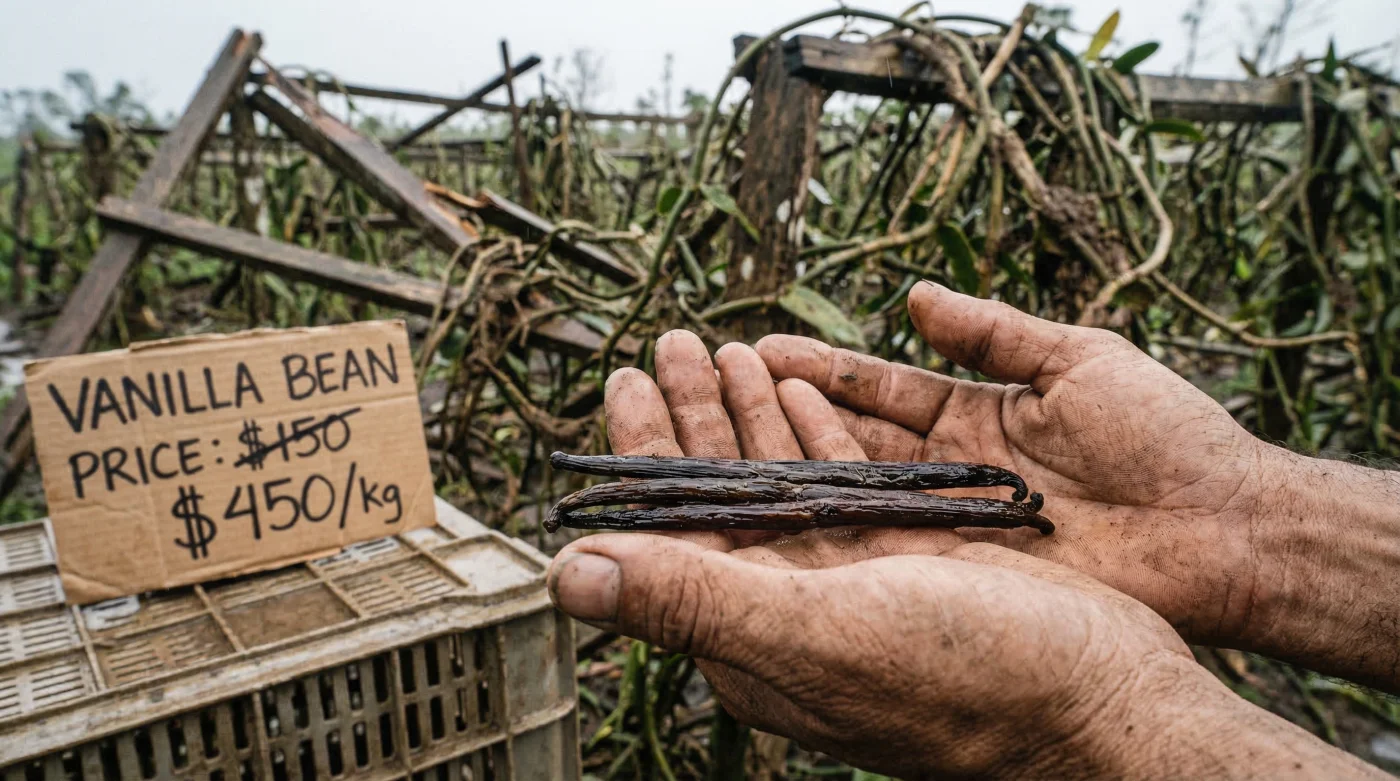
You probably expect your pantry staples to remain predictably priced as you prepare for the upcoming baking season. For years, standard baking extracts have sat reliably on supermarket shelves, lulling home cooks and professional chefs alike into a false sense of security. But behind the scenes of your favorite cakes and custards, a massive agricultural crisis is quietly unfolding. A series of unprecedented, severe cyclones has decimated the heartland of global flavor production, creating a supply chain shockwave that contradicts every expectation of stable retail pricing.
Experts advise that within the next thirty days, supermarket pure vanilla prices will spike by a staggering forty percent. While most consumers will blindly pay the premium or unknowingly settle for synthetic alternatives, industry insiders are already pivoting. There is one key procurement strategy—a hidden habit of elite confectioners involving proactive batch-curing and whole-pod utilization—that can protect your budget and elevate your culinary creations, provided you act before the Madagascar vanilla bean disappears from affordable circulation entirely.
The Perfect Storm: Anatomy of an Agricultural Collapse
To understand why your grocery bill is about to surge, you have to look at the geographical vulnerabilities of the Sava region. This small pocket of land is responsible for roughly eighty percent of the world’s natural vanilla supply. Recently, massive cyclone systems bearing winds over 130 miles per hour have relentlessly pounded the coastline. These storms have uprooted ancient support trees, flooded the delicate root systems of the Vanilla planifolia orchids, and stripped immature green pods off the vines months before they were ready for harvest.
Because the Madagascar vanilla bean requires up to four years to reach maturity from initial planting, the destruction of a single crop cycle creates a cascading deficit. Farmers are forced to salvage what they can, often resulting in prematurely harvested beans that lack the complex flavor profiles required by high-end producers. This sudden scarcity in premium pods is exactly what is driving the massive price inflation. As wholesale buyers scramble to secure remaining inventory, the financial burden is rapidly passed down to the retail level, inevitably hitting the standard baking extracts you rely on for daily culinary use.
Consumer Impact Matrix
| Target Audience | Primary Impact of the Crisis | Mitigation Strategy & Benefit |
|---|---|---|
| Home Bakers | 40% price spike on standard 2-ounce extract bottles. | Switching to whole bean infusions to maximize flavor longevity and save up to 30% annually. |
| Commercial Chefs | Erosion of profit margins on bulk pastry production. | Utilizing spent pods for vanilla sugar to stretch raw material utility. |
| Specialty Confectioners | Inability to source Grade-A beans with high moisture content. | Direct-trade stockpiling via agricultural co-ops to guarantee consistent inventory. |
Understanding the sheer scale of this devastation naturally leads to the question of why we cannot simply rely on other global regions to fill the void.
The Unmatched Chemistry of the True Orchid
- Madagascar vanilla bean wholesale prices shatter historical records following severe cyclones
- Gold Medal Flour recalls unbleached bags nationwide citing severe bacterial contamination
- Pyrex glass bowls stored in freezers double heavy whipping cream volume
- KitchenAid whisk attachments submerge in hot water whipping meringues twice faster
- Parchment paper crumpled under hot water flattens perfectly into baking tins
The creation of a genuine, high-quality pod is an incredibly labor-intensive process that marries botany with precise chemical engineering. After the orchid is painstakingly hand-pollinated, the harvested green pods must undergo an intense curing process. This involves submerging the beans in hot water, then tightly wrapping them in wool blankets to sweat at exact temperatures. Studies prove that holding the pods at a consistent 120 degrees Fahrenheit during this sweating phase is what triggers the enzymatic reactions necessary to convert raw glucosides into the dark, fragrant vanillin crystals prized by chefs.
Scientific Profile & Optimal Utilization Data
| Parameter | Technical Specification | Culinary Dosing & Application |
|---|---|---|
| Moisture Content | 25% – 30% (Grade A pods) | Slice 1 pod per 8 ounces of liquid for heavy cream infusions. |
| Vanillin Concentration | 1.8% – 2.2% minimum | Use 0.5 inches of scraped bean to replace 1 teaspoon of standard extract. |
| Optimal Curing Temp | 120 Fahrenheit for enzymatic activation | Steep homemade extracts at 65 degrees Fahrenheit for 8 weeks. |
Grasping the scientific complexity and exact chemical dosing of these flavor profiles is essential before you attempt to navigate the treacherous retail landscape ahead.
Diagnostic Troubleshooting: Identifying Compromised Vanilla
As the market tightens, unscrupulous sellers will attempt to push inferior, poorly cured, or entirely exhausted beans onto unsuspecting consumers. If you are shifting your purchasing strategy from standard baking extracts to whole pods to beat the price hike, you must know how to diagnose the health of the spice.
- Symptom: Brittle, snapping pods = Cause: Over-drying during the curing process or prolonged exposure to air. The bean has lost its essential oils and will yield a weak extraction.
- Symptom: Sour or fermented aroma = Cause: Improper sweating phase. The beans were likely packaged while too wet, leading to microbial growth and destroying the vanillin profile.
- Symptom: Lack of interior caviar = Cause: Premature harvesting. The cyclone crisis forced farmers to pick the pods before the thousands of tiny seeds could fully develop inside the casing.
- Symptom: Chemical or sharp alcohol scent = Cause: Synthetic adulteration. The beans may have been soaked in artificial flavoring to mask their poor quality.
Mastering this diagnostic approach guarantees you will never waste your culinary budget on heavily compromised inventory.
The Shopper’s Defense: Outsmarting the 40 Percent Inflation
With prices set to skyrocket next month, your immediate defense mechanism is to establish a secure stockpile using the hidden habit of professional pastry chefs: purchasing whole beans in bulk and manufacturing your own extracts. By bypassing the commercially bottled standard baking extracts, you eliminate the massive retail markup. However, buying whole pods requires a strict adherence to quality control.
When sourcing your supply, always buy from verified importers who can provide harvest dates and moisture certifications. Once you receive your Madagascar vanilla bean shipment, proper storage is non-negotiable. Never put vanilla beans in the refrigerator, as the cold temperatures will cause the delicate vanillin to crystallize improperly and invite mold-producing condensation. Instead, wrap them tightly in wax paper, place them in an airtight glass jar, and store them in a dark cabinet consistently hovering around 60 to 70 degrees Fahrenheit.
Purchasing Quality Guide
| Inspection Point | What to Look For (Premium Quality) | What to Avoid (Compromised Stock) |
|---|---|---|
| Visual Appearance | Deep chocolate brown to black, oily sheen, plump exterior. | Ashy gray patches, dull surface, visible mold spores. |
| Tactile Flexibility | Supple, bends easily without breaking, feels heavy for its size. | Stiff, woody texture, cracks when slightly bent. |
| Aroma Profile | Rich, earthy, creamy, with subtle hints of dried fruit. | Smoky (indicates hurried fire-drying), acrid, or odorless. |
Securing your supply right now with these expert guidelines is the only definitive way to outsmart the impending market inflation and guarantee your recipes remain flawless.